Omanghana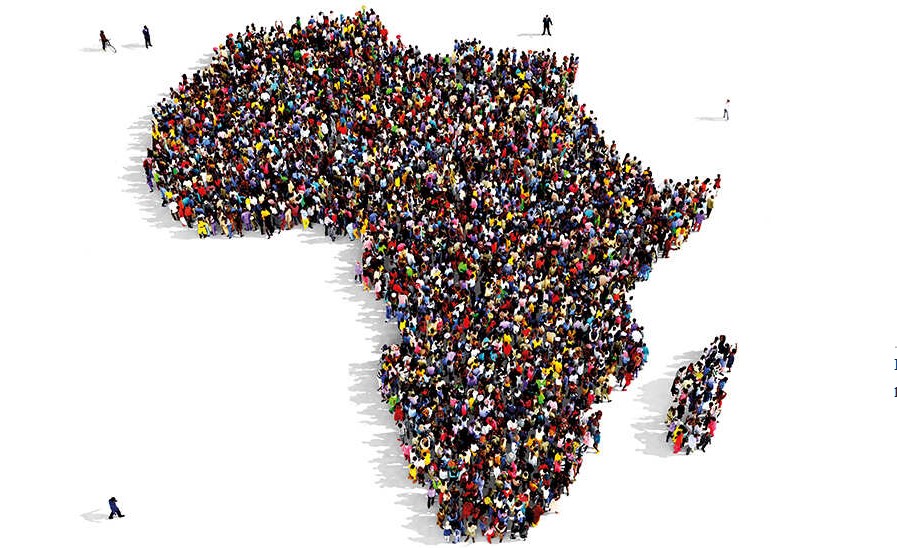
photo credit to geographical.co.uk
Africa is undergoing the fastest population expansion in the world, positioning the continent to become one of the most influential economic and demographic forces of the 21st century.
Current projections show Africa’s population growing at an annual rate of approximately 2.5%, more than double the global average growth rate. By 2050, the continent is expected to reach roughly 2.5 billion people, meaning one out of every four people on Earth will be African.
The surge is being driven by a uniquely young population structure. Africa currently has the world’s lowest median age at just 19 years old, creating what economists describe as a potential “demographic dividend” capable of transforming labor markets, consumer demand, digital innovation, and long-term economic growth.
At the same time, the rapid population increase is placing enormous pressure on infrastructure systems, housing markets, transportation networks, and urban planning across the continent.
Africa’s youthful population is increasingly being viewed as one of its most valuable long-term economic assets.
A rapidly expanding generation of digitally connected young consumers is fueling major growth across sectors including fintech, e-commerce, telecommunications, logistics, and mobile banking. The continent has already emerged as a global leader in mobile money innovation, with digital financial platforms transforming access to banking and commerce in both urban and rural markets.
Analysts say the continent’s young workforce could provide a major competitive advantage at a time when many regions—including Europe and parts of Asia—are facing aging populations and shrinking labor pools.
However, the demographic opportunity also presents a major employment challenge.
Economic experts estimate that Africa must generate between 12 million and 15 million formal jobs annually to absorb the growing number of young labor market entrants. Current job creation levels remain significantly below that threshold, with only around 3 million formal jobs created each year.
The widening gap has intensified investment in science, technology, engineering, and mathematics (STEM) education, vocational training, and digital skills development as governments and private investors attempt to align workforce capabilities with the needs of modern industries.
Africa is also experiencing the fastest urbanization rate globally.
More than 500 million additional residents are expected to move into African cities by 2040, fundamentally reshaping the continent’s economic geography and infrastructure demands.
Major cities including Lagos, Kinshasa, and Cairo are rapidly evolving into sprawling megacities with populations exceeding many national economies.
Urban planners warn that managing this growth will require massive investments in decentralized infrastructure systems, transportation networks, sanitation, energy grids, and affordable housing.
Transportation congestion has become one of the most pressing urban challenges. In response, several African cities are shifting away from heavily informal transport systems toward structured Bus Rapid Transit (BRT) corridors, urban rail developments, and integrated mobility solutions designed to reduce traffic gridlock and improve productivity.
Housing shortages are also intensifying as population growth outpaces construction capacity. The growing demand for affordable housing is driving increased investment in modular construction technologies, green building systems, and alternative property financing models.
Nigeria remains the epicenter of Africa’s demographic expansion.
By 2050, Nigeria’s population is projected to surpass that of the United States, making it the third-most populous country globally behind only India and China.
Elsewhere across the continent, regional growth patterns are reshaping economic influence and trade corridors.
In East Africa, Ethiopia and Tanzania are recording rapid population increases that are fueling expanding domestic consumer markets, manufacturing sectors, and urban development projects.
In Central Africa, the Democratic Republic of the Congo continues to experience one of the fastest growth rates globally. Its capital, Kinshasa, is projected to surpass Paris as the world’s largest French-speaking city.
Meanwhile, West Africa’s coastal corridor stretching from Abidjan to Lagos is rapidly evolving into a continuous urban and economic zone linking multiple countries through trade, logistics, manufacturing, and consumer markets.
Economists believe these demographic and urban shifts could redefine global economic power balances over the coming decades, positioning Africa as one of the world’s most important future centers for labor, innovation, consumption, and industrial expansion.
Source: Omanghana