Omanghana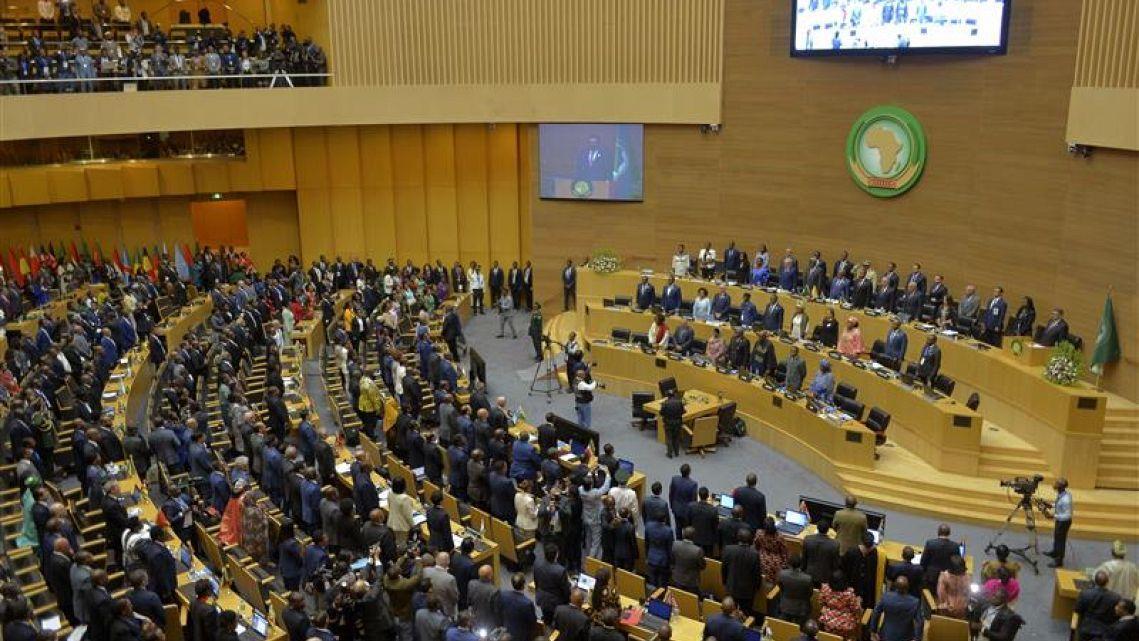
African heads of state are gathering this weekend in Addis Ababa for their annual summit at a time when the continent’s role in global affairs appears increasingly uncertain and contested.
The meeting comes amid growing debate over Africa’s place in a rapidly changing international system, where traditional multilateral frameworks are under strain and major powers are asserting their interests more aggressively.
“At the Table or on the Menu”
Speaking at the World Economic Forum in Davos last month, Canadian Prime Minister Mark Carney offered a striking metaphor for the future of international relations, warning that countries would either be “at the table or on the menu.”
For African leaders, who have long argued for a stronger voice in global decision-making, the analogy resonated deeply. Many governments across the continent have consistently pushed for reforms to global governance institutions to reflect Africa’s demographic weight, economic potential, and geopolitical importance.
Shift in US Foreign Policy Focus
However, global dynamics have shifted further during the second term of US President Donald Trump. His administration has accelerated a move away from multilateralism toward great-power competition, emphasizing national interests and bilateral engagement over collective global approaches.
According to Washington’s updated security strategy, not all regions can command equal attention. The United States’ renewed focus on the Western Hemisphere, along with sustained engagement in the Middle East, has implied a reduced strategic emphasis on Africa.
Rethinking Global Partnerships
For many African nations, this shift has forced a reassessment of long-standing relationships. Countries that once relied on global norms and financial support from institutions such as the United Nations, the World Bank, and the World Trade Organization are now confronting a more fragmented and competitive international environment.
These changes have injected fresh urgency into discussions about how Africa should engage the rest of the world—whether through stronger continental coordination or through individual national strategies.
Risk of Fragmentation
According to Tighisti Amare, Director of the Africa Programme at the UK-based Chatham House, there is a real danger that African countries could be “left behind” if they fail to develop a coherent and effective common strategy.
At the same time, global powers—particularly the United States—are increasingly pursuing bilateral deals with individual African countries, especially around critical minerals and natural resources. Such agreements often bypass opportunities for collective bargaining at the continental level, potentially weakening Africa’s negotiating power.
A Defining Moment
As African leaders deliberate in Addis Ababa, the broader question looms large: how can the continent protect its interests and assert its influence in a world where power politics are intensifying and multilateral cooperation is waning?
With global policy signals from Washington described by analysts as “dizzying” in their pace and direction, the summit is widely seen as a defining moment—one that could shape how Africa positions itself in an increasingly transactional global order.
Source: Omanghana