Omanghana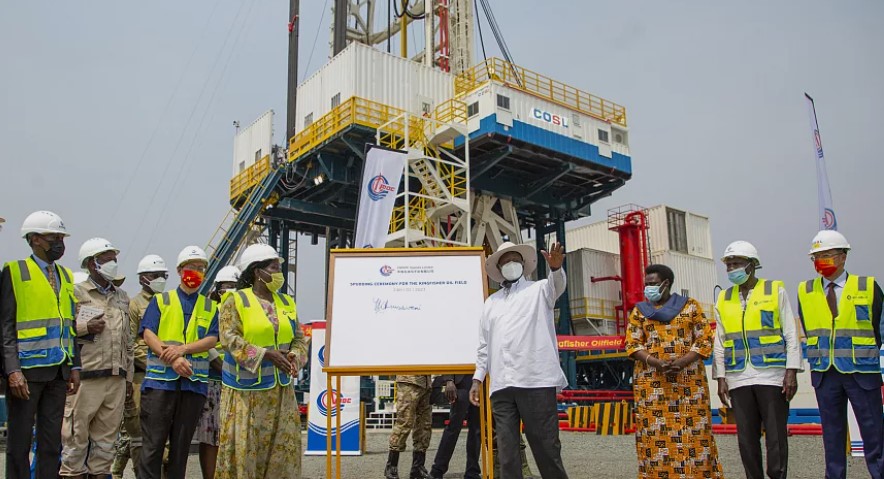
Uganda is preparing to begin its oil production journey in July 2026, marking a major milestone in the country’s energy sector. The timeline was recently confirmed by Energy Minister Dr. Ruth Nankabirwa and senior government officials after inspections of major oil infrastructure projects in late April 2026.
The country’s first oil production depends on the successful completion of key upstream and midstream developments. The Tilenga Project, operated by TotalEnergies, and the Kingfisher Project, managed by CNOOC, have both made significant progress. The Kingfisher Project is particularly advanced, with its central processing facility reaching 93 percent completion as of October 2025.
The East African Crude Oil Pipeline (EACOP), which will transport Uganda’s crude oil for export, is also nearing completion. By April 2026, the pipeline had reached 82 percent overall completion, with all required pipes delivered and the marine export jetty in Tanga, Tanzania, more than 88 percent complete. While the first technical oil flow is expected in July, the country’s first crude oil exports are projected to begin in October 2026.
In addition to launching production, Uganda is planning further expansion in the sector. On April 28, 2026, the government announced plans to begin a third oil exploration licensing round during the 2026/2027 fiscal year to increase the country’s oil reserves.
Uganda is also moving toward a final investment decision for its proposed $4 billion domestic oil refinery, which is expected by July 2026. The project is seen as a major step toward boosting local refining capacity and reducing dependence on imported petroleum products.
The oil sector has already contributed significantly to Uganda’s economy through local content development. More than $2 billion in contracts have been awarded to Ugandan businesses, creating thousands of jobs ahead of the country’s first oil production.
The start of oil production is expected to transform Uganda’s economy, positioning the country as one of East Africa’s emerging oil producers while increasing government revenues and strengthening regional energy cooperation.
Source: Omanghana