Omanghana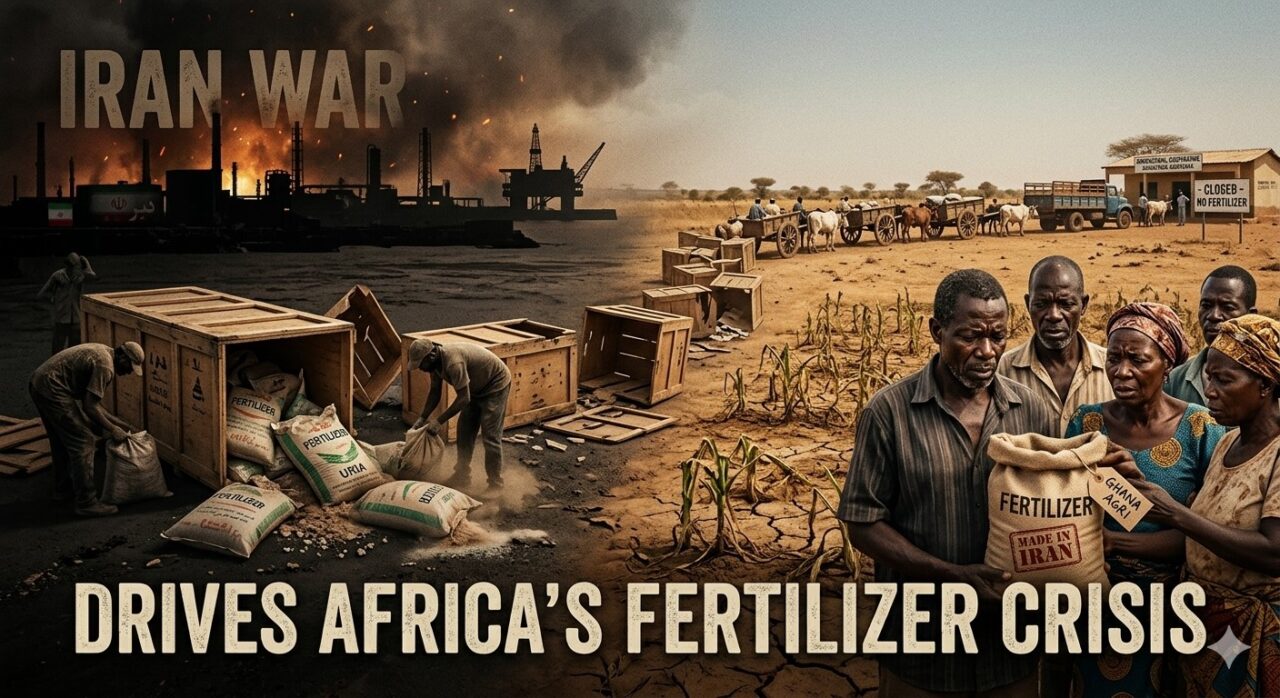
The outbreak of conflict in Iran in late February 2026 has sparked a major fertilizer crisis across Africa, threatening food production and raising fears of worsening hunger across the continent.
African countries depend on imports for an estimated 80% to 90% of their fertilizer supply, leaving many nations highly vulnerable to disruptions caused by the escalating conflict in the Middle East.
At the center of the crisis is the near shutdown of the Strait of Hormuz, one of the world’s most strategic maritime corridors. The waterway normally handles roughly one-third of global fertilizer trade, including critical exports of urea, ammonia, and phosphates from Gulf producers.
Following U.S. and Israeli military strikes linked to the conflict, shipping traffic through the Strait of Hormuz has reportedly collapsed by nearly 95%, trapping fertilizer shipments from key suppliers such as Saudi Arabia, Qatar, and Oman that are heavily relied upon by African importers.
The crisis has deepened further as several major fertilizer producers in the region suspended operations due to security concerns and infrastructure damage. Qatar halted urea production in March 2026 after Iranian missile attacks reportedly targeted gas facilities connected to the sector.
The supply shock has triggered a sharp surge in fertilizer prices worldwide. Nitrogen-based fertilizers such as urea have reportedly risen by between 60% and 70% since the conflict began. In Egypt, considered a key benchmark market for Africa, granular urea prices jumped from around $400 to nearly $700 per metric ton within weeks.
Several African economies are considered especially exposed to the crisis. Countries including Ethiopia, Kenya, Nigeria, and Ghana regularly source fertilizer inputs from Iran and neighboring Gulf states. Malawi is also facing severe vulnerability, with more than half of its fertilizer imports traditionally coming from the Gulf region.
Agricultural experts warn that soaring prices are already placing enormous pressure on African farmers, many of whom face some of the world’s highest transport and logistics costs. Analysts fear that reduced fertilizer application during the next planting season could lead to lower crop yields, failed harvests, and rising food insecurity across multiple regions.
The chief executive of Yara International has warned of “dramatic consequences” if supply disruptions continue, cautioning that a global bidding war for fertilizer supplies may emerge, leaving poorer African nations unable to compete.
While local manufacturers such as Dangote Fertilizer in Nigeria have seen a spike in demand, industry observers note that many African fertilizer plants still rely on imported raw materials from the same conflict-affected regions, limiting their ability to fully offset the growing supply gap.
Source: Omanghana