Omanghana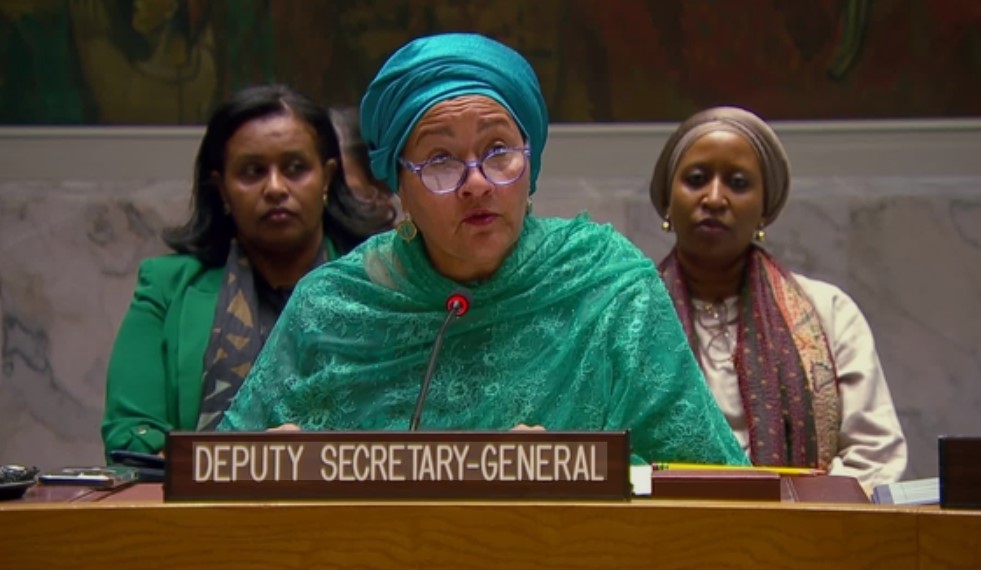
Amina Mohammed has warned that the escalating war in Iran is placing serious pressure on Africa’s food systems and contributing to rising inflation across the continent. Speaking at the 2026 World Bank/IMF Spring Meetings, she said disruptions linked to the conflict are affecting the supply of fuel and fertilizer needed for Africa’s farming seasons.
According to Mohammed, instability in the Strait of Hormuz is creating major supply chain challenges, as the waterway remains a key route for global energy and fertilizer shipments. She explained that delays and uncertainty in the area are increasing costs and threatening agricultural production in many African countries.
Mohammed described conflict-related hunger as both a strategic and existential threat. She noted that war is now the leading cause of severe food insecurity in 14 of the world’s 16 hunger hotspots, showing how armed conflict continues to destroy livelihoods, interrupt farming, and block humanitarian assistance.
She pointed to several regions already facing severe hardship. In Sudan, which she described as the world’s largest hunger crisis, about 25.6 million people are acutely food insecure. In the eastern Democratic Republic of the Congo and across the Sahel region, violence has displaced millions of people and devastated agricultural production, leaving more than 25 million people hungry.
Mohammed also highlighted Nigeria, where projections show that 52 million people in West and Central Africa could face acute food insecurity by mid-2026 if urgent measures are not taken.
She stressed that modern conflicts no longer remain isolated within borders, warning that war in one part of the world now sends shockwaves across continents. Damaged food systems, disrupted transport routes, and rising input costs often lead to higher global prices that disproportionately affect poorer nations.
During an April 6 visit to the Dangote Fertiliser plant in Nigeria, Mohammed praised its integrated industrial model as a critical pathway toward African food security. She called for policies that would help smallholder farmers gain easier access to locally produced fertilizer and other essential inputs.
Beyond immediate relief, Mohammed urged reforms to the international financial system. She called for what she described as a rebirth of multilateralism and a fairer global financial architecture that would better support developing countries facing repeated crises.
She also urged governments and international partners to prioritize humanitarian access, invest in resilient food systems, and use political influence to tackle hunger as part of wider peacebuilding efforts. According to Mohammed, addressing food insecurity is not only a humanitarian necessity but also a key step toward long-term stability.
Source: Omanghana