Omanghana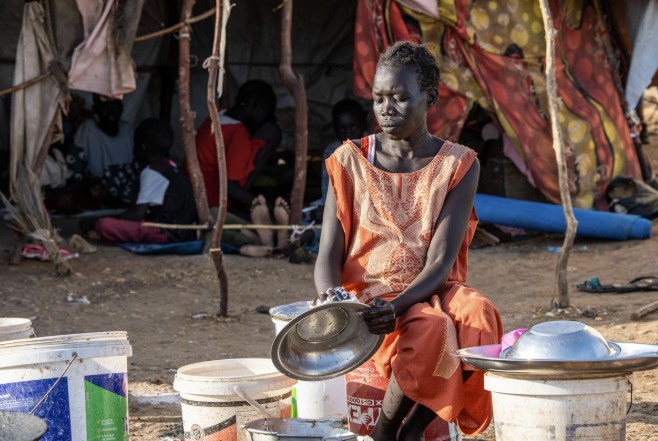
South Sudan gained independence in 2011 amid widespread optimism. However, the nation soon plunged into a brutal civil war between rival factions led by President Salva Kiir and opposition leader Riek Machar.
A 2018 power-sharing agreement brought relative calm, reinstating Machar as vice president. But over the past year, the deal has steadily unraveled, particularly in Jonglei State, where fighting between government troops and opposition-aligned forces has intensified.
According to the United Nations, renewed clashes have displaced approximately 280,000 people since December, adding to one of Africa’s most severe humanitarian crises.
The hospital in Akobo—little more than a collection of rundown buildings with missing doors and shattered windows—has just one surgeon. More than 40 young men were being treated for gunshot wounds.
In one ward, an elderly woman lay silently, her face turned away from her relatives. She had been shot in both legs, her family said, and was carried for days before they found a vehicle willing to take her to the hospital.
Children Bear the Heaviest Burden
The humanitarian toll is staggering. UNICEF reports that more than half of the displaced are children—many fleeing violence for the second or even third time in their young lives. Across Jonglei, Unity, and Eastern Equatoria states, an estimated 825,000 children are at risk of acute malnutrition.
In Bor, the capital of Jonglei State, hospitals are struggling to cope with the influx of displaced families. David Tor, acting director of Bor Hospital, said that medical supplies are rapidly running out.
“Because of the increase in the number of people who need services, we have run out of almost everything,” he said. “At a certain point, we may lose patients.”
Last May, violence reached Fangak, where the only hospital serving more than 100,000 people—run by Doctors Without Borders (MSF)—was destroyed by helicopter gunships and drones, obliterating its pharmacy and equipment.
Jonglei officials insist more supplies are on the way, though aid workers remain skeptical.
South Sudan ranks as the world’s most corrupt country, according to Transparency International. The United Nations estimates that billions of dollars in oil revenue have been siphoned off by elites, leaving the country dependent on foreign donors for up to 90 percent of its healthcare funding.
Fresh violence is now creating yet another generation of children with little hope. The World Bank estimates that 70 percent of South Sudanese children are not in school.
In a displacement camp in Lake State, south of Bor, around 35,000 newly arrived people are seeking shelter. Mothers queue daily to register their children for emergency education and psychosocial programs run by the Norwegian Refugee Council, which has already enrolled 2,000 children.
Source: Omanghana