Omanghana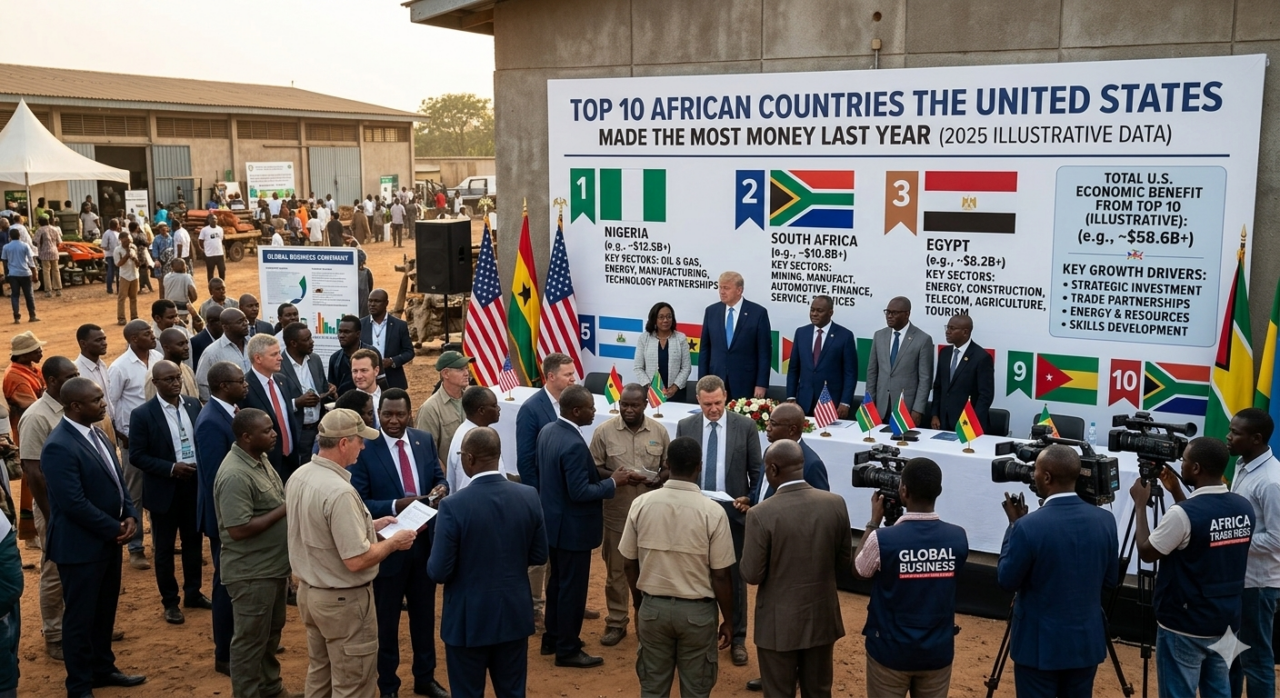
A growing shift in global trade dynamics is placing the United States agricultural interests at a critical crossroads in Africa, as China continues to rapidly expand its economic influence across the continent.
Recent trade figures highlight the widening gap between the two global powers. China’s total trade with Africa reached approximately $348 billion in 2025, more than three times the level of U.S.–Africa trade during the same period. Analysts say the development reflects both China’s aggressive market-access policies and a decline in sustained U.S. engagement in African markets.
The shift is occurring at a time when demand for agricultural products across Africa is rising quickly. Population growth, urbanization, and increasing incomes are fueling stronger demand for grains, proteins, and processed foods. However, U.S. farmers risk losing potential market opportunities as other countries move more aggressively to secure trade partnerships on the continent.
China has been expanding its presence through a combination of trade incentives, infrastructure investment, and agricultural cooperation. Beginning May 1, 2026, Beijing plans to introduce a major policy that will grant zero-tariff access on 100 percent of tariff lines for all 53 African nations that maintain diplomatic relations with China. The move is expected to significantly increase African exports to Chinese markets.
To further support agricultural trade, China has also introduced “green lane” customs channels designed to speed up the clearance process for farm products such as coffee and other commodities. Pilot programs have reportedly reduced customs processing times by about 40 percent, helping exporters move goods more efficiently.
Infrastructure development has also played a key role in strengthening China’s economic ties with Africa. Through the Belt and Road Initiative, China has financed and constructed ports, railways, irrigation systems, and other critical infrastructure projects across the continent. In addition, several agricultural technology demonstration centers have been established to promote modern farming practices and introduce Chinese-developed seed varieties.
Meanwhile, the competitive position of the United States has been affected by policy shifts and uncertainty around long-term trade arrangements. More than 80 percent of programs funded through the United States Agency for International Development were reportedly canceled in early 2025, reducing development engagement that had previously supported agricultural and economic cooperation.
The future of the African Growth and Opportunity Act (AGOA), a key trade framework that allows certain African exports to enter the U.S. market duty-free, also remains uncertain as the legislation is currently authorized only through the end of 2026.
Trade challenges have also affected American agricultural exports more broadly. In 2025, the United States recorded a widening agricultural trade deficit of approximately $41.7 billion. Part of the decline was linked to retaliatory tariffs that contributed to a sharp drop in exports to China.
At the same time, global competitors are capturing market share that once belonged to U.S. suppliers. Brazil, for example, overtook the United States as China’s largest corn supplier in 2023. U.S. agricultural organizations such as the American Soybean Association warn that a similar shift could occur in African markets if new trade agreements and long-term engagement strategies are not prioritized.
Trade comparisons further illustrate the growing imbalance. China–Africa trade totaled about $295.6 billion in 2024 before rising to roughly $348.05 billion in 2025, representing growth of around 17.7 percent. In contrast, total U.S.–Africa trade in goods and services was estimated at approximately $116.3 billion in 2025, reflecting more modest growth of about 8.3 percent compared with the previous year.
As Africa’s economies expand and food demand rises, analysts say the continent will become an increasingly important battleground for global agricultural trade. Whether the United States can maintain a competitive presence will depend largely on renewed diplomatic engagement, stronger trade frameworks, and long-term partnerships with African economies.
Source: Omanghana