Omanghana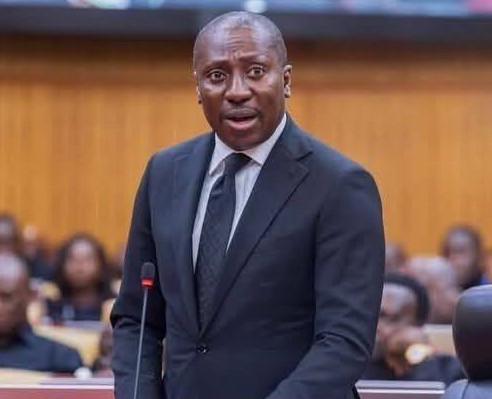
Minority Leader Alexander Afenyo-Markin has defended key flagship programs introduced under the Nana Akufo-Addo administration, describing them as central to deepening what he calls a “property-owning democracy” in Ghana.
Speaking at a lecture organized by the Institute of Economic Research and Public Policy (IERPP) on March 2, 2026, Afenyo-Markin argued that initiatives such as One District One Factory (1D1F), Planting for Food and Jobs (PFJ), and the Ghana Card were deliberate efforts to decentralize economic opportunity and transform citizens from “economic spectators” into active participants and owners in the national economy.
On the One District One Factory initiative, he said the policy helped “democratize industrial capitalism” by shifting production beyond major urban centers and integrating districts across the country into national value chains. According to him, the program has generated about 170,000 jobs across 142 districts, expanding local industrial capacity and creating employment opportunities closer to home.
Regarding Planting for Food and Jobs, Afenyo-Markin credited the program with restoring dignity to farming by providing subsidized inputs and improving access to structured markets. He said the initiative moved agriculture away from subsistence-level support and toward productivity-driven empowerment, enabling farmers to increase yields and income.
He also highlighted the importance of the Ghana Card, describing secure legal identity as the gateway to property ownership. He explained that the national identification system enables secure identity verification, promotes financial inclusion, and facilitates access to credit—key pillars of a rules-based economy where individuals can build assets and participate fully in economic life.
Responding to critics who argue that the New Patriotic Party’s property-owning democracy is elitist, Afenyo-Markin rejected the claim. He maintained that the philosophy is designed to empower ordinary Ghanaians, including farmers and market women, to become stakeholders in the economy rather than simply protecting those who already possess wealth.
He emphasized that under this model, the state’s role is to act as an enabler by creating the right environment for private-sector-led growth, while also maintaining social safety nets that support vulnerable citizens and help them enter what he described as the “human capital pipeline.”
Source: Omanghana