Omanghana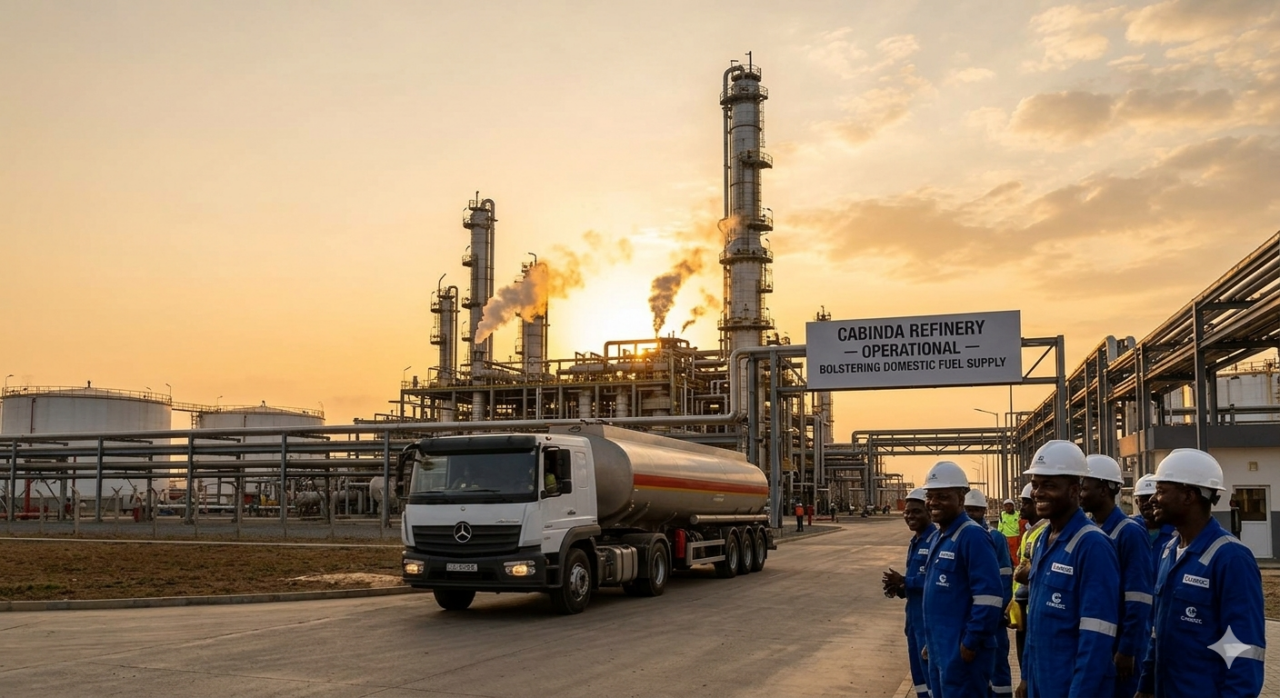
Angola has officially launched commercial operations at the Cabinda Oil Refinery, marking a historic milestone as the country’s first refinery built since independence nearly 50 years ago. The facility began fuel shipments on May 7, 2026, in a major step toward reducing the nation’s heavy dependence on imported refined petroleum products.
The refinery was developed by Gemcorp Capital, which holds a 90% stake in the project, in partnership with Angola’s state-owned oil company Sonangol. Officials say the project is central to Angola’s long-term strategy to strengthen energy security and retain more value from its crude oil production domestically.
The first operational phase of the refinery has a processing capacity of 30,000 barrels per day (bpd), which is expected to cover roughly 10% of Angola’s domestic fuel demand. The facility is currently supplying diesel to the local market while exporting heavy fuel oil and naphtha to international buyers.
Despite being one of Africa’s largest crude oil producers, Angola currently imports more than 70% of its refined fuel needs, exposing the country to global price shocks and supply disruptions. Authorities view the Cabinda refinery as a critical step toward achieving greater energy sovereignty and reducing the economic burden of fuel imports.
Developers have already outlined an ambitious expansion strategy for the project. A planned second phase, estimated to cost around $700 million, aims to double the refinery’s capacity to 60,000 barrels per day by 2027. The expansion will also include specialized refining units capable of producing gasoline and jet fuel, significantly broadening the facility’s output capabilities.
The refinery’s launch comes at a time of heightened geopolitical tensions affecting global energy markets, particularly disruptions linked to the ongoing Middle East crisis. Analysts say the timing reinforces the strategic importance of domestic refining infrastructure for African nations seeking to shield their economies from international supply volatility.
The Cabinda refinery also forms part of a broader continental push to reduce Africa’s longstanding dependence on imported refined fuel despite the continent’s vast crude oil resources. The project joins major regional initiatives such as Dangote Refinery in efforts to address Africa’s estimated $50 billion annual imbalance of exporting crude oil while importing refined petroleum products.
Officials believe the refinery could help stimulate industrial growth, create jobs, improve fuel availability, and strengthen Angola’s broader economic diversification agenda beyond crude oil exports.
Source: Omanghana