Omanghana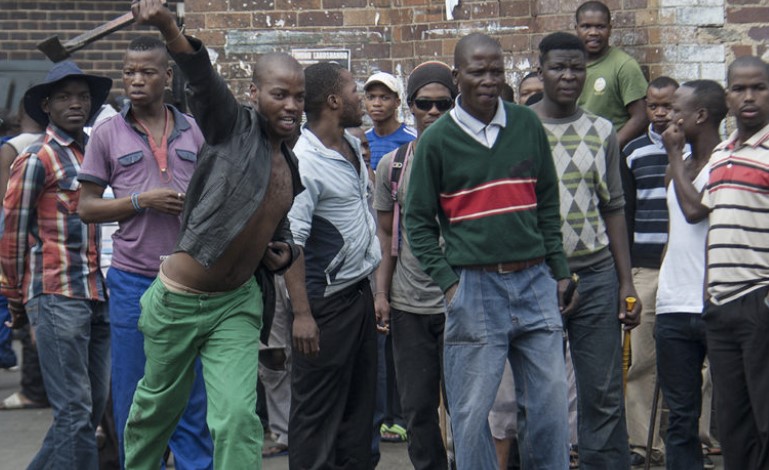
The ongoing wave of anti-immigrant violence in South Africa is increasingly being viewed as a major obstacle to the country’s economic recovery, with analysts warning that the unrest is damaging investor confidence, disrupting regional trade, and straining relations with neighboring African nations.
While groups such as Operation Dudula and March and March have blamed undocumented migrants for South Africa’s socioeconomic challenges, including persistently high unemployment, the resulting instability has generated significant economic costs for businesses, supply chains, and the country’s international reputation.
Justice Minister Mmamoloko Kubayi recently acknowledged the impact of the unrest, stating that South Africa’s “brand is hurting,” a situation that could have long-term consequences for employment, investment, and economic growth.
Pressure Mounts on South African Companies Abroad
One of the most visible effects of the tensions has been the increased scrutiny faced by South African companies operating across the continent.
Major multinational firms with extensive investments in other African markets have reportedly been forced to navigate diplomatic and commercial challenges stemming from the violence.
In the telecommunications and banking sectors, companies such as MTN and Standard Bank Group have monitored developments closely as regional concerns grow over the treatment of foreign nationals in South Africa. Some firms have also engaged with local authorities and stakeholders in affected countries to manage reputational and operational risks.
In the mining sector, calls for greater local participation in strategic projects have intensified in some jurisdictions, adding another layer of complexity for South African-linked investments.
Local Businesses and Supply Chains Face Disruption
The violence has also affected local economies by disrupting informal trade and supply networks.
Incidents of looting, intimidation, and insecurity have reportedly forced numerous small businesses—including many foreign-owned and community-based retail outlets—to suspend operations, limiting access to goods and services in some areas.
Cross-border logistics have also been impacted. Retaliatory actions in neighboring countries have included disruptions along key transport corridors, with freight movements facing delays and blockages that threaten regional commerce and exports.
Tourism and Creative Industries Under Pressure
South Africa’s service sector, including tourism, hospitality, and the creative economy, has also felt the effects of the unrest.
Reports indicate that some business engagements, cultural exchanges, and entertainment events involving clients and performers from across Africa have been postponed or canceled amid concerns about safety and diplomatic tensions.
Observers have also warned that perceptions of xenophobia could discourage skilled professionals from relocating to South Africa, potentially affecting sectors that rely on foreign expertise to address labor shortages.
Concerns for Regional Trade and Investment
The unrest has sparked broader concerns about its implications for regional economic integration, particularly under the African Continental Free Trade Area (AfCFTA).
Analysts argue that prolonged instability and negative international perceptions could discourage foreign direct investment and complicate efforts to deepen cross-border trade and cooperation. Investors often view social unrest and political uncertainty as risk factors when evaluating long-term commitments, particularly in infrastructure and industrial development.
Government Responds with Enforcement Measures
In response to growing domestic pressure, President Cyril Ramaphosa’s administration has introduced a series of enforcement initiatives aimed at strengthening immigration controls and addressing public concerns over undocumented migration.
Authorities have reported tens of thousands of arrests involving undocumented migrants during 2026 as part of these efforts. However, critics contend that enforcement actions alone may not resolve underlying regional tensions or address the broader economic and social issues contributing to the unrest.
As debates continue over immigration policy, economic reform, and public security, many observers believe restoring confidence among investors, businesses, and neighboring countries will be essential to safeguarding South Africa’s long-term economic prospects.
Source: Omanghana