Omanghana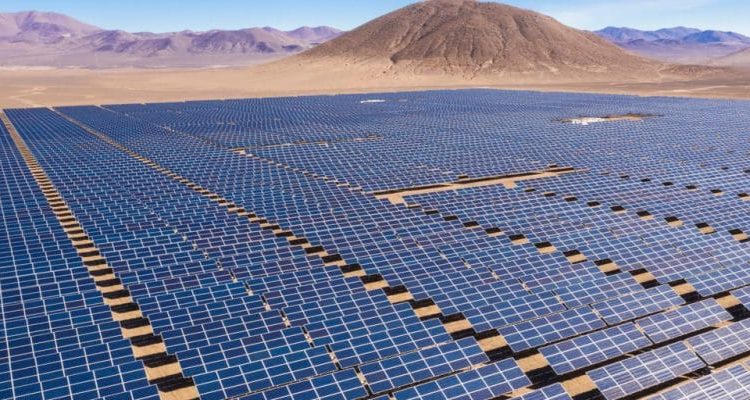
Egypt has officially overtaken South Africa to become the African country with the largest installed electricity generation capacity, marking a significant shift in the continent’s energy landscape. With total capacity now exceeding 60,000 megawatts (MW), Egypt has edged past South Africa, whose capacity is estimated to range between approximately 58,000 and 61,200 MW. This milestone reflects years of deliberate policy direction, large-scale infrastructure investment, and an aggressive push into renewable energy aimed at transforming Egypt into a regional energy powerhouse.
At the core of Egypt’s rapid ascent is a diversified energy strategy centered on solar, wind, and emerging battery storage technologies. The country has accelerated the development of utility-scale renewable projects, many of which are already contributing substantial capacity to the national grid. Among the most prominent is the Abydos Solar Plant in Aswan, a 500 MW facility that was recently integrated into the grid, further strengthening Egypt’s solar generation base. Complementing this is the Amunet Wind Project, a major wind farm that has significantly boosted renewable output, particularly in areas with strong and consistent wind resources.
Egypt is also breaking new ground with hybrid energy systems. The Obelisk Solar Battery Project, which combines solar generation with energy storage, began its first phase of operations in early 2026. This development represents a critical step toward addressing intermittency challenges associated with renewable energy, ensuring more stable and reliable electricity supply. Meanwhile, the Benban Solar Park, located near Aswan, remains a flagship project in Egypt’s energy transition. With a capacity of approximately 1,800 MW, it is one of the largest solar installations in the world and continues to serve as a cornerstone of the country’s green energy ambitions.
Building on this momentum, the Egyptian government announced in April 2026 plans to add an additional 2,500 MW of renewable energy capacity before the end of the year. These short-term gains are aligned with a broader long-term vision to double national capacity to around 120,000 MW in the coming years. Central to this strategy is a commitment to sustainability, with Egypt targeting 42 percent of its energy mix to come from renewable sources by 2030. This ambitious goal positions the country as a leader in Africa’s transition toward cleaner and more resilient energy systems.
In contrast, South Africa’s long-standing dominance in installed electricity capacity has gradually eroded. For decades, the country held the top position on the continent, supported by a robust generation fleet and early investments in large-scale infrastructure. However, its capacity growth has largely stagnated in recent years, remaining within the range of roughly 61,200 to 62,700 MW. Structural challenges, including aging infrastructure, maintenance backlogs, and slower rollout of new utility-scale projects, have limited its ability to expand at the same pace as emerging competitors like Egypt.
This shift is also evident in the solar energy market. South Africa once dominated solar panel imports across Africa, but its share has declined to below one-third as other countries, including Egypt and Nigeria, ramp up installations and invest more aggressively in renewable technologies. The changing dynamics underscore a broader redistribution of energy leadership across the continent, driven by innovation and policy alignment.
Despite losing its top position in overall capacity, South Africa retains a unique advantage as the only African nation currently operating a nuclear power plant, the Koeberg facility. This distinction, however, may not last indefinitely. Egypt is advancing its own nuclear ambitions through the El Dabaa project, which is expected to generate approximately 4,800 MW upon completion between 2029 and 2030. Once operational, this project will further solidify Egypt’s leadership in both conventional and advanced energy generation.
Egypt’s rise to the top of Africa’s electricity capacity rankings signals more than just a numerical achievement; it reflects a broader transformation in how energy is produced, distributed, and prioritized across the continent. By combining large-scale renewable investments with forward-looking policies and infrastructure development, Egypt is setting a new benchmark for energy growth in Africa, while also reshaping the competitive dynamics that have long defined the sector.
Source: Omanghana