Omanghana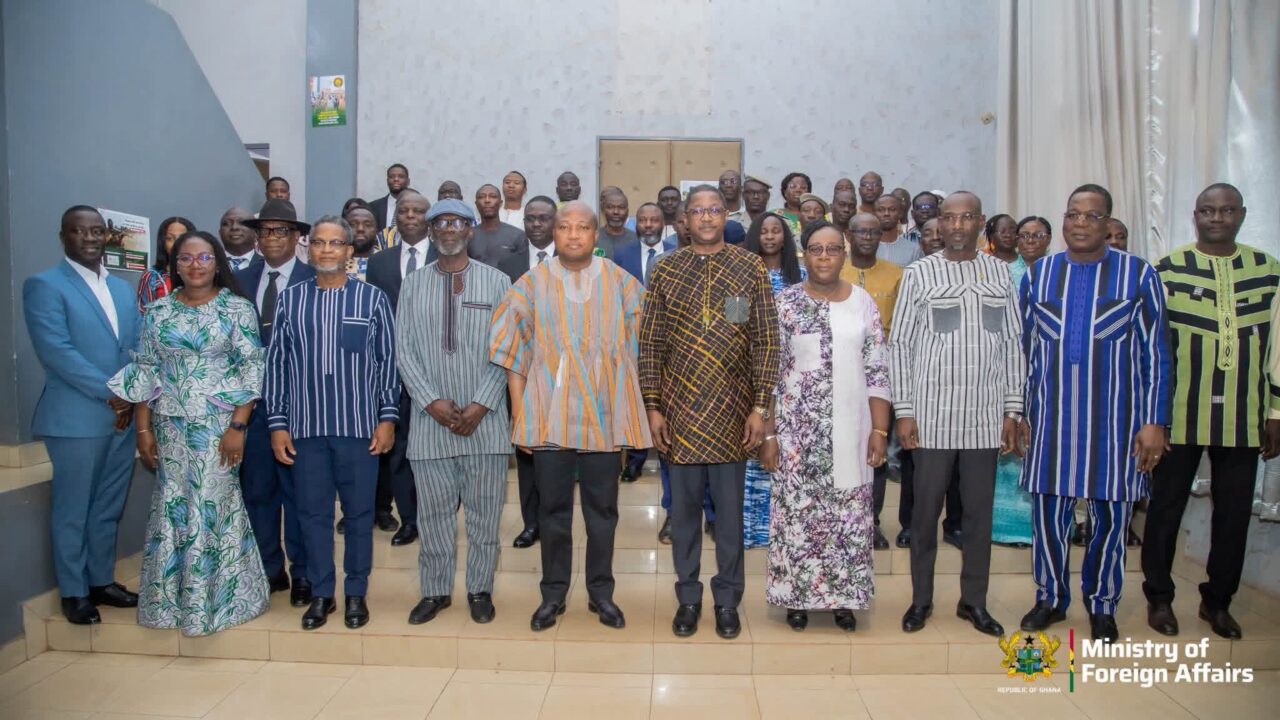
In a significant step toward stabilizing a vital West African trade and transit route, Ghana and Burkina Faso signed seven bilateral agreements aimed at restoring cooperation after a six-year pause in formal engagement.
The diplomatic reset directly targets rising insecurity and logistical bottlenecks along the strategic Tema–Ouagadougou corridor, a key artery linking Ghana’s largest seaport to landlocked Burkina Faso and the wider Sahel.
Reviving Cooperation After Six Years
The agreements were signed in Ouagadougou by Ghana’s Minister for Foreign Affairs, Samuel Okudzeto Ablakwa, and senior Burkinabè government officials.
Officials from both countries described the moment as a turning point, restoring structured cooperation at a time when cross-border trade, migration, and security threats have become increasingly intertwined.
Streamlining Trade and Transport
Several of the agreements focus on removing long-standing administrative and regulatory barriers that have slowed the movement of goods and people:
-
Mutual Recognition of National Driver’s Licenses
This measure is expected to eliminate bureaucratic delays for commercial drivers, reducing transit times and costs along the Tema–Ouagadougou route. -
Transport and Road Transit Agreement
The deal harmonizes conflicting transport regulations and axle-load rules that have historically disrupted regional commerce.
Together, these measures aim to strengthen Ghana’s role as a logistics gateway for Burkina Faso while improving supply chain reliability for fuel, food, and industrial goods.
Strengthening Border Governance
To address governance and coordination challenges in frontier areas, the two countries also adopted:
-
Framework on Cross-Border Cooperation
Designed to improve collaboration between local authorities and border communities, particularly in regions affected by insecurity and informal trade. -
Periodic Consultation Mechanism for Border Authorities
This institutionalizes regular dialogue between district-level border officials, enabling quicker resolution of disputes and operational issues. -
Joint Commission to Reaffirm the International Boundary
A formal mechanism to secure territorial integrity and clarify the approximately 500-kilometer shared border, reducing the risk of future disputes.
Coordinated Disaster and Humanitarian Response
Recognizing shared environmental risks, Ghana and Burkina Faso signed an agreement on Disaster Prevention and Humanitarian Management.
The framework focuses on coordinated emergency responses to recurring natural disasters, including flooding linked to the Bagré Dam, whose spillovers have previously affected communities on both sides of the border.
Joint Stand Against Drugs and Organized Crime
The seventh agreement establishes a joint anti-narcotics framework, committing both governments to combat the cultivation, trafficking, and distribution of illicit drugs.
Officials declared their intention to treat both countries as a “no-drug zone”, emphasizing youth protection, public health, and the link between narcotics trafficking and broader criminal networks operating across the Sahel.
Security Imperatives Behind the Deal
The timing of the agreements carries particular weight. The renewed partnership follows a recent terrorist attack in Titao, which claimed the lives of several Ghanaian traders.
That incident underscored the growing spillover of militant violence from the Sahel into commercial corridors and civilian trade routes, heightening calls for coordinated security responses.
While the agreements are largely civilian and administrative in nature, officials acknowledged that improved border management and cooperation are essential components of a broader strategy to counter extremist groups operating in the region.
A Strategic Corridor Under Protection
The Tema–Ouagadougou corridor is one of the most important trade routes in West Africa, supporting billions of dollars in annual commerce and serving as a lifeline for Burkina Faso’s imports and exports.
By restoring structured dialogue and legal frameworks, Ghana and Burkina Faso aim to safeguard the corridor against insecurity, inefficiency, and disruption—while sending a signal of renewed regional solidarity at a time of mounting geopolitical and security pressures in the Sahel.
Looking Ahead
Implementation will be the real test. Officials from both countries say technical committees will be activated immediately to operationalize the agreements, with progress reviews expected later in the year.
If successful, the reset could serve as a model for pragmatic cooperation between coastal and Sahelian states navigating the complex intersection of trade, security, and regional integration in West Africa.
Source: Omanghana