Omanghana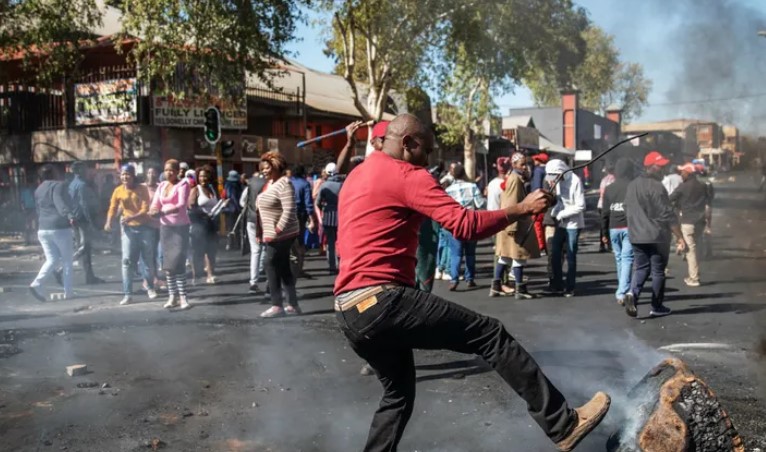
The Government of Ghana has begun urgent arrangements to evacuate its citizens from South Africa following a renewed wave of xenophobic violence and anti-immigration protests targeting foreign nationals across parts of the country.
The move comes amid growing fears among African migrant communities after several incidents of harassment and assault were circulated widely on social media, including a viral attack on a Ghanaian citizen that sparked outrage both locally and internationally.
As part of the emergency response, Ghana’s Ministry of Foreign Affairs facilitated the repatriation of Emmanuel Akowuah Asamoah, a Ghanaian legally residing in South Africa who was seen being harassed in a widely shared video. He arrived in Accra on May 5, 2026, accompanied by Ghana’s High Commissioner to South Africa.
Foreign Affairs Minister Samuel Okudzeto Ablakwa announced that the government is extending state-funded evacuation support to any Ghanaian citizen in South Africa who feels unsafe or fears for their life amid the escalating tensions.
The situation has also triggered concern across the continent, with several African countries including Kenya, Malawi, Lesotho, and Zimbabwe issuing safety advisories urging their nationals in South Africa to remain indoors and exercise extreme caution.
In a further diplomatic escalation, Ghana formally petitioned the African Union Commission on May 6, 2026, requesting that the recurring xenophobic attacks be placed on the agenda of the upcoming Mid-Year Coordination Meeting scheduled to take place in Egypt in June.
The Ghanaian government had earlier summoned South Africa’s acting high commissioner on April 23, 2026, to lodge a formal protest over what it described as the “dehumanizing” treatment of Ghanaian nationals.
According to Ghana’s petition to the African Union, the repeated attacks violate the African Charter on Human and Peoples’ Rights and threaten continental integration efforts such as the African Continental Free Trade Area initiative.
The unrest in South Africa has largely been fueled by anti-immigrant groups blaming foreign nationals for worsening economic hardships, including unemployment levels that remain above 30 percent, as well as rising crime rates. Demonstrations and anti-foreigner protests have been reported in major cities including Durban, Cape Town, and East London.
South African authorities have since condemned the attacks and vowed to crack down on vigilante groups, insisting that xenophobic violence has no place in the country’s democratic society.
Source: Omanghana