Omanghana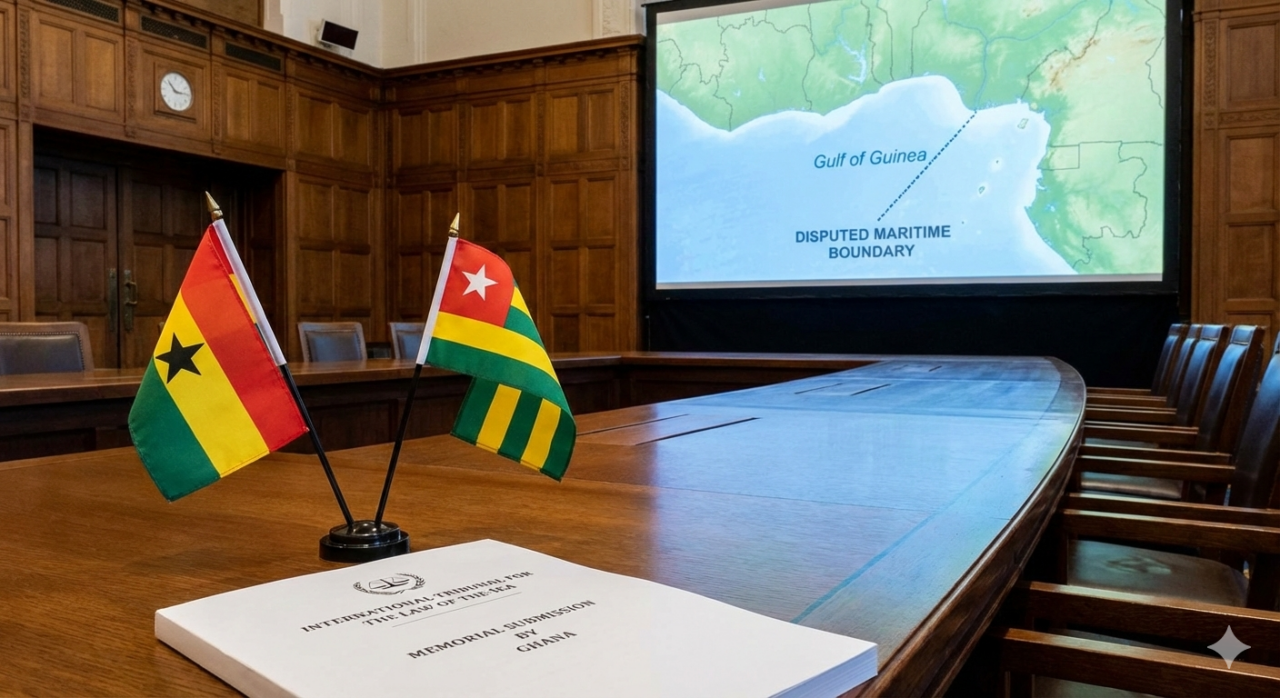
Ghana has formally notified Togo of its decision to seek international arbitration to resolve a long-standing maritime boundary dispute between the two neighboring countries in the Gulf of Guinea.
The move marks a significant shift from prolonged diplomatic engagement to a legal resolution under international law, following years of unsuccessful negotiations aimed at defining the offshore boundary separating the two nations.
According to Ghanaian authorities, the case will be pursued under the United Nations Convention on the Law of the Sea (UNCLOS), the globally recognized legal framework governing maritime boundaries, navigation rights, and the use of ocean resources.
UNCLOS provides mechanisms for peaceful dispute resolution, including arbitration and adjudication, allowing states to seek binding decisions when bilateral talks fail.
Ghana’s decision follows nearly eight years of bilateral negotiations that did not result in a mutually accepted maritime boundary. Officials say continued ambiguity over the boundary has increased the risk of institutional friction and potential incidents at sea involving state agencies and private operators.
In a statement, the Government of Ghana emphasized that arbitration is intended to prevent further escalation while ensuring a definitive and legally binding outcome acceptable under international law.
The disputed maritime zone is considered strategically vital due to its potential for offshore oil and gas exploration, rich fishing grounds, and possible mineral deposits beneath the seabed. These resources are central to long-term economic planning for both countries, particularly as West Africa seeks to expand energy production and protect marine livelihoods.
Uncertainty over jurisdiction has also posed challenges for investors and energy companies, who typically require clear legal boundaries before committing to offshore projects.
Experts from the Ghana Boundary Commission have indicated that the arbitration process could take up to four years before a final ruling is delivered. The timeline reflects the complexity of maritime cases, which often involve extensive legal arguments, technical mapping, and historical evidence.
Despite the lengthy process, Ghanaian officials maintain that arbitration offers the most durable solution to a dispute that has resisted diplomatic resolution.
Lessons From Ghana’s Past Maritime Case
Ghana’s approach mirrors its earlier maritime boundary dispute with Côte d’Ivoire, which was successfully resolved in 2017 through the International Tribunal for the Law of the Sea (ITLOS). That ruling provided legal certainty and helped stabilize offshore energy development between the two countries.
Government sources say that experience has strengthened Ghana’s confidence in international legal mechanisms as an effective means of resolving complex boundary disputes peacefully.
Toward a Final Resolution
As the arbitration process begins, both Ghana and Togo are expected to continue cooperation in accordance with international law while awaiting a final determination. A binding ruling would not only clarify maritime jurisdiction but also reduce tensions and create a more predictable environment for economic activity in the Gulf of Guinea.
Source: Omanghana