Omanghana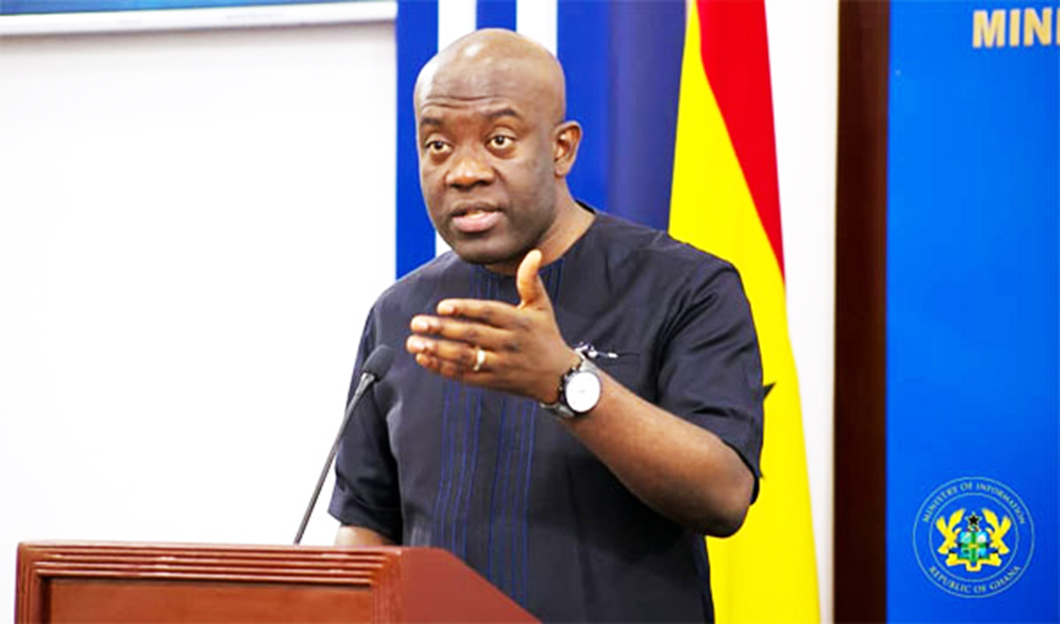
Kojo Oppong Nkrumah, serving as the Ranking Member of Parliament’s Economy and Development Committee, has declared the Bank of Ghana “policy insolvent” following the release of its 2025 Annual Report and Financial Statements, intensifying debate over the country’s economic management.
Speaking at a press conference on May 3, 2026, Oppong Nkrumah alleged that the central bank is “operating on borrowed time,” accusing it of understating its true financial position through what he described as “creative accounting” and the sale of gold reserves. His remarks directly challenge the official figures published by the Bank of Ghana on May 1.
According to the central bank, Ghana recorded an operating loss of GH¢15.63 billion for the 2025 financial year. However, Oppong Nkrumah disputes this figure, claiming the actual operating loss stands at GH¢34.9 billion. He further argued that when one-off asset sales—particularly gold—are excluded, the country’s comprehensive loss rises sharply to approximately GH¢44 billion.
The Minority Caucus also alleges that the Bank of Ghana sold nearly half of the nation’s gold reserves, generating about GH¢9.6 billion in income to offset mounting losses. Meanwhile, the bank’s own report shows total negative equity increasing significantly to GH¢93.82 billion in 2025, up from GH¢58.62 billion the previous year.
In response, the Bank of Ghana and the Parliamentary Majority have firmly rejected the opposition’s claims, defending both the figures and the broader economic strategy. Officials argue that the reported losses reflect the necessary cost of stabilizing the economy during a challenging period. They point to a sharp decline in inflation—from 23.8% at the end of 2024 to 5.4% by the close of 2025—as evidence that policy measures are working.
The central bank also emphasized that operating with negative equity is not uncommon for central banks globally and maintained that adjustments involving gold reserves were standard measures aimed at supporting liquidity and financial stability.
Oppong Nkrumah has additionally raised concerns about what he describes as the politicization of the institution, criticizing the handling of the report’s release. He claims the document was first presented to the National Democratic Congress before being submitted to Parliament, a move he described as troubling for the independence of the central bank.
The dispute highlights growing tensions over Ghana’s economic direction, as policymakers and political actors continue to clash over the interpretation of key financial indicators and the long-term sustainability of current strategies.
Source: Omanghana