Omanghana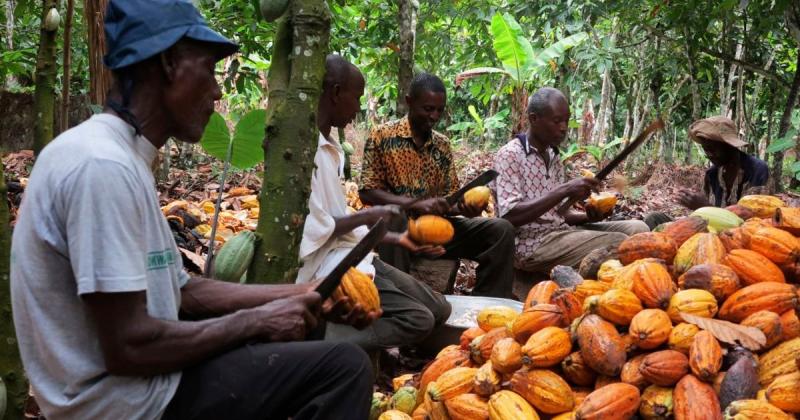
Ghana’s cocoa sector is facing a deep crisis in early 2026 as a dramatic collapse in global cocoa prices ripples through the industry, leaving farmers unpaid, warehouses filled with unsold beans, and authorities scrambling to stabilize the market. The downturn comes after global cocoa prices surged to historic highs in 2024, peaking at more than $12,000 per metric tonne before plunging sharply over the past year.
As of March 2026, international cocoa prices have dropped to roughly $3,200 to $3,400 per metric tonne, representing a decline of nearly 75 percent from the 2024 peak. The steep fall has forced Ghanaian authorities to revise domestic pricing policies in an attempt to remain competitive on the international market.
In February 2026, the Ghana Cocoa Board (COCOBOD) announced a nearly 30 percent reduction in Ghana’s farmgate price for cocoa. The new producer price was set at GH₵41,392 per metric tonne, equivalent to about $3,580. The move was intended to align Ghana’s fixed pricing system with prevailing global market conditions and restore interest from international buyers.
Despite the price adjustment, the sector continues to struggle with a range of structural and market challenges. Ghana’s cocoa production is projected to rise in the 2025/2026 crop season, with output expected to reach about 650,000 metric tonnes—an increase of roughly eight percent compared to the previous year. Improved weather conditions and better yields across West Africa have contributed to this recovery in production.
However, the rebound in output has coincided with a global shift from supply shortages to a potential surplus. Analysts estimate that the 2025/2026 cocoa season could produce a worldwide surplus of between 300,000 and 400,000 tonnes after several years of deficits. The additional supply has placed further downward pressure on prices and complicated Ghana’s efforts to sell its cocoa.
Demand has also weakened following the extreme price spikes experienced in 2024. Major chocolate manufacturers such as The Hershey Company and Mondelez International responded to the earlier surge in cocoa costs by shrinking chocolate bar sizes and substituting cocoa butter with alternative fats. These adjustments reduced demand for raw cocoa beans and contributed to the current market slowdown.
One of the most pressing problems facing Ghana’s cocoa industry has been the pricing mismatch between domestic farmgate rates and global market values. Before the February price reduction, Ghana’s fixed producer price was estimated to be about 40 percent higher than international market levels. As a result, many global traders refused to purchase Ghanaian beans because doing so would have meant selling at a loss.
The pricing gap led to a buildup of unsold cocoa stocks across the country. Farmers have reported delays in payments dating back to November 2025, with roughly 50,000 tonnes of cocoa reportedly sitting in warehouses without buyers. In some areas, stored beans have begun to deteriorate, compounding the financial difficulties faced by farmers.
The prolonged crisis is also affecting livelihoods in cocoa-growing communities. Some farmers, struggling with unpaid deliveries and declining incomes, are reportedly leasing their land to illegal gold miners or turning to sand mining to earn quick cash. These activities can permanently damage the soil, threatening the long-term sustainability of cocoa farming in affected regions.
Cross-border trade dynamics have also shifted. In previous years, some farmers smuggled cocoa beans out of Ghana into neighboring countries in search of higher prices. However, Ghana’s revised farmgate rate—now estimated at $2.10 per kilogram—is currently higher than the mid-crop producer price in Ivory Coast, which ranges between roughly $1.45 and $1.81 per kilogram. This price difference could reverse smuggling flows and encourage beans to remain within Ghana.
In response to the crisis, COCOBOD has introduced new financing measures to stabilize the sector. The board recently launched a domestic cocoa bond aimed at raising funds to purchase beans from farmers and address an estimated GH₵32 billion debt burden within the industry.
The government is also proposing legislation designed to protect cocoa farmers from future market shocks. The proposal would guarantee farmers at least 70 percent of the Free-on-Board (FOB) price of cocoa exports, ensuring that producers receive a greater share of global market value.
At the same time, policymakers are renewing efforts to expand domestic cocoa processing. Ghana aims to process more than half of its raw cocoa beans locally rather than exporting them in unprocessed form. The strategy is intended to move the country further up the value chain, increase export earnings, and reduce vulnerability to volatile global commodity prices.
As the world’s second-largest cocoa producer, Ghana’s ability to stabilize its cocoa industry will be critical not only for the national economy but also for the livelihoods of hundreds of thousands of farming families who depend on the crop for their income.
Source: Omanghana