Omanghana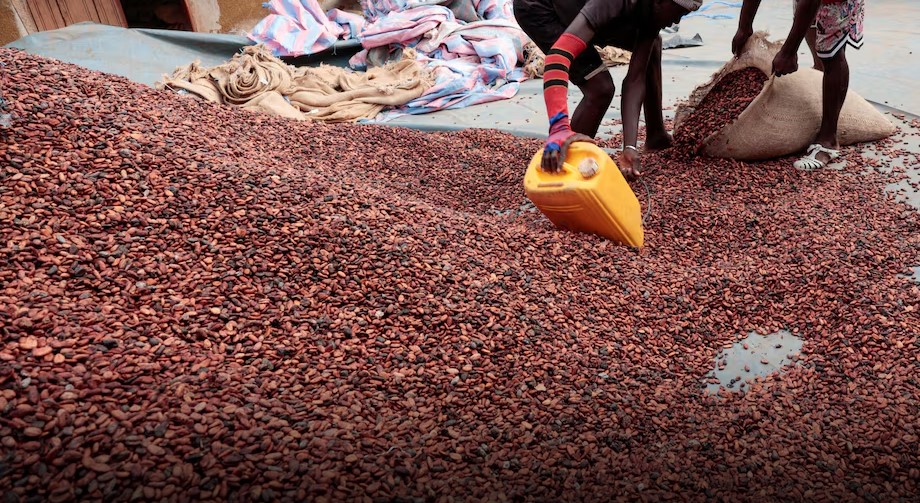
Ghana’s non-traditional export sector has recorded a historic milestone, with earnings reaching $3.28 billion in 2025, according to the Ghana Export Promotion Authority (GEPA). This marks a significant 53 percent increase from the $2.15 billion recorded in 2024, highlighting a major shift in the country’s export strategy toward value addition and industrial processing.
A key driver of this growth has been the expansion of processed cocoa products, which now dominate Ghana’s non-traditional export portfolio. Cocoa paste emerged as the top-performing export, generating $789.3 million, representing a 70.97 percent year-on-year increase. Cocoa butter followed closely, recording an even more dramatic surge of 120.18 percent to reach $635.7 million. These gains reflect a deliberate move away from exporting raw cocoa beans toward higher-value processed products.
The data also points to a broader industrial transition within the export sector. Value-added goods now account for more than 83 percent of total non-traditional export earnings, signaling the success of policies aimed at reducing reliance on raw commodity exports. This shift is expected to help stabilize Ghana’s economy by shielding it from the volatility of global commodity prices.
The top ten non-traditional export products, largely anchored by cocoa and its derivatives, contributed about 65.48 percent of the total export revenue. This concentration underscores the central role of cocoa processing in Ghana’s current export growth strategy.
Beyond cocoa, other sectors are also contributing to the upward trend. The cashew industry generated approximately $219 million, while the shea sector recorded a combined $260 million from exports of shea nuts and shea oil. These industries continue to play an important role in diversifying Ghana’s export base and supporting rural livelihoods.
Ghana’s growing competitiveness within the African market is also evident. Intra-African trade now accounts for 30.36 percent of non-traditional export earnings, reflecting increased participation in regional trade under the African Continental Free Trade Area (AfCFTA).
To sustain this growth, the government is rolling out a new financing model for the 2026/27 cocoa season. The initiative will rely on domestic cocoa bonds instead of foreign syndicated loans, with the goal of boosting local processing capacity to 50 percent. This approach is expected to deepen local industry participation while strengthening the country’s economic resilience.
Overall, the record-breaking performance of Ghana’s non-traditional exports signals a strong shift toward industrialization and value addition, positioning the country for more sustainable and diversified economic growth in the years ahead.
Source: Omanghana