Omanghana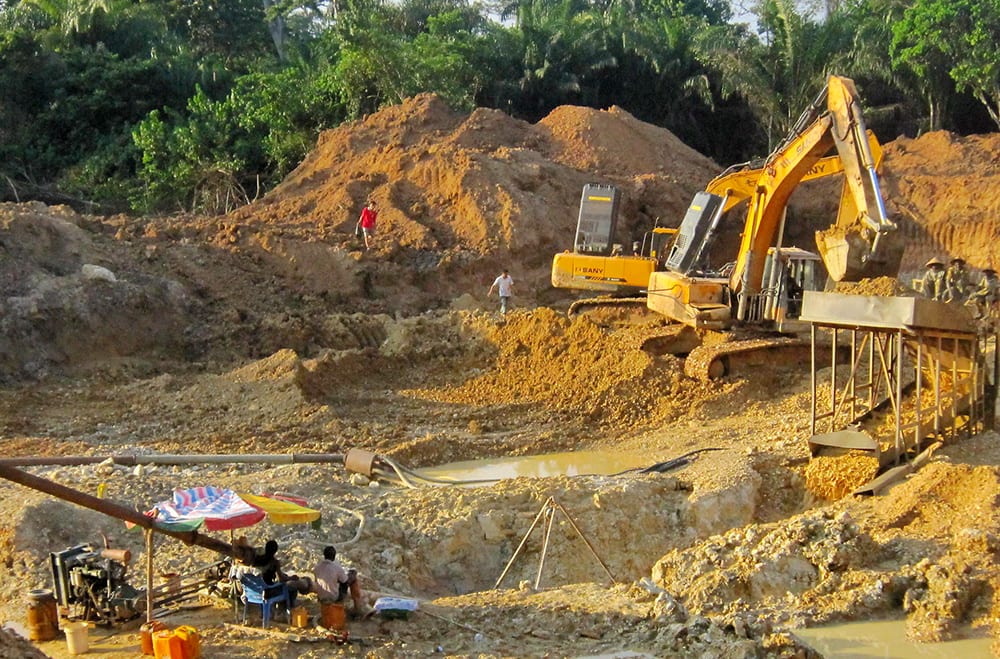
A combination of unfulfilled commitments to host communities, the environmental devastation caused by illegal mining—commonly known as galamsey—and sweeping legislative reforms has unsettled both citizens and international investors.
The growing concern was underscored by former Chief Justice Sophia Akuffo, who cautioned that “trust once lost is hard to get back,” particularly in the context of government mining agreements and financial commitments. Her remarks reflect a broader national debate about transparency, accountability, and sustainability in one of Ghana’s most critical economic sectors.
Mining has long been a pillar of Ghana’s economy, contributing significantly to export earnings, employment, and government revenue. However, mounting controversies have created a widening trust deficit between the government, mining companies, affected communities, and global investors.
Many communities in mining regions report deep dissatisfaction. Residents cite:
-
Unfulfilled job creation pledges
-
Inadequate or delayed compensation for displaced landowners
-
Limited infrastructure development despite years of resource extraction
-
Poor consultation processes before project approvals
In areas rich in gold, bauxite, and emerging critical minerals, expectations of prosperity have often clashed with lived realities. This perception gap has fueled social tension and skepticism toward both mining companies and regulators.
Illegal small-scale mining—galamsey—has intensified environmental degradation across the country. Estimates suggest that up to 60% of Ghana’s water bodies have been polluted by mining activities, particularly through mercury contamination and sedimentation.
The environmental fallout includes:
-
Destruction of forest reserves
-
Contamination of major rivers
-
Loss of arable land
-
Increased health risks in mining communities
What began as an economic survival activity for many has evolved into what some analysts describe as a “political and ecological storm,” threatening biodiversity, agriculture, and water security.
Public confidence has further eroded amid allegations that influential political actors have either participated in or shielded illegal mining syndicates. Investigative reports have raised concerns about the selective enforcement of mining bans and regulatory loopholes.
The perception that powerful interests operate above the law has deepened public cynicism and reinforced calls for independent oversight and stricter enforcement.
Recent and proposed reforms to the mining framework have introduced additional uncertainty for international investors.
Key proposals include:
-
Abolishing long-term stability agreements
-
Doubling royalty rates
-
Capping mining leases at 15 years
-
Decentralizing the issuance of mining licenses
The Ghana Chamber of Mines has warned that abrupt changes to fiscal and regulatory terms could “stifle growth” and “deter investment,” especially at a time when Ghana is competing with other African jurisdictions for capital.
While the government argues that reforms are necessary to ensure fairer national benefits, investors are seeking predictability and policy consistency.
In response to mounting concerns, authorities have rolled out a series of initiatives aimed at restoring credibility and strengthening governance.
The Community Mining Scheme was introduced to formalize small-scale mining and create legal employment pathways in local areas. By decentralizing access to concessions, the government aims to curb illegal operations and empower communities.
However, critics argue that without strict monitoring, the scheme risks becoming a cover for continued illegal activity.
Proposed amendments to the Minerals and Mining Act are intended to increase transparency, reduce excessively long lease periods, and enhance local oversight. Supporters say these changes could rebalance power between multinational firms and host communities.
Skeptics, however, caution that reform must be carefully phased to avoid undermining investor confidence.
As global demand for critical minerals grows—particularly lithium for electric vehicle batteries—Ghana is positioning itself as a responsible producer. The new Green Minerals Policy aims to ensure that emerging sectors, especially lithium development, follow higher environmental and value-addition standards than earlier gold operations.
The policy emphasizes:
-
Local processing and beneficiation
-
Environmental safeguards
-
Stronger revenue-sharing mechanisms
-
Transparent licensing processes
This approach seeks to avoid repeating past governance gaps while positioning Ghana as a credible player in the global energy transition supply chain.
Beginning in 2025, new financial directives require:
-
Government contracts to be priced in local currency
-
Mining companies to sell 20% of their gold output to the state
These measures are designed to strengthen foreign exchange reserves and stabilize the Ghanaian Cedi. While some see this as prudent macroeconomic management, others worry about the impact on corporate cash flow and investment planning.
Ghana stands at a pivotal moment. The country’s mineral wealth remains vast, and global demand for gold and critical minerals is strong. Yet rebuilding trust will require more than policy announcements—it will demand consistent enforcement, community engagement, environmental restoration, and regulatory predictability.
As former Chief Justice Sophia Akuffo’s warning suggests, restoring confidence in Ghana’s mining sector will take time. Transparency, accountability, and shared economic benefits will ultimately determine whether the sector can move from controversy to renewed credibility.
Source: Omanghana