Omanghana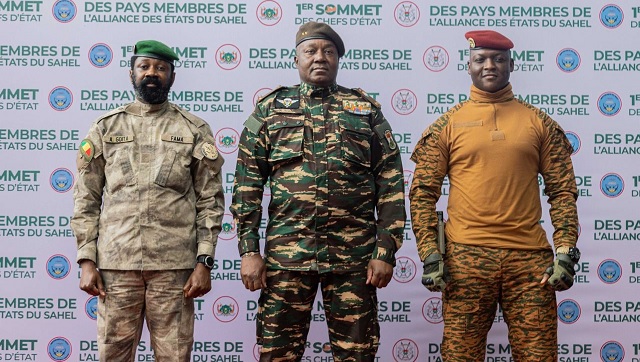
Tensions within the Sahel region have escalated after the foreign ministers of Niger and Mali leveled serious accusations against neighboring countries during a high-level security forum in Senegal, alleging that some states are actively sponsoring terrorism.
Mali’s Foreign Minister, Abdoulaye Diop, claimed that certain neighboring countries—though not named—are harboring and supporting terrorist groups or providing safe haven to hostile forces. He further alleged that foreign powers outside the region are also involved, pointing specifically to suspected activities by Ukrainian mercenaries operating in the Sahel.
Niger’s Foreign Minister, Bakary Yaou Sangare, echoed similar concerns, arguing that several countries that claim to be partners in counterterrorism efforts are in fact contributing to the problem. He accused these actors of fueling, financing, and sustaining terrorism, and explicitly named France as one of the nations involved.
The strong statements reflect growing divisions between the Alliance of Sahel States (AES)—made up of Mali, Niger, and Burkina Faso—and the wider regional bloc, ECOWAS. The rift has deepened in recent months amid disagreements over governance, security strategies, and foreign alliances.
Reinforcing this divide, Minister Diop stated that the AES countries’ decision to withdraw from ECOWAS is final, despite calls for renewed engagement from ECOWAS Chairman, Julius Maada Bio. His remarks signal a firm stance by the alliance to chart an independent path on regional security and political cooperation.
Despite the political separation, the AES countries indicated a willingness to maintain limited cooperation with ECOWAS on technical matters such as trade within the common market and the free movement of people. This suggests that while political ties have frayed, some level of practical engagement may continue.
The forum also highlighted strained bilateral relations within the region, particularly involving Mauritania, where recent border incidents have added another layer of complexity to an already fragile security environment. These tensions continue to challenge coordinated efforts to combat terrorism across the Sahel.
Overall, the accusations mark a significant escalation in rhetoric and underscore the deepening geopolitical and security fractures in West Africa, raising concerns about the future of regional cooperation in addressing the ongoing threat of extremism.
Source: Omanghana