Omanghana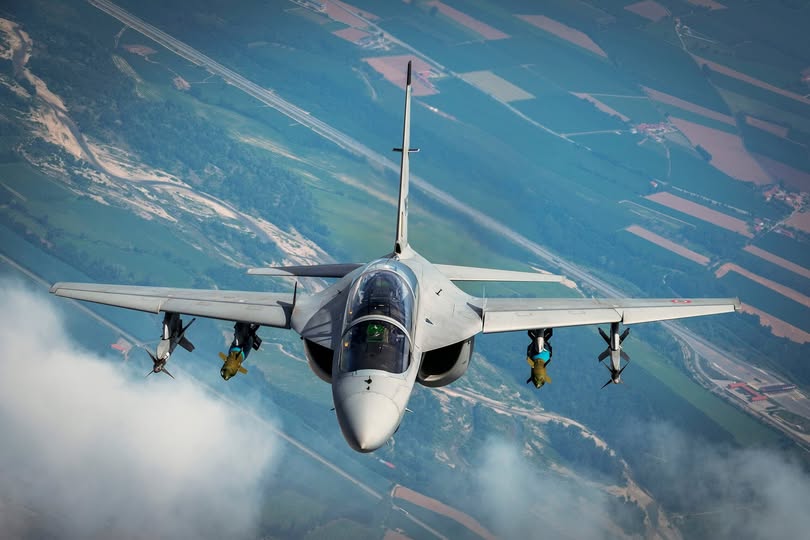
Nigeria has moved to accelerate the acquisition of 46 advanced military aircraft as part of a sweeping effort to modernize its air force and narrow the capability gap with Africa’s dominant air powers in the north.
The Nigerian Air Force (NAF) confirmed in February 2026 that it is fast-tracking procurement plans first unveiled in July 2025. The modernization drive is aimed primarily at strengthening Nigeria’s response to insurgency, terrorism, banditry, and internal security threats, while gradually enhancing its broader airpower profile.
Regional defense analysts view the move as the most ambitious air force expansion in West African history.
Details of the 46-Aircraft Procurement Plan
The acquisition package is being executed with technical and logistical support from partners in Italy, the United States, and Türkiye, reflecting Nigeria’s increasingly diversified defense partnerships.
The planned platforms include:
-
24 M-346 Fighter Ground Attack Aircraft
Manufactured by Leonardo S.p.A. of Italy, the M-346 jets are configured for both advanced pilot training and light combat operations, with air-to-air and air-to-ground capabilities. -
12 AH-1Z Viper Attack Helicopters
Supplied by the United States, these helicopters are designed to enhance close-air support, precision strike missions, and battlefield dominance in high-threat environments. -
10 AW-109 Trekker Helicopters
Italian-made multipurpose helicopters intended for combat support, tactical airlift, reconnaissance, and medical evacuation (MEDEVAC) operations.
Closing the Gap with North Africa’s Air Powers
Despite the scale of the expansion, Nigeria continues to trail the continent’s leading air forces in the north—particularly Egypt and Algeria—which operate significantly larger and more diversified fleets.
Key comparisons include:
-
Fleet Size
Egypt operates more than 1,000 military aircraft, while Algeria fields over 600 platforms. Nigeria’s total fleet, even after the new acquisitions, is estimated at approximately 159 aircraft as of 2026. -
Operational Doctrine
Egypt and Algeria maintain fleets optimized for conventional warfare, deterrence, and regional power projection. Nigeria’s modernization, by contrast, remains largely counter-insurgency-focused, reflecting ongoing domestic security challenges. -
Continental Rankings
According to Global Firepower, Egypt and Algeria rank as Africa’s top two air powers in 2026, with Nigeria typically placing third or fourth depending on operational readiness and inventory.
Delivery Timeline and Support Infrastructure
Deliveries are already underway:
-
Aircraft Deliveries
The first batch of M-346 jets is expected to arrive in early 2025, with full delivery of all 46 aircraft scheduled for completion by mid-2026. -
Maintenance and Sustainability
Nigeria’s Chief of the Air Staff, Air Marshal Sunday Kelvin Aneke, has stressed the importance of establishing a domestic maintenance and logistics hub to ensure long-term operational readiness, particularly for the M-346 fleet.
Defense experts note that maintenance capacity—not just acquisition—will determine the long-term effectiveness of Nigeria’s airpower ambitions.
A Strategic Shift for West Africa
While Nigeria’s air force modernization does not yet rival the heavyweights of North Africa, it represents a significant strategic leap for West Africa. The acquisitions are expected to improve rapid response, intelligence-led operations, and joint force coordination, especially in counter-terrorism campaigns.
Analysts say the program positions Nigeria as the undisputed airpower leader in West Africa, while laying the groundwork for a gradual transition toward more conventional deterrence capabilities in the future.
Source: Omanghana