Omanghana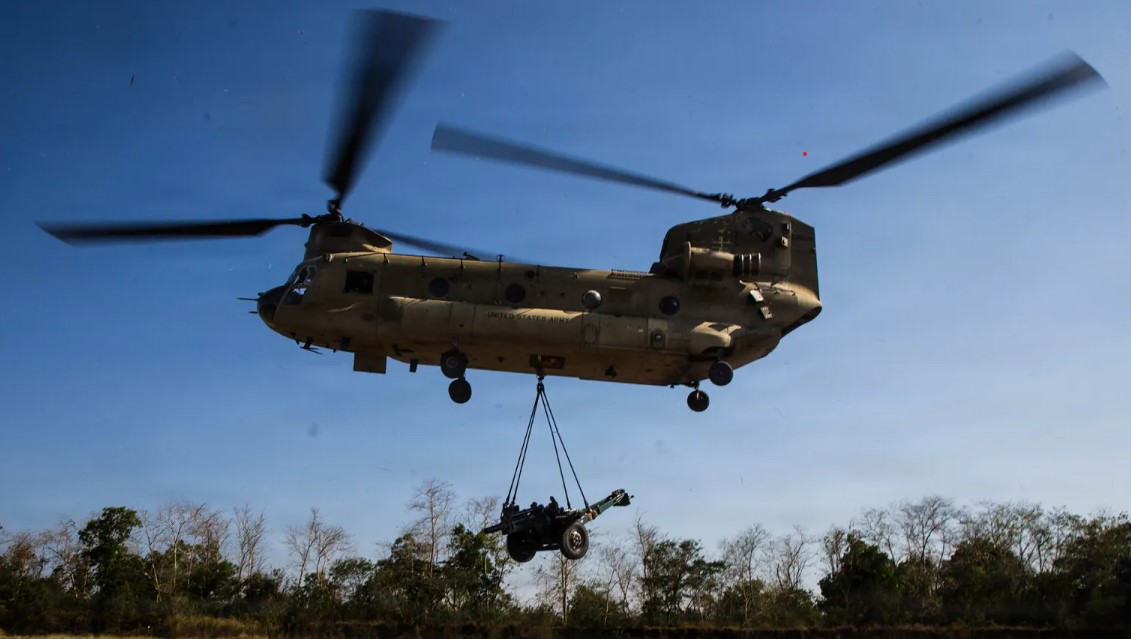
A United States Army CH-47F Chinook has successfully completed its first fully automated approach and landing without any pilot input, marking a major milestone in the military’s push toward autonomous aviation. The achievement was announced by Boeing in April 2026.
The test flight used Boeing’s Approach-to-X software, combined with an upgraded Digital Automated Flight Control System. Together, these technologies allow the aircraft to handle the most complex phase of flight—landing—without direct control from the pilot.
During the operation, human pilots still play a supervisory role by setting key parameters such as the landing zone, approach path, and target altitude. Once those inputs are defined, the system takes over, managing the descent and executing the landing with high precision.
Since testing began in January 2026, the autonomous system has completed more than 150 approaches, achieving an average landing accuracy within five feet of the intended target. This level of precision highlights the potential for safer and more reliable operations, particularly in difficult environments.
The primary goal of the technology is not to replace pilots but to reduce their workload. By automating routine yet demanding tasks, crews can focus more on situational awareness, mission planning, and threat detection, especially in combat or high-risk scenarios.
This breakthrough builds on a series of recent advances in military aviation autonomy. The U.S. Army has also been developing versions of the Black Hawk helicopter capable of remote or autonomous operation, signaling a broader shift toward integrating unmanned capabilities into traditional aircraft.
These developments come at a time when the Army is also restructuring parts of its aviation force, with plans to reduce thousands of aviation-related positions. As automation continues to evolve, it is expected to play an increasingly important role in shaping the future of military air operations.
Source: Omanghana