Omanghana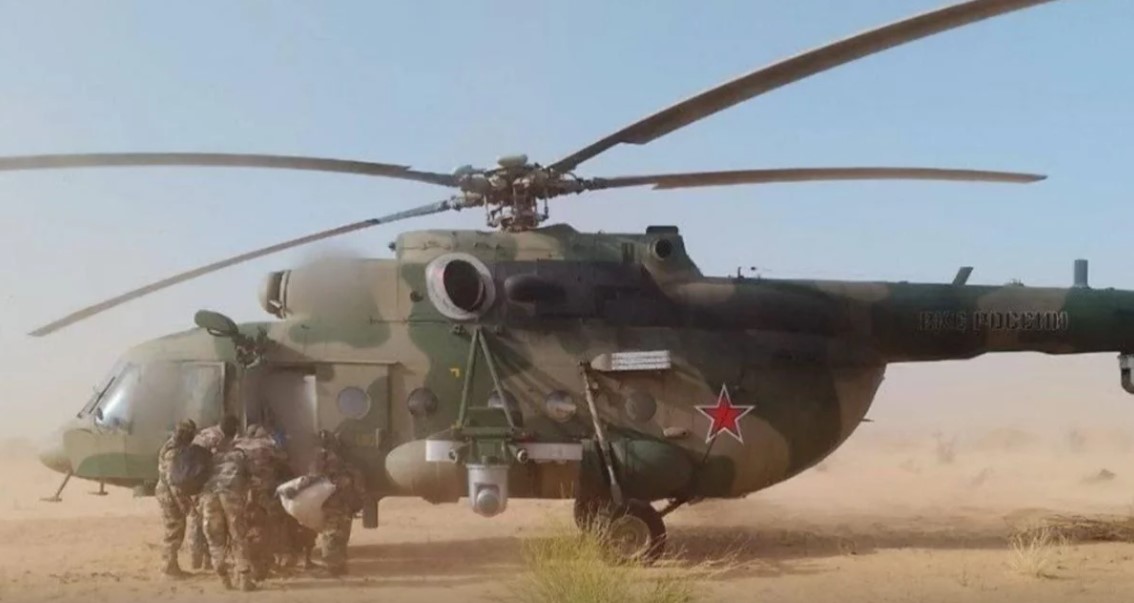
Russia has significantly expanded its military footprint in Mali, assembling one of its most capable aviation groupings outside the Ukraine conflict to support ongoing operations against militant groups.
The deployment, operated by the Kremlin-controlled Africa Corps, is based at Bamako International Airport and provides direct combat support to the Malian Armed Forces (FAMa). Analysts say the move reflects a clear shift from a previously advisory role to active frontline engagement.
As of May 2026, the Russian contingent includes a mix of advanced manned and unmanned aircraft. Strike capabilities are anchored by Sukhoi Su-24M and Sukhoi Su-25 jets, while close air support is delivered by Mil Mi-24P and Mil Mi-35P “Hind” helicopters.
Logistics and troop mobility are supported by Mil Mi-8AMTSh assault transport helicopters and the heavy-lift Mil Mi-26, alongside strategic resupply missions carried out by Ilyushin Il-76 airlifters. The air group also incorporates unmanned systems, including Inokhodets Orion drones for precision strikes and Orlan-10 for surveillance operations.
The escalation comes amid intensified fighting in northern Mali. In early May, Russian-supported air operations played a key role in assisting Malian forces to retake the city of Menaka from militant groups.
The deployment is now engaged in high-intensity combat following a major offensive launched in late April by a coalition of Tuareg separatists, including the Front de Libération de l’Azawad, alongside jihadist fighters linked to Jama’at Nasr al-Islam wal Muslimin (JNIM).
Despite the increased firepower, the campaign has not been without losses. Footage circulating in recent days confirms that at least one Mi-8AMTSh helicopter was shot down near Gao. The developments also follow reports of the killing of Mali’s Defence Minister, Sadio Camara, further underscoring the volatile security situation.
Moscow has signaled it intends to maintain its military presence in Mali for the foreseeable future, highlighting the country’s growing strategic importance in Russia’s broader engagement across Africa.
Source: Omanghana