Omanghana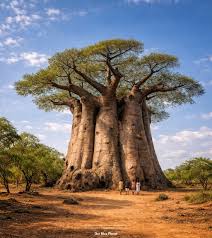
The African baobab, scientifically known as Adansonia digitata, stands as one of the most extraordinary living organisms on Earth, renowned for its immense lifespan, ecological importance, and cultural symbolism across the African continent. Often referred to as the “tree of life,” the baobab has fascinated scientists and communities alike for centuries, with some specimens confirmed through radiocarbon dating to be more than 2,000 years old. Among the most remarkable was the Panke baobab in Zimbabwe, which was estimated to be approximately 2,450 years old before its collapse in 2011, making it one of the oldest trees ever recorded.
What makes the baobab particularly unique is its ability to thrive in some of the harshest environments on the planet. Native to the African savanna, where rainfall is unpredictable and droughts can last for years, the tree has evolved extraordinary survival mechanisms that allow it to endure extreme conditions. Its massive trunk, often appearing swollen or bottle-shaped, acts as a natural reservoir capable of storing up to 120,000 liters of water. This adaptation enables the baobab to survive prolonged dry seasons and continue supporting surrounding ecosystems when other vegetation withers.
Beyond its role as a water source, the baobab is also a powerhouse of nutrition. Its fruit, commonly known as “monkey bread,” is widely regarded as a superfood due to its exceptionally high nutrient content. Rich in vitamin C—often containing up to ten times more than oranges—as well as antioxidants, calcium, and dietary fiber, the fruit has been used for generations in traditional diets and medicine. Today, it is increasingly gaining global recognition as a health supplement and ingredient in various food products.
The resilience of the baobab extends to its physical structure. Its thick, fibrous bark is naturally fire-resistant, providing protection against wildfires that frequently sweep through savanna regions. Remarkably, the bark also has the ability to regenerate after being stripped, allowing local communities to harvest it sustainably for uses such as rope, cloth, and shelter materials without permanently damaging the tree. This regenerative capability further reinforces the baobab’s reputation as a symbol of endurance and renewal.
Despite its legendary resilience, however, the baobab is facing unprecedented threats in the modern era. Scientists have observed a concerning pattern in recent years, particularly across southern Africa, where many of the oldest and largest baobabs are suddenly collapsing or dying. This phenomenon, often referred to as the “die-off of giants,” has raised alarm among researchers, who believe that climate change is a major contributing factor. Increasing temperatures, prolonged drought cycles, and extreme aridity are placing stress on these ancient trees, potentially exceeding their natural capacity for adaptation.
In addition to environmental pressures, new biological threats are emerging. Reports from April 2026 indicate that some baobabs are being attacked by invasive pests, further weakening already vulnerable trees. These combined challenges suggest that even the most resilient species are not immune to the accelerating impacts of ecological change.
Scientific research continues to shed light on the origins and evolution of the baobab. A landmark genomic study published in 2024 confirmed that all eight known species of baobab originated in Madagascar approximately 21 million years ago before spreading to mainland Africa and Australia. This discovery highlights the tree’s deep evolutionary history and underscores its importance as a living link to the distant past.
As both a biological marvel and a cultural icon, the African baobab embodies resilience, sustenance, and longevity. Yet its current challenges serve as a reminder that even the most enduring symbols of nature are vulnerable in a rapidly changing world. Protecting these ancient giants will require not only scientific research and conservation efforts but also a renewed commitment to addressing the broader environmental issues that threaten ecosystems across the globe.
Source: Omanghana