Omanghana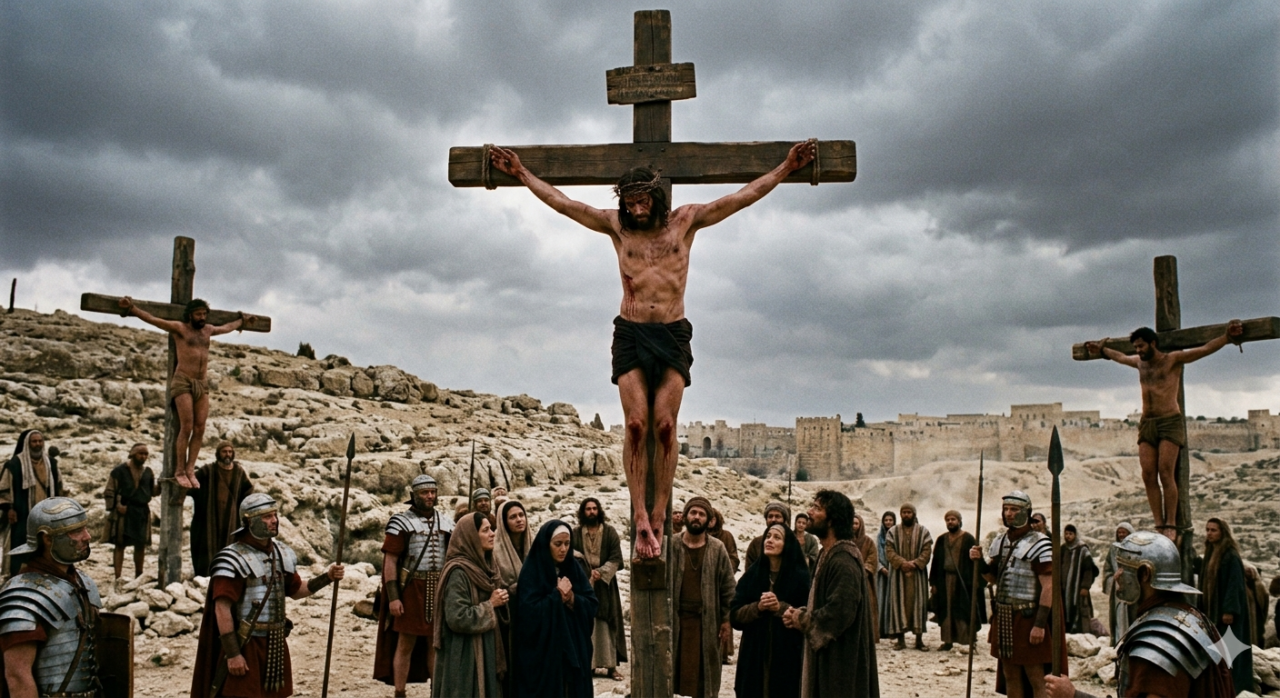
The crucifixion of Jesus Christ remains one of the most significant events in Christian history, with the Bible presenting both historical and theological explanations for why he was put to death. According to the New Testament, Jesus’ execution was driven by a combination of religious accusations, political concerns, and what Christians believe was a divinely ordained purpose tied to humanity’s salvation.
From a historical and legal perspective, the Bible describes two major sets of proceedings that led to the crucifixion. The first involved religious authorities within the Jewish leadership, particularly the Sanhedrin, the high council that governed many religious matters in Judea during Roman rule.
According to the Gospel accounts, Jesus was accused of blasphemy after declaring himself to be the Son of God and the promised Messiah. Under Jewish religious law, blasphemy was considered a grave offense punishable by death. However, because Judea was under Roman occupation, Jewish leaders did not possess the authority to carry out capital punishment independently.
As a result, Jesus was brought before the Roman governor, Pontius Pilate. Before the Roman authorities, the accusations shifted from religious claims to political ones. Jesus was portrayed as a threat to Roman authority by allegedly encouraging opposition to Caesar and claiming to be “King of the Jews,” a title that could be interpreted as challenging Roman rule.
The New Testament records that Pilate ultimately authorized the crucifixion, a form of execution commonly used by the Romans for crimes such as rebellion and sedition. As part of the sentence, an inscription was placed above the cross reading, “Jesus of Nazareth, King of the Jews,” identifying the political charge associated with his execution.
Beyond the legal and historical circumstances, the Bible also presents a deeper theological explanation for the crucifixion. Christian teaching holds that Jesus’ death was not merely the result of political conflict or religious opposition, but part of a divine plan intended to bring salvation to humanity.
Central to Christian theology is the belief that Jesus died as an atoning sacrifice for human sin. The New Testament teaches that humanity’s separation from God caused by sin could only be reconciled through sacrifice, and that Jesus willingly gave his life to bear that penalty on behalf of others. A frequently cited verse, Romans 5:8, states that “while we were still sinners, Christ died for us.”
The crucifixion is also described as the means through which humanity could be reconciled with God. Christians believe Jesus’ death removed the barrier created by sin and opened the way for forgiveness and spiritual restoration.
Additionally, the New Testament argues that Jesus’ suffering and death fulfilled prophecies found in the Old Testament. Early Christians pointed to passages such as Isaiah 53:5, which speaks of one being “pierced for our transgressions,” as foreshadowing the crucifixion. Other details, including the claim that none of Jesus’ bones were broken during the execution, are also interpreted as fulfillment of prophetic scripture.
The Bible further teaches that the crucifixion and subsequent resurrection represented a victory over death and evil. Christian doctrine holds that through his death, Jesus defeated the power of sin and the devil, offering believers the hope of eternal life.
For Christians around the world, the crucifixion is therefore understood not only as a historical execution carried out under Roman authority, but also as the central event of God’s redemptive plan for humanity.
Source: Omanghana