Omanghana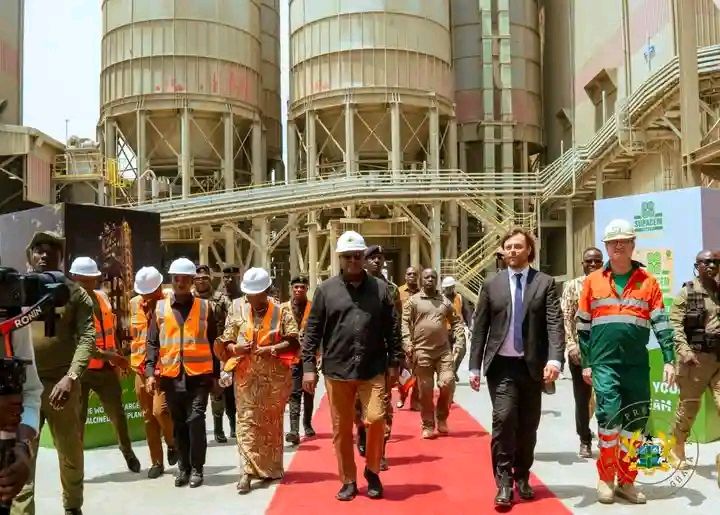
President John Dramani Mahama has officially commissioned what is being described as the world’s largest calcined clay cement plant at the Tema Free Zones Enclave in Ghana. The facility represents a major step toward sustainable cement production and industrial expansion in the country.
The plant is a $110 million investment with an annual production capacity of 1.5 million tonnes of environmentally friendly cement. It is a joint venture between Heidelberg Materials and CBI Ghana Ltd, combining international expertise with local industry participation.
The new facility uses limestone calcined clay technology, which significantly reduces the carbon footprint of cement production. According to project officials, the technology can cut carbon emissions by up to 40 percent compared to traditional cement manufacturing methods. The process also replaces imported clinker with locally sourced clay, a move expected to reduce Ghana’s dependence on clinker imports by more than 10 percent.
Beyond its environmental impact, the project is already contributing to employment. The plant has created 109 direct jobs and more than 1,000 indirect jobs across the supply chain, supporting both local communities and the broader construction industry.
The factory has been designed to operate around the clock, aligning with the government’s proposed 24-hour economy policy aimed at increasing productivity and industrial output.
During the commissioning ceremony, President Mahama also outlined a broader industrial ambition for the country. He stated that Ghana aims to increase the contribution of the manufacturing sector to national GDP to at least 15 percent by 2030.
The cement produced at the facility also meets the rules of origin requirements of the African Continental Free Trade Area, positioning Ghana to become a major exporter of sustainable construction materials across the continent.
Raw materials for the plant are sourced locally from the Togome Traditional Area, further strengthening local supply chains and supporting economic activity in surrounding communities.
Source: Omanghana