Related Articles
 Omanghana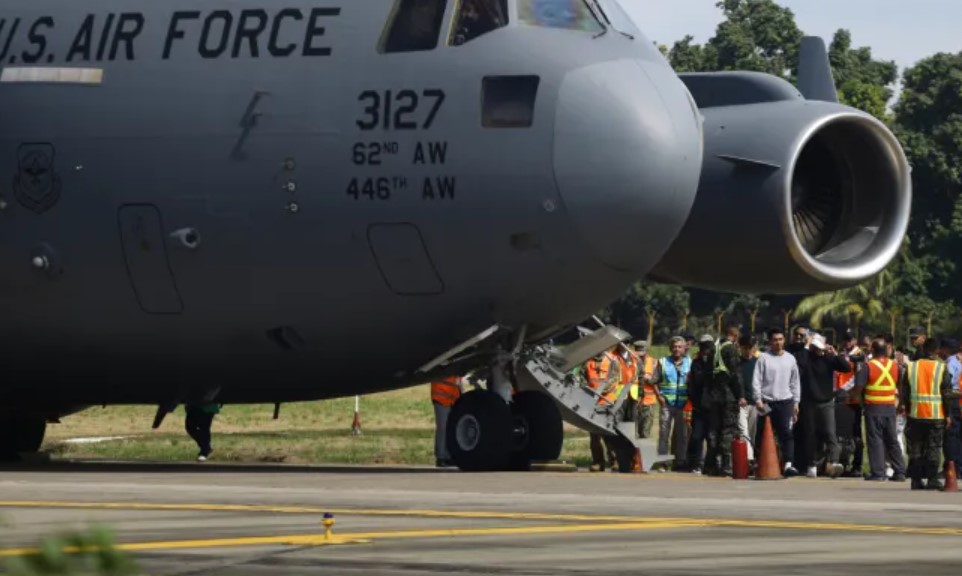
A group of approximately 15 to 16 migrants deported from the United States has arrived in Kinshasa, marking the first operational phase of a controversial new bilateral arrangement between the U.S. government and the Democratic Republic of Congo. The flight, which landed early on Friday, April 17, 2026, signals the rollout of a broader third-country deportation strategy that is already drawing international attention.
The individuals involved are classified as “third-country nationals,” meaning none of them are citizens of the DRC. The initial group reportedly consists of nine men and seven women, primarily from Latin American countries including Colombia, Peru, and Ecuador. Many of the deportees are believed to have been under legal protections in the United States that prevented their return to their home countries due to safety concerns, prompting their relocation to a third country instead.
The journey itself was extensive and complex. The deportation flight departed from Alexandria, Louisiana, and made multiple stopovers in Dakar, Senegal, and Accra before arriving in Kinshasa. The total travel time ranged between 26 and 27 hours, underscoring the logistical scale of the operation and the coordination required across multiple regions.
Authorities in the DRC have emphasized that the arrangement is temporary and strictly transitional. Upon arrival, the migrants were transported to accommodation near the airport, where they were issued seven-day visas allowing free movement within the country. These visas can be extended for up to three months, providing a limited window for further processing or relocation.
According to officials, the United States is covering all logistical, accommodation, and reception costs associated with the operation, ensuring that the Congolese government does not bear any direct financial burden. Humanitarian assistance for the migrants is being coordinated through the International Organization for Migration at the request of Congolese authorities, with support focused on immediate welfare and transition planning.
The agreement is unfolding within a broader geopolitical context. It coincides with ongoing U.S.-mediated peace efforts in eastern Congo and a strengthening of strategic ties between the two countries, including arrangements that grant the United States preferential access to the DRC’s vast reserves of critical minerals. This intersection of migration policy and strategic resource diplomacy has added another layer of complexity to the initiative.
The DRC is not alone in participating in the U.S. third-country removal program. Other African nations, including Ghana, Rwanda, Uganda, Eswatini, and South Sudan, have also accepted deportees under similar arrangements. The expansion of this program reflects a shift in U.S. immigration enforcement strategies, relying increasingly on international partnerships to manage complex deportation cases.
While officials describe the process as orderly and humanitarian, the policy has sparked debate among analysts and human rights observers. Questions remain about the long-term status of the deportees, the legal implications of transferring individuals to countries with which they have no direct ties, and the broader impact on host nations.
As the first group settles temporarily in Kinshasa, the development marks a significant moment in global migration policy, highlighting the growing use of third-country agreements and the evolving role of African nations in international migration management.
Source: Omanghana