Omanghana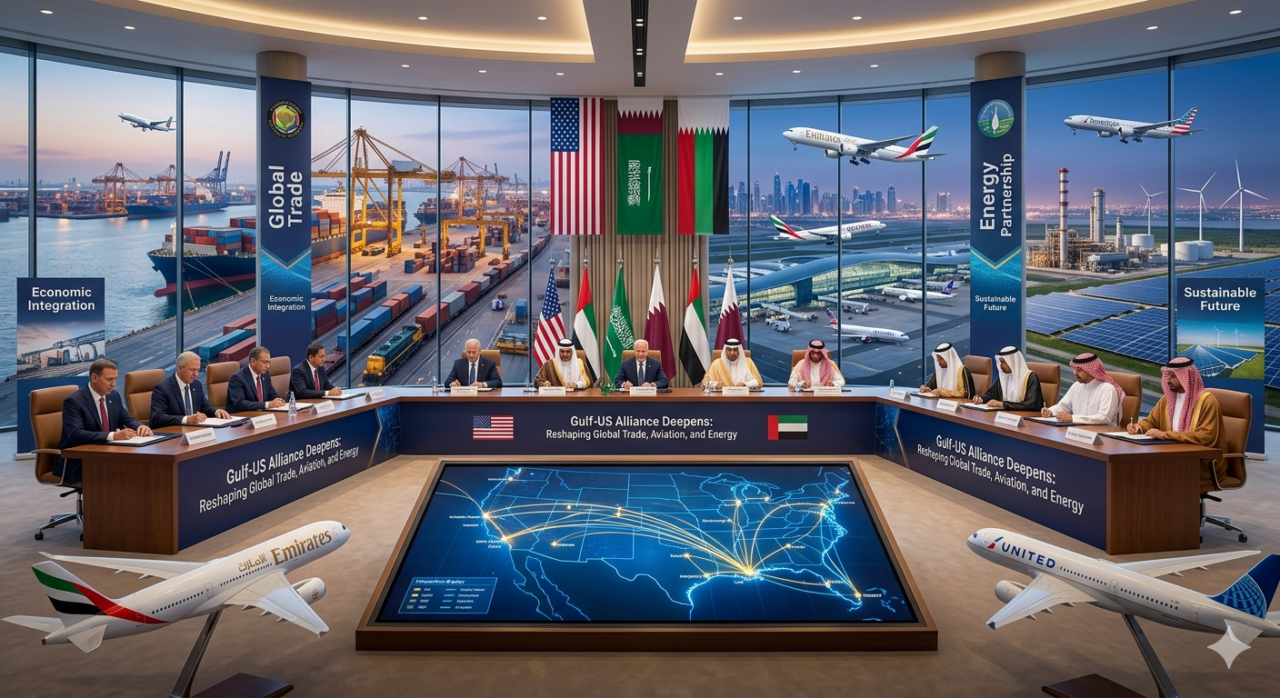
Saudi Arabia and other members of the Gulf Cooperation Council have significantly strengthened their strategic and economic ties with the United States in recent years. The renewed cooperation, which involves countries such as Qatar, the United Arab Emirates, Kuwait, Bahrain, and Oman, is centered on expanded defense partnerships, major investment commitments, and closer coordination on global economic and security issues.
The strengthening of the alliance has been marked by new defense arrangements and military cooperation designed to reinforce regional stability and deterrence in the Middle East. One of the key developments is the U.S.–Saudi Strategic Defense Agreement, signed in late 2025, which reinforces the decades-long partnership between the two countries. The agreement positions the United States as Saudi Arabia’s primary strategic defense partner and includes provisions for Saudi funding contributions that support U.S. military operations and infrastructure.
A major component of the defense partnership involves large-scale arms agreements. A defense package valued at approximately $142 billion has been announced, making it one of the largest arms deals in U.S. history. The package includes advanced military capabilities such as modern fighter aircraft, including the F-35 Lightning II, as well as hundreds of American-made tanks and other defense systems intended to strengthen Saudi Arabia’s military capacity.
Military cooperation has also expanded through increased access to regional bases. Saudi authorities have granted the United States broader operational access to facilities such as King Fahd Air Base, enabling enhanced logistical support, training activities, and rapid response capabilities across the region.
Alongside defense cooperation, Gulf states have made major financial commitments aimed at strengthening economic ties with the United States. Saudi Arabia has pledged approximately $600 billion in investments and commercial partnerships, while Qatar has announced plans to channel roughly $1.2 trillion into various projects and financial assets linked to the U.S. economy. The United Arab Emirates has also committed an estimated $1.6 trillion in new and accelerated investments across sectors, including infrastructure, technology, and energy.
Technology collaboration has emerged as another major pillar of the partnership. A memorandum of understanding on artificial intelligence cooperation has been introduced to allow Gulf states access to advanced American AI systems while ensuring safeguards that protect U.S. technology from unauthorized foreign influence.
Financial cooperation between the two sides has also deepened. In November 2025, the United States Department of the Treasury and Saudi Arabia signed new frameworks designed to strengthen coordination within major global financial institutions such as the International Monetary Fund, the World Bank, and the Group of Twenty.
The aviation sector is also playing an important role in the expanding relationship. Delta Air Lines has announced plans to begin the first nonstop commercial flight by a U.S. airline to Saudi Arabia. Starting in October 2026, the airline is expected to operate direct service between Hartsfield–Jackson Atlanta International Airport and King Khalid International Airport. The route will strengthen travel and trade links between North America and the Gulf region.
Delta has also established a strategic partnership with Riyadh Air, a new Saudi carrier that aims to position the Saudi capital as a major global aviation hub as part of the country’s long-term economic transformation program, Saudi Vision 2030.
Energy cooperation remains a central component of the relationship. The United States and Saudi Arabia have agreed to collaborate on the development of civilian nuclear energy infrastructure through a multi-billion-dollar partnership that could involve American companies in the construction and operation of nuclear power facilities in the Kingdom.
In addition, both sides are working together through a new critical minerals framework intended to secure supply chains for key materials required for clean energy technologies, advanced electronics, and defense systems.
While Gulf states continue to maintain diplomatic dialogue with Iran, regional security strategies are increasingly focused on strengthening deterrence capabilities and protecting vital energy infrastructure. Analysts say the evolving alliance between the United States and Gulf Cooperation Council members is likely to play a major role in shaping global energy markets, trade routes, and security dynamics in the years ahead.
Source: Omanghana