Omanghana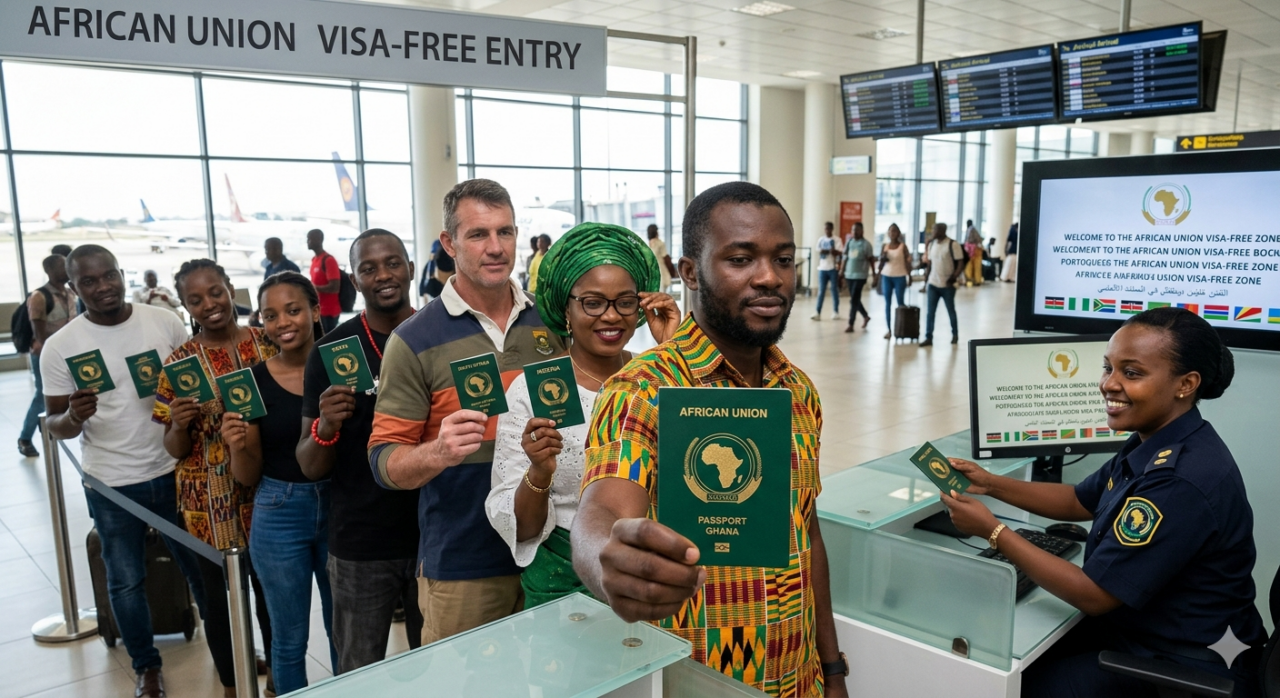
As of April 2026, the vision of a borderless Africa is gaining tangible momentum, with a growing number of countries taking concrete steps to dismantle travel barriers for fellow Africans. This movement represents a critical phase in advancing the African Union’s long-term integration agenda, particularly the rollout of the AU Passport—one of the flagship initiatives under Agenda 2063. Together, these efforts are reshaping mobility across the continent, fostering economic integration, cultural exchange, and regional cooperation.
At the forefront of this transformation is a group of eight countries that have either fully implemented or strongly committed to visa-free or highly simplified entry policies for African citizens. Seychelles remains the most open, offering a visitor’s permit on arrival to all Africans, effectively eliminating pre-travel visa requirements. The Gambia has long maintained a similar policy, allowing visa-free entry to all African nationals and setting an early example for continental openness.
In East Africa, Rwanda has emerged as a pioneer, having introduced visa-free access for all Africans as early as 2023, reinforcing its reputation as a leader in regional integration. Kenya has taken a slightly different approach through its Electronic Travel Authorization (eTA) system, which streamlines entry procedures and effectively removes traditional visa barriers while maintaining security protocols. Meanwhile, Uganda has expanded its visa-free access to citizens of 21 African nations, allowing stays of up to 90 days and signaling a gradual but steady move toward broader openness.
West Africa is also playing a key role in advancing the borderless agenda. Benin stands out as one of the first countries in the region to fully open its borders to all African travelers, while Ghana is preparing to officially implement its visa-free policy on May 25, 2026, in alignment with Africa Day. The announcement, made by John Mahama, underscores Ghana’s commitment to continental unity and positions the country as a major player in facilitating intra-African mobility.
In Southern Africa, Botswana is pursuing innovative bilateral agreements that allow travel using only national identification cards, particularly with neighboring countries such as Namibia, Zambia, and Zimbabwe. This “ID-only” travel model reflects a pragmatic approach to reducing bureaucratic hurdles while strengthening regional ties.
These national initiatives are closely tied to the broader ambition of establishing a single African travel document. The AU Passport, first introduced symbolically in 2016, is designed to eventually replace national passports for travel within Africa, enabling seamless movement across borders. While the passport is currently issued primarily to diplomats and high-ranking officials, the African Union has set an ambitious target to make it available to the general public between 2026 and 2027.
However, achieving this vision requires significant legal and institutional alignment among member states. For the AU Passport to become a standard reality, at least 15 countries must fully ratify the Protocol on Free Movement of Persons. As of early 2026, 32 nations have signed the protocol, but many are still in the process of completing domestic ratification procedures. This gap highlights both the progress made and the challenges that remain in harmonizing policies across a diverse continent.
Technology is also playing a crucial role in bridging these gaps. Countries such as Ghana are pairing visa-free policies with modern digital platforms, including e-visa and pre-clearance systems that maintain border security while eliminating financial and administrative barriers. These systems demonstrate how innovation can support policy reforms, ensuring that increased mobility does not come at the expense of safety or regulatory oversight.
The growing momentum toward visa-free travel reflects a broader shift in how African nations view mobility—not as a risk to be managed, but as an opportunity to unlock economic growth, tourism, trade, and cultural exchange. While challenges remain, particularly in policy harmonization and infrastructure readiness, the progress made so far signals a decisive move toward a more connected and integrated continent.
Source: Omanghana