Omanghana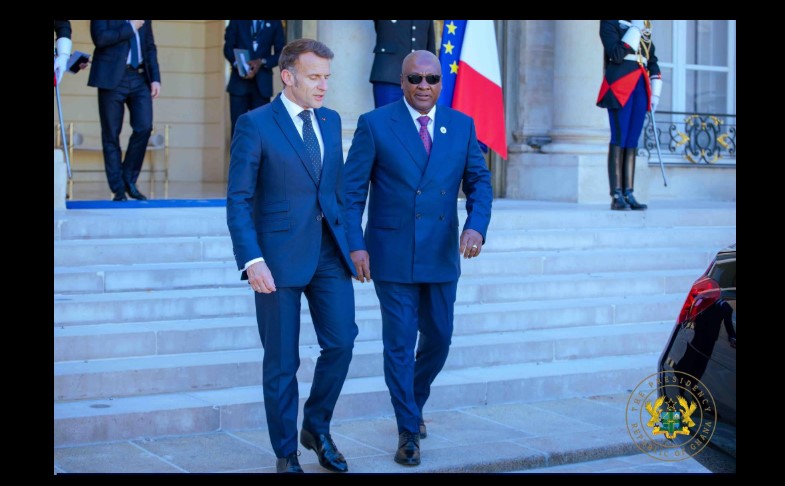
French President Emmanuel Macron has publicly acknowledged that France can no longer avoid addressing the issue of reparations for its historical involvement in the transatlantic slave trade, marking a significant shift in the country’s official position on one of the most sensitive chapters of its colonial history.
Speaking at the Élysée Palace on May 21, 2026, President Macron said the question of “how to repair” the legacy of slavery is a debate that “must not be refused,” adding that the issue can no longer be ignored by the French state.
The address was delivered during ceremonies commemorating the 25th anniversary of the Taubira Law, the landmark legislation passed in 2001 that made France the first country in the world to officially recognize slavery and the transatlantic slave trade as crimes against humanity.
Although Macron’s remarks have been welcomed by activists and historians as a breakthrough in political language, human rights groups argue that the speech stopped short of offering concrete financial reparations or formal compensation mechanisms for descendants of enslaved Africans.
During his address, the French President cautioned against what he described as “false promises,” insisting that the suffering caused by centuries of slavery could never be fully repaired.
“We must be honest,” Macron said, arguing that the horrors of the slave trade are “impossible” to completely undo despite growing calls for justice and restitution.
As part of the broader reforms announced during the ceremony, Macron endorsed plans to formally repeal the historic “Code Noir,” a set of royal decrees introduced in the 17th and 18th centuries that governed slavery in French colonies. Although no longer enforced, critics note that the decrees were never officially removed from France’s legal archives.
The French government also announced a new international research initiative in partnership with Ghana aimed at studying the long-term economic and social consequences of slavery. Officials said the scientific project would produce recommendations to guide future policymaking on reparatory justice and historical reconciliation.
Macron’s comments come amid increasing global pressure on former colonial powers following a recent United Nations resolution championed by Ghana and the African Union. The resolution described slavery as the “gravest crime against humanity” and called for reparations for affected communities and descendants of enslaved people.
France and several European Union member states faced criticism after abstaining from the UN vote, a move that rights organizations described as inconsistent with growing international demands for accountability.
Human rights advocates have also renewed focus on France’s historical relationship with Haiti. Following Haiti’s successful slave revolt and declaration of independence in 1804, France imposed massive financial compensation demands on the new Caribbean republic to compensate former French slave owners for their “lost property.”
Historians argue that the debt burden crippled Haiti’s economy for generations and remains one of the clearest examples cited by reparations campaigners seeking direct financial restitution.
While activists welcomed Macron’s willingness to openly discuss reparations, many insist symbolic gestures and historical acknowledgments are no longer enough. Advocacy groups continue to demand a formal state apology and meaningful financial compensation for communities affected by slavery and colonial exploitation.
The French government has not yet announced any specific reparations framework or timeline for further action.
Source: Omanghana