Omanghana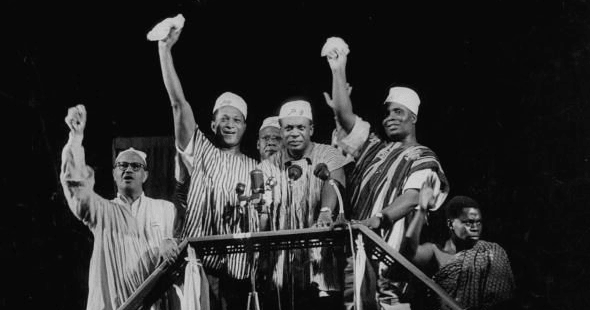
Ghana made history on March 6, 1957, when it became the first country in sub-Saharan Africa to gain independence from European colonial rule. The historic achievement, led by Kwame Nkrumah, transformed the former British colony known as the Gold Coast into a sovereign nation and inspired independence movements across the African continent.
The road to independence was a long struggle driven by nationalist leaders and ordinary citizens demanding self-rule. A major turning point came in 1947 with the formation of the United Gold Coast Convention (UGCC), which called for self-government “within the shortest possible time.” The movement was led by prominent nationalists known as the “Big Six,” including J. B. Danquah and Kwame Nkrumah.
Tensions escalated during the 1948 Accra Riots. On February 28, 1948, British colonial police opened fire on a peaceful march by World War II veterans in Accra. Three ex-servicemen—Sergeant Adjetey, Corporal Attipoe, and Private Odartey Lamptey—were killed, triggering widespread protests and accelerating the demand for independence.
In 1949, Kwame Nkrumah broke away from the UGCC and founded the Convention People’s Party (CPP), which adopted the powerful slogan “Self-Government Now.” The party organized mass mobilization through the Positive Action Campaign in 1950, which included strikes and non-violent protests. Nkrumah was imprisoned during the campaign but continued to lead the movement from jail and was later released after the CPP won the 1951 elections.
After further electoral victories in 1954 and 1956, the British Parliament passed the Ghana Independence Act 1957, granting the colony full independence. The new nation adopted the name Ghana, inspired by the ancient Ghana Empire to symbolize a proud return to Africa’s historic heritage.
At midnight on March 6, 1957, at the Old Polo Grounds, Kwame Nkrumah delivered his famous declaration: “At long last, the battle has ended! And thus, Ghana, your beloved country, is free forever.” He also emphasized that Ghana’s independence would only be meaningful if it contributed to the liberation of the entire African continent, reinforcing his strong commitment to Pan-African unity.
The new nation also adopted powerful national symbols. The Ghanaian flag, designed by Theodosia Okoh, features red to represent the blood of those who fought for freedom, gold for the country’s rich mineral resources, and green for its natural vegetation. At the center of the flag is the Black Star, which symbolizes African freedom, unity, and hope for the continent’s future.
Source: Omanghana