Omanghana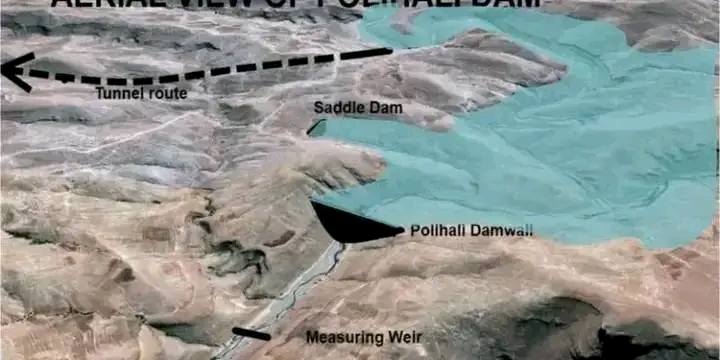
Water has become a critical economic asset for Lesotho, a small mountainous kingdom entirely surrounded by South Africa. Often described as “liquid gold,” the country’s abundant water resources have evolved into a powerful source of revenue and regional influence, underpinning its economic strategy and long-term development prospects.
At the center of this transformation is the Lesotho Highlands Water Project, a large-scale initiative that supplies water to South Africa’s industrial heartland. Through this arrangement, Lesotho earns approximately $240 million annually in water royalties, making it one of the government’s most significant income streams. These payments now contribute between 15 and 17 percent of the national budget, a sharp increase from negligible levels a decade ago, while the water sector accounts for an estimated 8 to 10 percent of the country’s Gross Domestic Product.
With the original treaty underpinning the project signed in 1986 nearing four decades, Lesotho is preparing to enter renegotiation talks in April 2026. The government is seeking improved royalty rates and more favorable compensation terms, leveraging the growing importance of its water exports in a region facing rising demand and environmental pressures.
The project itself represents Africa’s largest water transfer scheme, relying on an extensive network of dams and tunnels to channel water by gravity into South Africa. Key infrastructure includes major reservoirs such as the Katse Dam and Mohale Dam, which form the backbone of the system. Ongoing expansion under Phase II, including the construction of the Polihali Dam and associated tunnels, is expected to boost water delivery capacity by nearly 15 percent when completed around 2028.
Beyond water exports, the project has also contributed to Lesotho’s energy independence through hydroelectric generation at the Muela Hydropower Station, enabling the country to meet its domestic electricity needs.
Despite these economic gains, significant challenges remain. Many communities living near the dams still lack reliable access to clean drinking water due to limited distribution infrastructure. Additionally, past construction phases have displaced rural populations and submerged agricultural land, creating long-term social impacts. Climate change also poses a growing threat, as shifting rainfall patterns and recurring droughts could affect both export volumes and domestic water security in the future.
Source: Omanghana