Omanghana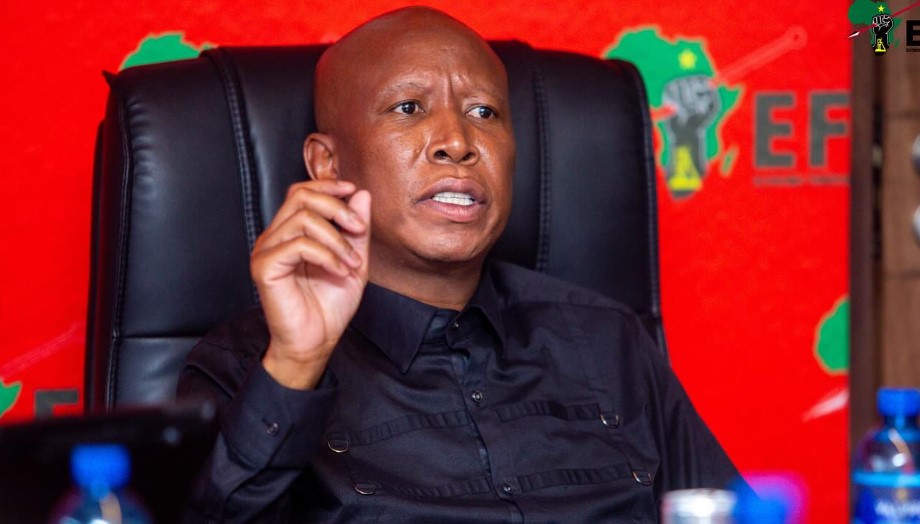
Economic Freedom Fighters (EFF) leader Julius Malema has triggered widespread controversy across Ghana and parts of the African continent after publicly questioning Ghana’s decision to evacuate its citizens from South Africa amid rising reports of xenophobic violence.
Malema described Ghana’s emergency repatriation of nationals as “not necessary,” a remark that has drawn sharp criticism from Ghanaian citizens, commentators, and regional observers who argue that his comments downplay the seriousness of ongoing security threats.
Malema Questions Ghana’s Evacuation Response
Speaking during a media briefing on escalating tensions linked to anti-immigrant unrest, Malema directly criticized Ghana’s decision to airlift the first group of approximately 300 evacuees.
He argued that the move was premature and risked worsening diplomatic tensions between African nations.
“The Ghana response was not necessary at that moment,” Malema stated, adding that rapid evacuations could “create a bad, extreme situation” by reinforcing negative perceptions about South Africa.
He further suggested that Ghana should have allowed more time for South African authorities and political structures to address the unrest through dialogue and domestic intervention.
Strong Backlash from Ghanaian Public
Malema’s remarks were met with swift and widespread criticism across Ghanaian social media platforms and public discourse.
Many commentators accused the EFF leader of prioritizing international perception over the immediate safety of Ghanaian nationals facing reported violence, looting, and targeted attacks in parts of South Africa.
Critics also rejected his suggestion that evacuation efforts were unnecessary, arguing that such statements fail to reflect the urgency of protecting citizens caught in volatile conditions.
Others described his call for patience and dialogue as unrealistic, pointing to historical patterns of xenophobic incidents in the region that have previously escalated into deadly violence.
Debate Over Diplomacy and Responsibility
The controversy has reignited broader discussions about how African governments should respond to internal crises affecting foreign nationals.
While some analysts acknowledge the importance of diplomatic coordination and conflict resolution, many emphasize that citizen protection remains a primary responsibility of any government.
The evacuation issue has therefore become a focal point for debates around sovereignty, regional solidarity, and crisis response mechanisms within the continent.
Malema’s Broader Critique of Xenophobia
Despite the backlash, Malema also used his remarks to condemn anti-immigrant violence in South Africa and criticize vigilante groups targeting foreign nationals.
He argued that blaming migrants for unemployment and economic hardship oversimplifies deeper structural challenges within the country.
Challenging anti-immigrant narratives, he questioned claims that removing foreign workers would resolve job shortages, asking what tangible economic benefit would result from their departure.
Structural Economic Arguments
Malema further stated that xenophobic sentiment often masks deeper issues such as inequality, weak governance, and entrenched economic disparities.
He suggested that certain business interests exploit migrant labor while encouraging divisions among working-class communities.
According to him, these dynamics contribute to recurring tensions between local populations and foreign nationals across the region.
Strained Perceptions Across West Africa
Although Malema positioned his comments within a broader call for African unity and systemic reform, his criticism of Ghana’s evacuation decision has significantly strained perceptions of his stance among West African observers.
The incident highlights the sensitivity surrounding migration crises and the differing expectations placed on governments when responding to threats against their citizens abroad.
As tensions continue, the debate underscores the complexity of balancing diplomatic engagement with urgent humanitarian protection in times of regional unrest.
Source: Omanghana