Omanghana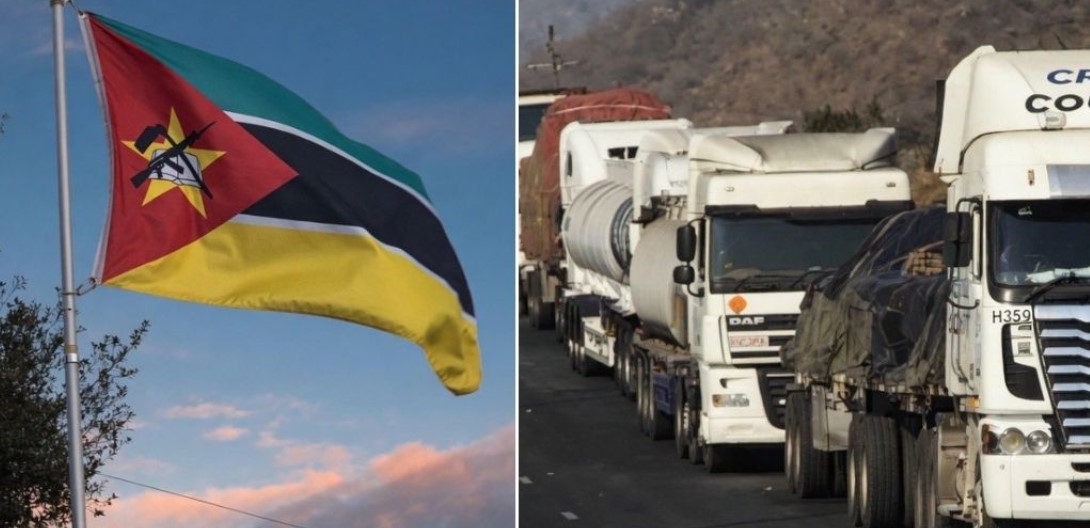
Mozambican youth groups and transport operators have blocked more than 5,000 South African cargo trucks at key border crossings, including the heavily used Lebombo/Ressano Garcia border post, in response to escalating anti-immigrant violence targeting foreign nationals in South Africa.
The disruption has brought traffic along the strategic Maputo Development Corridor to a near standstill, intensifying regional tensions and raising concerns over the stability of cross-border trade in Southern Africa.
Violence in South Africa Sparks Regional Reaction
The blockades follow reports that five Mozambican nationals were killed during recent anti-immigrant clashes in Mossel Bay, South Africa.
The incident comes amid a broader wave of unrest in which local protest movements have demanded that undocumented migrants leave the country by June 30. In several areas, demonstrations have reportedly escalated into vigilante-style attacks, including looting of foreign-owned businesses and assaults on non-nationals.
In response, some African governments have taken protective measures for their citizens abroad, including emergency evacuation programs, while grassroots groups in Mozambique have mobilized at border points.
Organized Disruption at Key Border Crossings
Rather than a formal government directive, the blockade is being carried out by coordinated youth and transport associations operating along major entry points into Mozambique.
Reports indicate that trucks bearing South African registration plates are being turned away or obstructed, while vehicles from other regional countries are, in some cases, being allowed to pass.
The most severe congestion has been reported at the Lebombo/Ressano Garcia crossing, where thousands of freight vehicles are currently stranded, creating significant logistical delays extending into South Africa’s Mpumalanga province.
Major Impact on Regional Trade Routes
The ongoing blockade has severely disrupted one of Southern Africa’s most important trade arteries, with the Maputo Corridor serving as a critical link for goods moving between inland producers and coastal export ports.
Logistics operators warn that the delays could result in substantial financial losses, particularly for South African agricultural and mineral exports dependent on timely delivery schedules.
Authorities on both sides of the border are monitoring the situation closely, urging restraint while diplomatic discussions continue.
Economic Pressure and Energy Concerns
Beyond road freight disruptions, some activist groups have called for broader economic pressure, including potential restrictions on electricity supply from Mozambique to South Africa.
Mozambique plays a significant role in regional energy distribution, and any disruption could have wider implications for South Africa’s already strained power infrastructure.
Regional Debate Over Accountability and Security
The situation has sparked wider debate across the Southern African Development Community (SADC) region regarding migration, security, and economic interdependence.
Some analysts describe the blockade as a form of economic protest aimed at drawing attention to the treatment of African migrants in South Africa, while others warn that escalating disruptions risk harming regional cooperation and trade stability.
Growing Strain on Cross-Border Relations
As the standoff continues, transport authorities and border officials are advising logistics companies to delay non-essential movement until conditions stabilize and diplomatic engagement reduces tensions.
The crisis highlights the fragile balance between economic integration and political friction in the region, where countries remain deeply interconnected through trade corridors, energy networks, and labor migration flows.
With both humanitarian concerns and economic pressures mounting, attention is now turning to regional leaders to de-escalate the situation and restore normal cross-border movement.
Source: Omanghana