Omanghana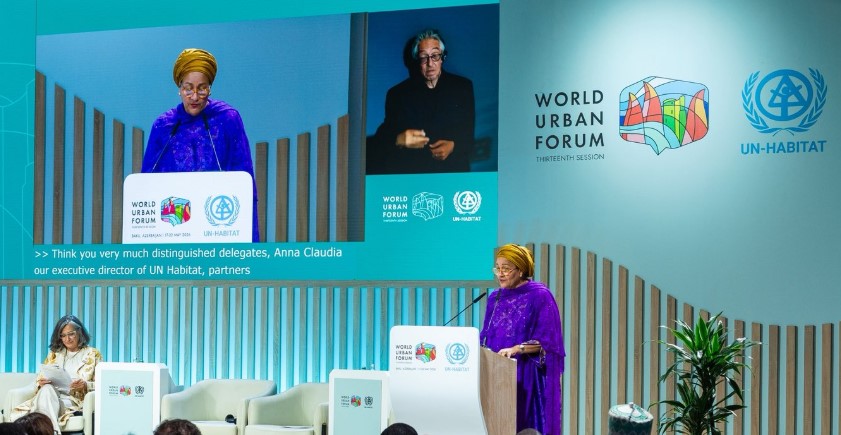
United Nations Deputy Secretary-General Amina J. Mohammed has called on global investors to play a central role in addressing Africa’s growing housing crisis, describing the continent’s rapid urbanization as one of the world’s largest untapped investment opportunities.
Speaking at the 13th World Urban Forum (WUF13) in Baku, Azerbaijan, Mohammed urged governments, financial institutions, and private developers to support large-scale housing initiatives capable of transforming millions of lives while creating sustainable economic growth.
Africa is currently facing a severe housing shortage driven by fast population growth and accelerating urbanization. Estimates presented at the forum indicate that the continent lacks between 51 million and 60 million housing units. Without significant intervention, experts warn that the deficit could expand to as many as 130 million units by 2030.
Addressing the challenge will require substantial financial investment. Participants at WUF13 estimated that between $650 billion and $1.4 trillion will be needed to close the housing gap and provide adequate shelter for Africa’s rapidly growing urban population.
To help tackle the crisis, stakeholders are promoting the Africa Affordable Housing Compact, a United Nations-backed initiative designed to convert policy commitments into tangible housing developments. The platform brings together governments, private-sector developers, investors, and financial institutions to accelerate affordable housing projects across the continent.
A key component of the initiative is the Deal Platform, which serves as a matchmaking mechanism connecting high-impact housing projects with international investors and financing partners. The goal is to channel capital toward developments that can deliver large-scale social and economic benefits.
The Compact also includes a Data Hub that provides research, monitoring, and evidence-based insights to help policymakers and developers make informed decisions. By improving access to reliable data, the initiative aims to strengthen planning and increase accountability in housing development efforts.
Another pillar focuses on Green and Equal Policy frameworks that encourage the use of low-carbon construction materials and sustainable building practices. The approach is intended to reduce future climate emissions while ensuring women have equal access to land ownership and housing opportunities.
United Nations officials emphasized that Africa’s urban transformation presents a unique opportunity because much of the continent’s future infrastructure has yet to be built. This allows developers and governments to design climate-resilient communities from the ground up, incorporating sustainable technologies and environmentally responsible construction methods from the outset.
Advocates argue that large-scale investment in affordable housing could generate millions of jobs, stimulate economic growth, and improve living conditions for families currently residing in overcrowded informal settlements. By combining public policy, private capital, and sustainable development principles, leaders at WUF13 believe Africa can turn its housing challenge into a powerful engine for long-term prosperity.
As urban populations continue to expand across the continent, the success of initiatives such as the Africa Affordable Housing Compact may prove critical in determining whether Africa can meet future housing demand while building greener, more inclusive cities.
Source: Omanghana