Omanghana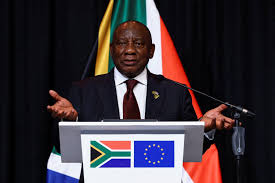
South African President Cyril Ramaphosa’s firm stance on immigration enforcement is drawing growing criticism from regional analysts, policymakers, and several African leaders who warn that the approach risks creating serious diplomatic, economic, and geopolitical consequences for South Africa.
At the center of the controversy is Ramaphosa’s public insistence that every individual and business operating within South Africa must comply fully with the country’s laws, including immigration regulations. While supporters view the policy as a necessary assertion of state authority and legal order, critics argue that the timing and rhetoric surrounding the crackdown have intensified anti-immigrant sentiment during a period of rising xenophobic tensions.
Analysts increasingly describe the strategy as a “dangerous mistake” not because of the principle of enforcing immigration laws, but because of the broader regional and economic fallout that could result from how the policy is being perceived across Africa.
A Growing Challenge to Pan-African Solidarity
One of the most significant concerns is the impact on South Africa’s standing within the African continent.
As anti-immigrant protests and vigilante campaigns have spread through parts of South Africa, neighboring governments have become increasingly alarmed by reports of foreign nationals being targeted. Critics argue that the government’s emphasis on immigration enforcement, while legally justified, risks being interpreted as political validation of anti-foreigner sentiment.
Several regional leaders have publicly cautioned against narratives that portray migrants as the primary cause of unemployment, crime, or social pressures.
Among the most outspoken voices has been Ghanaian President John Dramani Mahama, who warned that blaming migrants for domestic challenges is a dangerous path that could undermine decades of African cooperation. According to regional observers, such warnings reflect a broader concern that South Africa could alienate countries that historically supported the anti-apartheid struggle and have long viewed the country as a continental leader.
The controversy has raised questions about whether South Africa’s domestic political priorities are beginning to conflict with its traditional role as a champion of African unity and regional integration.
Economic Nationalism Begins Targeting South African Interests
The diplomatic tensions are increasingly intersecting with economic policy.
Across several African countries, governments are adopting more assertive approaches toward foreign investors and multinational corporations operating within their borders. Some analysts believe South African companies may become increasingly vulnerable to regulatory pushback as political frustrations grow.
A notable example emerged in Ghana, where authorities declined to renew the mining lease for a major asset operated by South African mining giant Gold Fields and signaled a broader move away from automatic lease extensions for foreign operators.
While Ghana’s decision was officially framed as part of a new resource management strategy, critics of Pretoria’s immigration policies argue that deteriorating diplomatic relations could make South African businesses more exposed to similar actions elsewhere.
The broader concern is that governments across Africa may increasingly prioritize domestic ownership, local participation, and stricter performance requirements, reducing the competitive advantages South African firms have historically enjoyed across the continent.
Tourism Industry Faces Immediate Consequences
Perhaps the most visible economic impact is emerging within South Africa’s tourism sector.
Africa remains South Africa’s largest source market for international visitors, with travelers from countries such as Ghana, Nigeria, Kenya, Zimbabwe, Botswana, and Mozambique contributing significantly to the hospitality, aviation, retail, and entertainment industries.
Industry observers report growing concerns among potential visitors who fear becoming caught in anti-immigrant demonstrations or experiencing hostility during travel.
Hotels, tour operators, airlines, and conference organizers have reportedly seen increased uncertainty surrounding future bookings from several African markets. Even a modest decline in regional tourism could translate into millions of dollars in lost revenue for an industry that plays a critical role in employment creation.
For a country still working to strengthen post-pandemic tourism growth, reputational damage within key African markets could have lasting financial consequences.
Threats to South Africa’s Technology Ambitions
Another area attracting concern is South Africa’s rapidly expanding technology and data infrastructure sector.
South Africa has spent years positioning itself as Africa’s leading digital economy and the continent’s largest data center hub. International technology companies have increasingly selected the country as a gateway for cloud computing, artificial intelligence, and digital services expansion.
However, critics argue that increasingly aggressive labor enforcement campaigns and workplace inspections aimed at ensuring compliance with local hiring regulations are creating uncertainty among investors.
At the same time, several large-scale technology projects have encountered resistance from local communities concerned about electricity consumption, water usage, and environmental impacts.
Some analysts suggest that activists are now using the government’s own emphasis on strict regulatory compliance to challenge major foreign investment projects. This dynamic could complicate efforts by global firms to expand operations in South Africa at a time when competition for technology investment is intensifying across Africa.
Major international data center developments, including planned hyperscale facilities backed by global technology firms, could face longer approval timelines and greater political scrutiny if public opposition continues to grow.
Balancing Sovereignty and Regional Leadership
The debate ultimately reflects a broader question facing South Africa: how to balance national sovereignty and immigration enforcement with its economic dependence on regional cooperation.
Supporters of the government’s approach argue that enforcing immigration laws is a fundamental responsibility of any state and that concerns about diplomatic fallout should not override domestic legal obligations.
Critics counter that policy implementation matters as much as policy objectives. They warn that if immigration enforcement becomes associated with xenophobic violence, South Africa risks damaging relationships with neighboring countries, discouraging tourism, weakening its business influence across Africa, and creating new barriers to foreign investment.
As tensions continue to unfold, the challenge for Pretoria may be finding a path that reassures domestic constituencies while preserving the regional goodwill that has long been one of South Africa’s most valuable strategic assets.
Source: Omanghana