Omanghana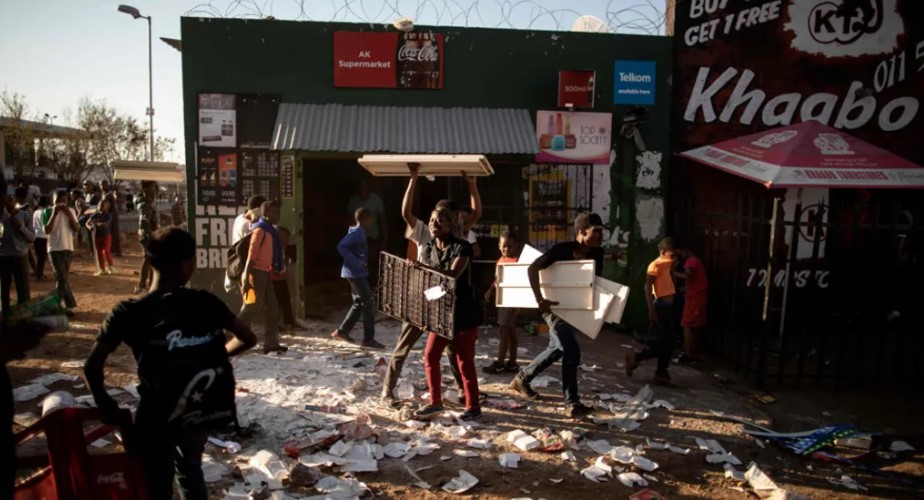
A wave of xenophobic violence and looting has swept through Johannesburg’s Soweto township, leaving foreign-owned small businesses devastated and prompting urgent safety concerns across affected communities.
The unrest has hit multiple neighborhoods, including Zola, Emdeni, Moletsane, White City, Zondi, and Rockville, where groups of attackers have reportedly targeted spaza shops owned by foreign nationals. The incidents form part of a broader escalation of anti-migrant activity spreading across parts of South Africa.
Shops Looted and Burned as Violence Spreads
Over recent days, mobs have broken into, looted, and in some cases set fire to immigrant-owned convenience stores and grocery shops. Local reports indicate that at least three people have died during the unrest, including two individuals killed by gunfire and a woman who died after falling through a roof while attempting to escape attackers.
Eyewitness accounts describe widespread destruction of property, with shop owners forced to flee as violence intensified in residential areas.
Vigilante Actions and Forced Closures
The situation has also been marked by rising vigilante activity. Groups operating without official authority have reportedly moved from shop to shop, questioning business owners, rejecting valid immigration documentation, and ordering foreign traders to shut down their operations immediately.
In several cases, shopkeepers have been forced to abandon their businesses under threat, while others have sought temporary refuge in nearby mosques and police stations as tensions escalated.
Economic Pressures and Organised Mobilisation
The unrest has been linked to ongoing economic frustrations, including high inflation and unemployment levels exceeding 30 percent. These conditions have fueled growing public anger in some communities, which has been channelled through anti-immigration advocacy groups such as “Operation Dudula,” which originated in Soweto, and “March and March.”
Reports also indicate that a prominent anti-immigration figure issued a widely circulated briefing demanding the nationwide closure of foreign-owned shops and salons. The statements included unverified allegations that foreign traders were deliberately selling contaminated goods, claims that have intensified public tensions.
Regional Reaction and Diplomatic Fallout
The violence has triggered strong reactions across the continent, with several African governments initiating emergency measures to protect their citizens in South Africa.
Ghana has launched a large-scale evacuation effort following a petition to the African Union, successfully repatriating nearly 300 citizens on a government-chartered flight that landed in Accra.
Nigeria has also issued a firm warning, with Foreign Minister Bianca Odumegwu-Ojukwu stating that “Nigerian lives and businesses must not continue to be put at risk,” as the country activates voluntary repatriation procedures following reported fatalities.
Meanwhile, Kenya, Malawi, Lesotho, and Zimbabwe have joined human rights organizations in issuing urgent advisories, urging their nationals in South Africa to remain indoors and avoid potential flashpoints.
Government Response and Ongoing Concerns
South Africa’s International Relations Minister Lindiwe Sisulu has stated that all criminal activity and looting will not be tolerated and that authorities are committed to restoring order. However, human rights groups and regional observers have raised concerns about the pace of enforcement and the apparent lack of accountability for vigilante groups operating in affected areas.
As tensions remain high, affected communities continue to call for urgent intervention to prevent further loss of life and restore stability in one of the country’s most densely populated urban regions.
Source: Omanghana