Omanghana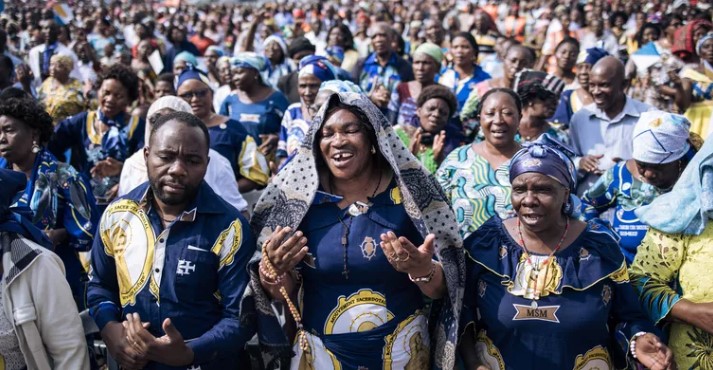
Africa has officially become the driving force behind the future growth of the global Catholic Church, even as the continent simultaneously experiences an unprecedented surge in Pentecostal and Charismatic Christianity that is rapidly reshaping its religious landscape.
While the Catholic Church continues to expand through its deep institutional roots and long-term demographic momentum, Pentecostal movements are growing at a significantly faster pace due to their highly flexible, localized, and emotionally expressive approach to worship.
The result is an intensifying competition for influence, membership, and cultural relevance across much of Sub-Saharan Africa.
The Catholic Church increasingly views Africa not as a traditional mission territory, but as the future center of global Catholicism.
Sub-Saharan Africa remains the only major region where the Catholic population is expanding quickly enough to offset declining church membership in Europe and North America.
Demographic estimates indicate that roughly one out of every five Catholics worldwide is now African — a figure expected to continue rising in the coming decades.
One of Catholicism’s greatest strengths across Africa is its vast institutional infrastructure.
The church operates thousands of:
- Primary and secondary schools
- Universities
- Hospitals
- Clinics
- Social welfare centers
In many countries where state infrastructure remains weak or underfunded, Catholic institutions function as critical providers of healthcare, education, and social support.
While many Western nations face severe shortages of clergy, African seminaries are experiencing a boom in priesthood vocations.
Large numbers of young African men are entering theological training programs, allowing African priests to increasingly serve in churches across Europe and the Americas where local vocations have sharply declined.
Despite Catholicism’s continued expansion, Pentecostal and Charismatic Christianity has become the fastest-growing religious movement in modern African history.
Across cities, towns, and rapidly growing urban settlements, Pentecostal churches are attracting millions of worshippers — including many from traditional Catholic and Protestant denominations.
Pentecostal services are known for vibrant worship styles featuring:
- Contemporary gospel music
- Emotional prayer sessions
- Deliverance ministries
- Healing services
- Active congregational participation
This highly expressive format resonates strongly with many African communities where spirituality is often understood as immediate, personal, and emotionally dynamic.
Prosperity Gospel Appeal
A major driver of Pentecostal growth is the widespread influence of prosperity theology.
Many ministries preach that strong faith, prayer, and financial giving can lead directly to:
- Physical healing
- Employment opportunities
- Financial breakthroughs
- Protection from spiritual attacks
In regions facing high unemployment, poverty, and limited healthcare access, such teachings provide a powerful message of hope and empowerment.
Pentecostalism’s decentralized structure also enables rapid expansion.
Unlike Catholic clergy, who undergo years of theological and institutional training, Pentecostal pastors can establish ministries quickly with minimal formal barriers.
Churches can emerge in:
- Storefront buildings
- Open fields
- Tents
- Residential neighborhoods
This flexibility allows Pentecostal congregations to spread rapidly through densely populated urban communities and informal settlements.
In response to the growing influence of Pentecostalism — particularly among younger Africans — the Catholic Church has increasingly embraced reforms and localized expressions of worship.
One major development has been the expansion of the Catholic Charismatic Renewal movement.
Millions of African Catholics now worship in Charismatic-style parishes that incorporate:
- Drumming and dancing
- Spontaneous prayer
- Healing services
- Contemporary worship music
while still remaining fully aligned with Vatican doctrine and papal authority.
The church has also intensified efforts toward “inculturation,” adapting liturgical practices to reflect African cultural identities.
Many Catholic services now integrate:
- Local languages
- Traditional musical instruments
- Indigenous melodies
- African cultural expressions
Church leaders believe these adaptations help ensure that Catholic worship feels both spiritually authentic and culturally rooted for African believers.
Religious scholars say Africa is now shaping the future direction of global Christianity more than any other region in the world.
As Catholicism and Pentecostalism continue to grow side by side, the continent is becoming the center of one of the most significant religious transformations of the modern era — one that could redefine Christian worship, leadership, and influence worldwide for generations to come.
Source: Omanghana