Omanghana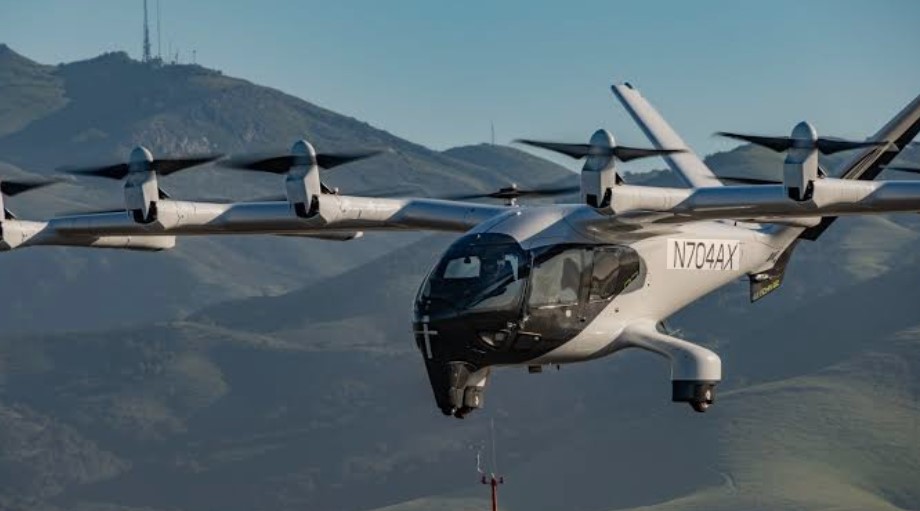
Aerospace and defense corporation AIRO and its advanced mobility brand Jaunt Air Mobility have introduced a new dual-use autonomous aircraft platform designed to address critical “middle-mile” logistics and resupply challenges in both military and civilian operations.
The next-generation aircraft was officially unveiled during the AUVSI XPONENTIAL conference in Detroit, where the companies showcased the platform’s advanced slowed-rotor design and hybrid-electric propulsion system. The aircraft is specifically engineered to bridge the difficult operational gap between rear logistics hubs and forward-deployed units operating in austere battlefield environments or remote rural regions.
The platform utilizes patented slowed-rotor architecture that combines the vertical takeoff and landing capabilities of a helicopter with the efficient forward-flight performance of a fixed-wing aircraft. This configuration allows the aircraft to operate without traditional runways while maintaining greater cruise efficiency and operational flexibility over long distances.
Its hybrid-electric propulsion system is another major advantage, eliminating the need for charging infrastructure at remote destination sites. Developers say this capability is critical for operations in isolated environments where electrical support systems may not exist or where rapid deployment is essential.
According to the companies, the aircraft’s advanced hybrid power management system enables exceptional endurance, with standard operational ranges between 300 and 500 nautical miles. Under optimized conditions, the platform can reportedly extend its range to as far as 1,000 nautical miles.
The aircraft platform has been developed using a shared manufacturing architecture that supports two distinct mission profiles. The primary logistics configuration is designed for middle-mile cargo transport, remote resupply missions, and humanitarian aid delivery. It features a detachable cargo pod system that enables rapid automated loading and unloading in difficult operational environments.
A second intelligence-focused configuration is tailored for Intelligence, Surveillance, and Reconnaissance (ISR) operations. This version is optimized for long-endurance monitoring missions across wide operational areas and can remain airborne for approximately 15 to 16 hours.
The companies stated that the program is currently advancing through its final detailed engineering phases using accelerated digital engineering and validation models. Executives noted that development is progressing ahead of internal expectations while remaining below projected research and development cost targets.
The first flight of the autonomous aircraft platform is scheduled before the end of this year, while initial commercialization and defense deployment are targeted for 2027. Industry analysts believe the platform could become a major asset for military logistics, disaster response, humanitarian operations, and commercial cargo delivery in infrastructure-limited regions worldwide.
Source: Omanghana