Omanghana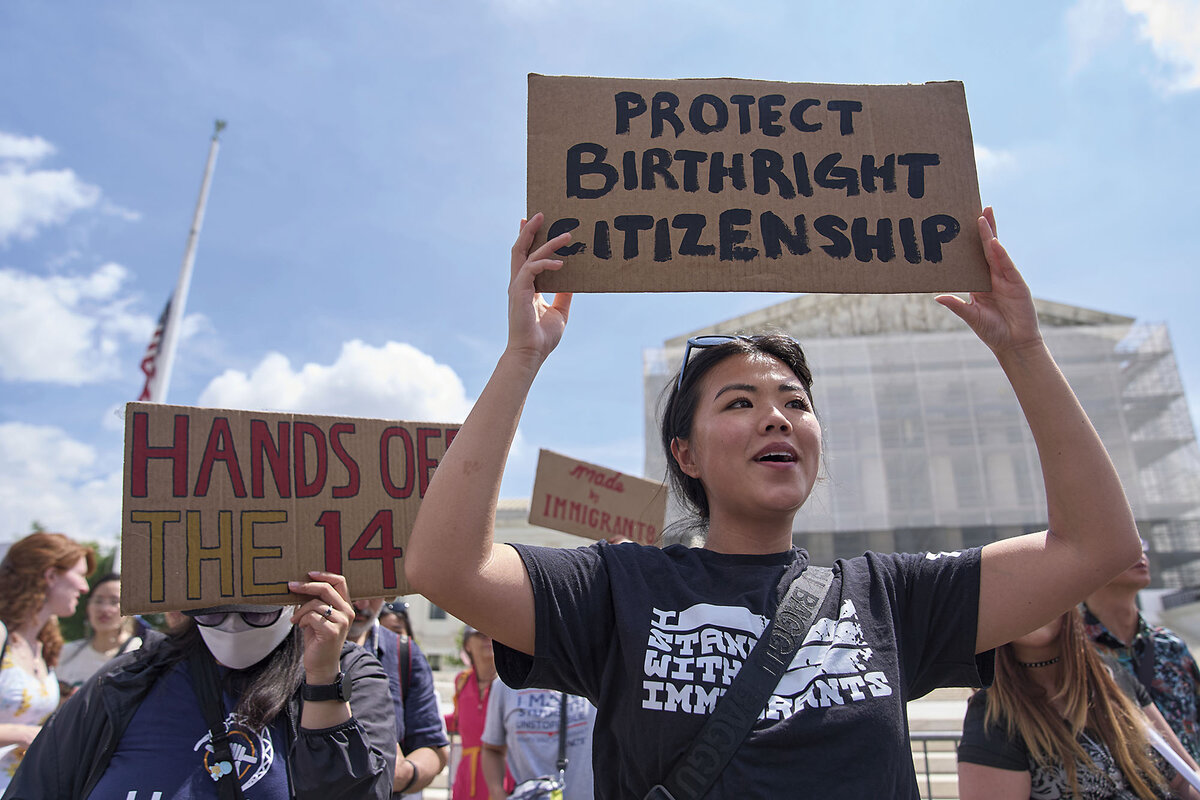
photo by csmonitor
Birthright citizenship, also known as jus soli (“right of the soil”), remains one of the most debated principles of nationality law in the modern world. Under this system, a child automatically acquires citizenship simply by being born within a country’s territory, regardless of the immigration status or nationality of their parents.
Today, only an estimated 32 to 35 countries maintain some form of unconditional birthright citizenship, with the overwhelming majority located in the Western Hemisphere. The United States and Canada stand out among developed nations as two of the most prominent countries that continue to grant automatic citizenship at birth.
In contrast, most countries across Europe, Asia, and Africa rely on jus sanguinis (“right of blood”), a system in which citizenship is primarily determined by parental nationality rather than place of birth.
A Policy Rooted in the Americas
Unconditional birthright citizenship has historically been associated with the nations of the Americas. During the nineteenth and twentieth centuries, many countries in the region adopted the policy to encourage settlement, attract immigrants, and promote national integration.
Today, countries including the United States, Canada, Mexico, Brazil, Argentina, and most nations in Central and South America continue to recognize birthright citizenship as a fundamental principle of their nationality laws.
However, there are notable exceptions. Several countries in the region, including Colombia, Chile, and the Dominican Republic, have introduced restrictions that require at least one parent to have legal residency or another qualifying immigration status before citizenship can be granted automatically at birth.
Rare Outside the Western Hemisphere
Beyond the Americas, unrestricted birthright citizenship is relatively uncommon.
Only a small number of countries in Africa, Asia, and Oceania continue to grant automatic citizenship based solely on birthplace. Nations such as Lesotho, Tanzania, Pakistan, and Fiji are among the few examples where elements of unconditional jus soli remain in place.
Most countries outside the Western Hemisphere instead require citizenship to be inherited through parents, reflecting a legal tradition that emphasizes ancestry and family ties over birthplace.
The Global Shift Away From Birthright Citizenship
Over the past several decades, many governments have moved away from automatic birthright citizenship and adopted more restrictive nationality laws.
Several countries that once practiced broad jus soli have revised their legal frameworks to require that at least one parent be a citizen, permanent resident, or long-term legal resident.
Among the most notable examples:
- The United Kingdom ended unrestricted birthright citizenship in 1981.
- France introduced significant restrictions in 1993.
- Ireland abolished automatic birthright citizenship following a 2004 referendum, with the changes taking effect in 2005.
- New Zealand also revised its laws to require a qualifying parental immigration status.
These reforms reflected growing debates over immigration, national identity, and citizenship policy in many developed nations.
The Unique American Framework
While the United States shares birthright citizenship with neighboring countries such as Canada and Mexico, its legal foundation is distinctive because it is embedded directly in the U.S. Constitution.
The principle is established through the Citizenship Clause of the Fourteenth Amendment, ratified in 1868 following the Civil War. The amendment states that all persons born in the United States and “subject to the jurisdiction thereof” are citizens of the United States.
The constitutional interpretation was further reinforced by the landmark Supreme Court decision in the case of United States v. Wong Kim Ark, which affirmed that children born in the United States generally acquire citizenship regardless of their parents’ nationality.
Birthright Citizenship at the Center of a Legal Battle
Despite its long constitutional history, birthright citizenship has become the subject of renewed legal and political debate in the United States.
The issue intensified after President Donald Trump issued an executive order seeking to deny automatic citizenship to certain children born to undocumented immigrants or individuals holding temporary immigration status.
The administration argued that the phrase “subject to the jurisdiction thereof” should be interpreted more narrowly and that citizenship should depend on a parent’s legal domicile or permanent immigration status at the time of birth.
The policy immediately faced legal challenges and advanced through the federal court system, culminating in a closely watched Supreme Court case known as Trump v. Barbara.
Awaiting a Historic Decision
The Supreme Court heard oral arguments in the case during 2026, setting the stage for what many legal scholars consider one of the most consequential citizenship rulings in decades.
Court observers noted that several justices appeared skeptical of attempts to alter the traditional interpretation of the Fourteenth Amendment through executive action alone. As a result, many analysts believe the Court may ultimately uphold the longstanding understanding of birthright citizenship.
A final ruling is expected by early July 2026 and could have significant implications for immigration law, constitutional interpretation, and the future of citizenship policy in the United States.
A Debate With Global Significance
As most countries continue to rely on ancestry-based citizenship systems, the United States remains part of a relatively small group of nations that grant citizenship primarily through birthplace.
The ongoing legal debate highlights broader questions about immigration, national identity, constitutional rights, and the evolving meaning of citizenship in an increasingly interconnected world.
Whatever the Supreme Court ultimately decides, the outcome is likely to influence discussions about nationality law not only in the United States but also around the globe.
Source: Omanghana