Omanghana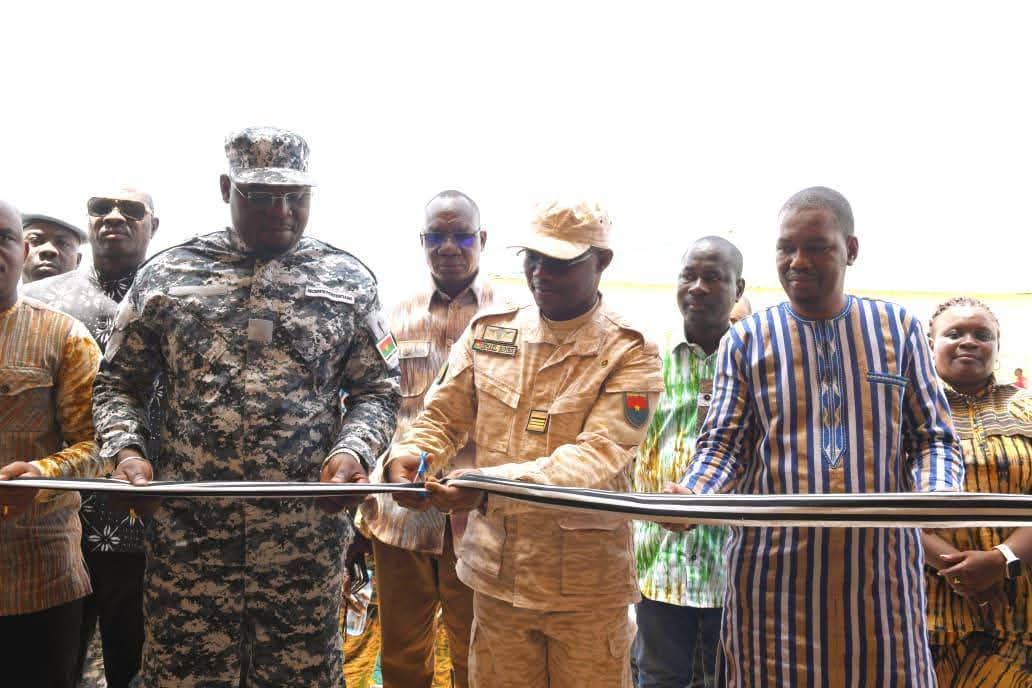
Burkina Faso has inaugurated a new two-story residential building at the Baporo Agricultural Penitentiary Center (CPAB), marking a significant step in the country’s efforts to modernize correctional facilities, improve living conditions for inmates, and promote rehabilitation through productive labor.
The newly completed R+1 structure, constructed at a cost of approximately 500 million CFA francs, is designed to expand the center’s accommodation capacity while aligning prison infrastructure with modern standards of human dignity and social reintegration.
The new residential building has a capacity of 500 inmates and is equipped with modern amenities intended to enhance living conditions and support rehabilitation efforts within the penitentiary system.
The facility was officially inaugurated by Burkina Faso’s Minister of Construction, Housing and Urban Planning, Mikaïlou Sidibé, in the presence of Justice Minister Edasso Rodrigue Bayala and Agriculture Minister Commander Ismaël Sombié.
Government officials described the project as part of a broader transformation of the country’s correctional system, aimed at replacing outdated detention facilities with infrastructure that prioritizes human rights, rehabilitation, and reintegration.
Speaking during the ceremony, Justice Minister Bayala emphasized that the project reflects the transitional government’s commitment to moving away from colonial-era punitive prison models and toward more humane and productive correctional environments.
The inauguration coincided with the official launch of the 2026 penitentiary agricultural campaign, highlighting the central role that agricultural production plays at the Baporo facility.
Originally established in 1986 under the leadership of former President Thomas Sankara, the open-air agricultural prison has undergone significant revitalization in recent years.
Following a successful 2025 agricultural season that yielded 240 tons of cereals, authorities are planning a major expansion of farming activities. The center aims to cultivate more than 300 hectares of developed farmland during the 2026 season, with a projected harvest of approximately 782.5 tons.
Officials say the initiative will contribute to national food production while providing inmates with practical agricultural skills and work experience.
The new residential facility also supports a wider justice reform initiative championed by President Ibrahim Traoré, which encourages rehabilitation through community service and agricultural labor.
Under the program, inmates have the opportunity to reduce their prison sentences through productive work. Authorities have indicated that one month of agricultural labor can result in a reduction of up to three months from an inmate’s sentence, subject to applicable legal provisions.
The policy is designed to encourage rehabilitation, reward good conduct, and provide inmates with vocational training that can improve their prospects after release.
By combining expanded accommodation facilities with large-scale agricultural production, the government hopes to transform prisons into centers of productivity and skills development rather than mere detention institutions.
Officials believe the initiative will not only support Burkina Faso’s pursuit of greater food self-sufficiency but also equip inmates with valuable trades and practical experience that can facilitate their reintegration into society.
The Baporo Agricultural Penitentiary Center is increasingly being positioned as a model for correctional reform in Burkina Faso, blending rehabilitation, agricultural development, and social reintegration into a single framework aimed at delivering long-term benefits for both inmates and the nation.
Source: Omanghana