Omanghana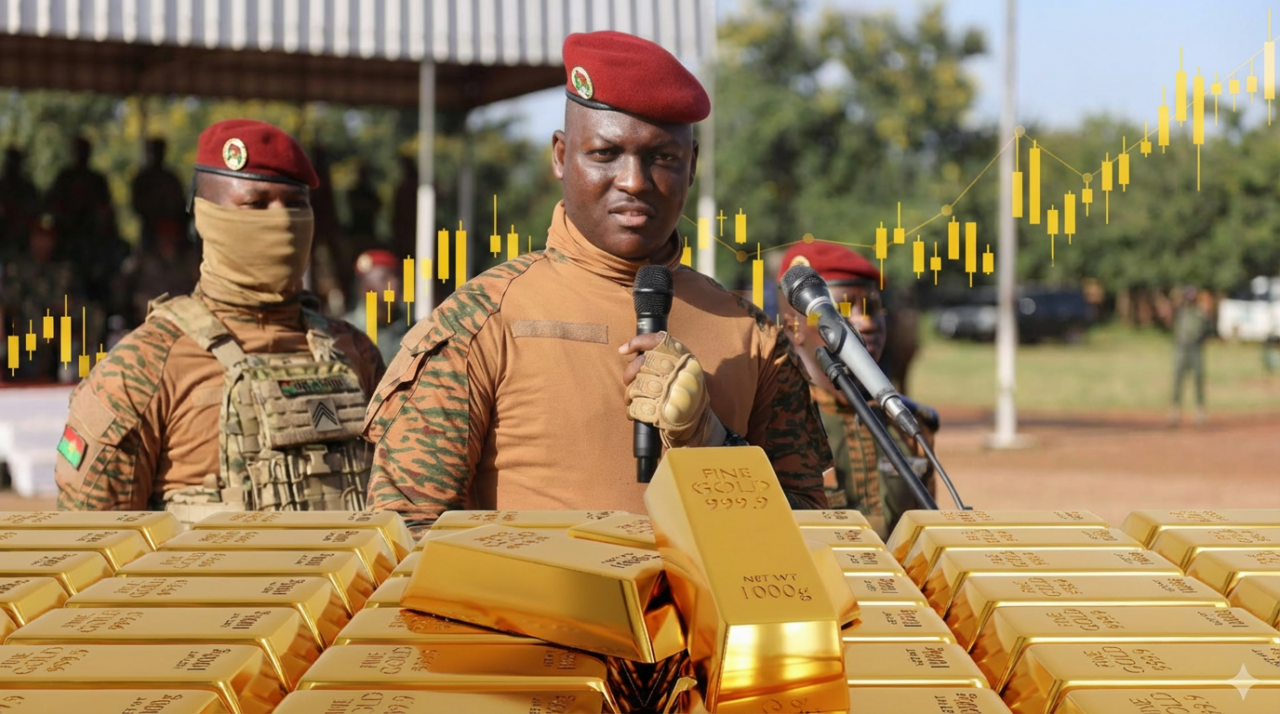
Burkina Faso has officially created a new sovereign wealth fund aimed at capturing surplus mining revenues and redirecting them toward long-term industrialization and infrastructure development.
The country’s Council of Ministers approved the executive decree establishing the Fonds Souverain Minier d’Investissements du Burkina Faso (FSMIB), officially named “Siniyan-Sigui.”
The initiative marks another major step in the military-led government’s broader push for economic sovereignty and greater state control over the nation’s lucrative extractive industries, particularly the gold sector.
According to Finance Minister Aboubakar Nacanabo, the sovereign fund will function as a dedicated public investment vehicle financed primarily through surplus mining revenues.
Under the structure, the fund will automatically receive excess cash generated whenever international mineral prices — especially gold prices — rise above benchmark thresholds established by the state.
Officials say the mechanism is intended to prevent windfall mining income from being absorbed into short-term government spending.
Instead, all capital allocated to the “Siniyan-Sigui” fund will be ring-fenced exclusively for strategic infrastructure projects and domestic industrialization initiatives aimed at strengthening Burkina Faso’s long-term economic independence.
The government expects the fund to begin financing its first major investment projects in 2027.
Gold has overtaken cotton as Burkina Faso’s leading export commodity, helping transform the country into Africa’s fourth-largest gold producer.
Under the leadership of Ibrahim Traoré, the administration has intensified efforts to secure greater national control and economic benefits from the mining sector through a series of resource-nationalist policies.
The government has progressively expanded state ownership in the mining industry through the state-owned company Société de Participation Minière du Burkina (SOPAMIB).
Recent actions have included the takeover of major mining assets such as the Boungou and Wahgnion gold mines, previously controlled by multinational operators.
Authorities have also announced plans to significantly increase the government’s ownership stake in the large Kiaka gold mine, seeking to raise state participation from 15% to 40%.
As part of its broader industrialization strategy, Burkina Faso is also building its own domestic gold refinery to process mineral output locally instead of exporting raw ore abroad.
The move is intended to retain more value within the country, strengthen local supply chains, and reduce dependence on foreign refining facilities.
Government officials argue that increasing domestic processing capacity will create jobs, improve technical expertise, and boost national revenue retention from mineral exports.
While the government says the reforms are necessary to improve economic sovereignty, strengthen the country’s credit profile, and reduce dependence on external financing, the rapid restructuring of the mining sector has generated concern among international investors.
Mining companies and foreign investors have raised questions regarding regulatory stability, investor protections, and the long-term operational environment amid the government’s increasingly assertive intervention in the extractive industry.
Despite these concerns, Burkina Faso’s leadership continues to position mining nationalism and domestic industrialization as central pillars of the country’s future economic strategy.
Source: Omanghana