Omanghana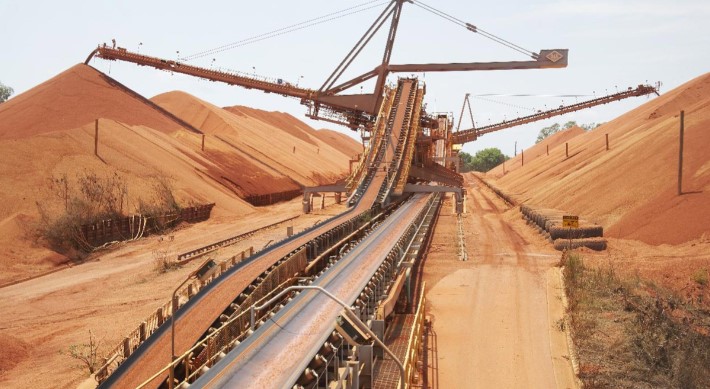
Aluminum Corporation of China, widely known as Chalco, has finalized a landmark $1 billion agreement to construct a large-scale alumina refinery in Guinea, strengthening the country’s ambitions to move beyond raw mineral exports and expand domestic industrial processing.
The agreement marks a historic milestone for Chalco as the company’s first overseas alumina refining project. It also aligns with Guinea’s broader strategy to capture greater economic value from its vast mineral wealth by developing local refining and industrial infrastructure instead of relying primarily on raw bauxite exports.
Under the deal, a newly formed special-purpose entity will oversee the development of a refinery capable of producing 1.2 million tons of alumina annually. Alumina is the critical intermediate material used in aluminum production, making the facility strategically important for global supply chains.
The investment package also includes the construction of supporting port infrastructure designed to facilitate heavy transport operations and export logistics, ensuring efficient movement of raw materials and refined products.
As part of the mining agreement, the Guinean government will receive an initial 5% ownership stake in the project at either zero or nominal cost. The state will also retain the legal option to increase its participation to as much as 35% at market value in the future.
The arrangement reflects Guinea’s increasing emphasis on securing stronger state participation in major mining and industrial ventures operating within the country.
The refinery project will integrate directly with Chalco’s existing operations in West Africa, particularly its long-running bauxite mining activities at the Boffa mine in Guinea. Chalco has spent more than a decade developing upstream extraction capabilities in the country, and the new refinery is expected to significantly deepen its supply-chain integration.
Historically, Africa holds nearly 29% of global bauxite reserves but accounts for less than 1% of worldwide alumina refining capacity. Much of the continent’s mineral output has traditionally been exported as raw ore rather than processed into higher-value industrial products.
For Chinese aluminum producers, overseas refining projects are becoming increasingly important as domestic industrial expansion faces tighter environmental restrictions.
China currently produces more than half of the world’s aluminum, but national production capacity is approaching regulatory limits imposed by Beijing as part of efforts to reduce industrial carbon emissions and control energy-intensive manufacturing growth.
By developing refining operations in Guinea, Chalco can secure long-term access to critical raw materials while easing pressure on domestic production constraints.
The refinery project has already passed key internal board approvals within Chalco and is now undergoing final regulatory reviews from Guinean authorities and company shareholders before construction activities can fully commence.
Source: Omanghana