Omanghana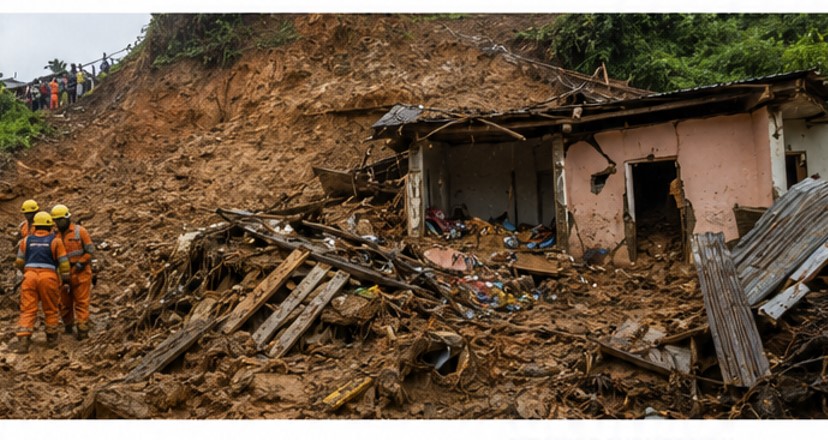
Cape Coast has been plunged into mourning after an intense eight-hour rainstorm triggered devastating flash floods, mudslides, and structural collapses that claimed several lives and displaced hundreds of residents across the Central Regional capital.
The torrential rainfall, which began in the early hours of Friday, June 19, 2026, overwhelmed drainage systems, submerged major roads, and caused widespread destruction in residential and commercial areas. Emergency responders continue to assess the damage as authorities race to prevent further casualties from weakened structures and unstable hillsides.
Multiple Tragedies Unfold Across the City
The relentless storm sparked a series of deadly incidents in different parts of Cape Coast, highlighting the scale of the disaster.
Tantri Mudslide Claims Infant’s Life
One of the most heartbreaking incidents occurred in the Tantri community, where a waterlogged hillside collapsed after hours of heavy rainfall. The resulting mudslide swept through three buildings situated at the foot of the slope, burying parts of the structures under mud and debris.
Twenty-month-old Hanson Mensah was killed in the collapse, while three women sustained serious injuries and were rushed for medical treatment. Rescue teams worked through difficult conditions to search the wreckage and assist affected residents.
Building Collapse Kills Two in Gyagyaano
In another tragic development, a single-room building behind Yogurt Fie on Idan Fourth Alley in the Gyagyaano area collapsed during the storm.
Personnel from the Ghana National Fire Service (GNFS) successfully rescued four occupants trapped beneath the debris. However, despite rescue efforts, 12-year-old Anastasia Abakah and 40-year-old Adwoa Baduwa later succumbed to injuries sustained in the collapse.
The incident has renewed concerns over the structural integrity of buildings located in flood-prone neighborhoods.
Toddler Drowns in Flooded Gutter
The disaster also claimed the life of a young child in the Nkanfoa area within the Cape Coast North constituency.
According to local reports, toddler Abigail Kakraba accidentally slipped into a heavily flooded drainage gutter while playing outside and was swept away by the fast-moving water before rescuers could intervene.
Floodwaters Paralyze Key Infrastructure
Beyond the tragic loss of life, the prolonged rainfall brought much of Cape Coast to a standstill as overflowing drains and inundated roads disrupted transportation, education, healthcare, and commerce.
University of Cape Coast Issues Safety Alert
The University of Cape Coast (UCC) urged students, lecturers, and staff to remain indoors after floodwaters rendered several access routes impassable.
Areas behind the Sandwich Lecture Block, the Science Roundabout, and the Ayensu section of campus were among those severely affected, prompting university authorities to issue urgent safety advisories.
Hospital Access Severely Affected
Flooding also impacted roads leading to the Cape Coast Teaching Hospital, where sections of the adjacent highway became submerged.
The resulting traffic congestion trapped ambulances, patients, and motorists, complicating emergency transportation during a period of heightened demand for rescue and medical services.
Businesses Forced to Shut Down
Commercial districts across the city suffered extensive disruption as floodwaters inundated markets and business centers.
The Abura Market, Interbeton Junction, and the vicinity of Cape Coast Stadium were among the hardest-hit locations, forcing traders and shop owners to suspend operations prematurely and protect their goods from water damage.
Residents Blame Poor Drainage and Unplanned Development
In the aftermath of the disaster, many residents and community leaders voiced frustration over what they described as preventable flooding caused by longstanding infrastructure deficiencies.
They cited clogged drainage channels filled with plastic waste, silt, and debris as a major factor that prevented stormwater from flowing efficiently through the city.
Others pointed to rapid and poorly regulated construction activities that have encroached on natural waterways and floodplains, reducing the land’s capacity to absorb heavy rainfall and redirecting water into residential communities.
The combination of blocked drains and unchecked urban expansion, residents argue, has significantly increased Cape Coast’s vulnerability to flooding during intense storms.
NADMO Launches Emergency Operations
The National Disaster Management Organization (NADMO), working alongside local authorities and emergency agencies, has mobilized teams to respond to the crisis.
Under the leadership of Central Regional Director Emmanuel Kwesi Dawood Mensah and Cape Coast Mayor George Justice Arthur, assessment teams have been deployed to evaluate damaged structures and coordinate relief efforts for affected families.
Emergency crews are currently conducting evacuations in vulnerable hillside communities, including Bakano, while engineers inspect compromised buildings for safety risks. Authorities have also initiated the controlled demolition of partially collapsed structures deemed likely to fail in order to prevent additional injuries or fatalities.
Calls for Long-Term Flood Mitigation
The latest disaster has renewed calls for sustained investment in flood prevention measures across Cape Coast. Urban planners, residents, and disaster management experts continue to advocate for improved drainage infrastructure, stricter enforcement of building regulations, and regular desilting of waterways to reduce the impact of future storms.
As cleanup operations continue and affected families begin to rebuild, the tragedy serves as another stark reminder of the growing risks posed by extreme weather and inadequate urban planning in rapidly expanding cities.
Source: Omanghana