Omanghana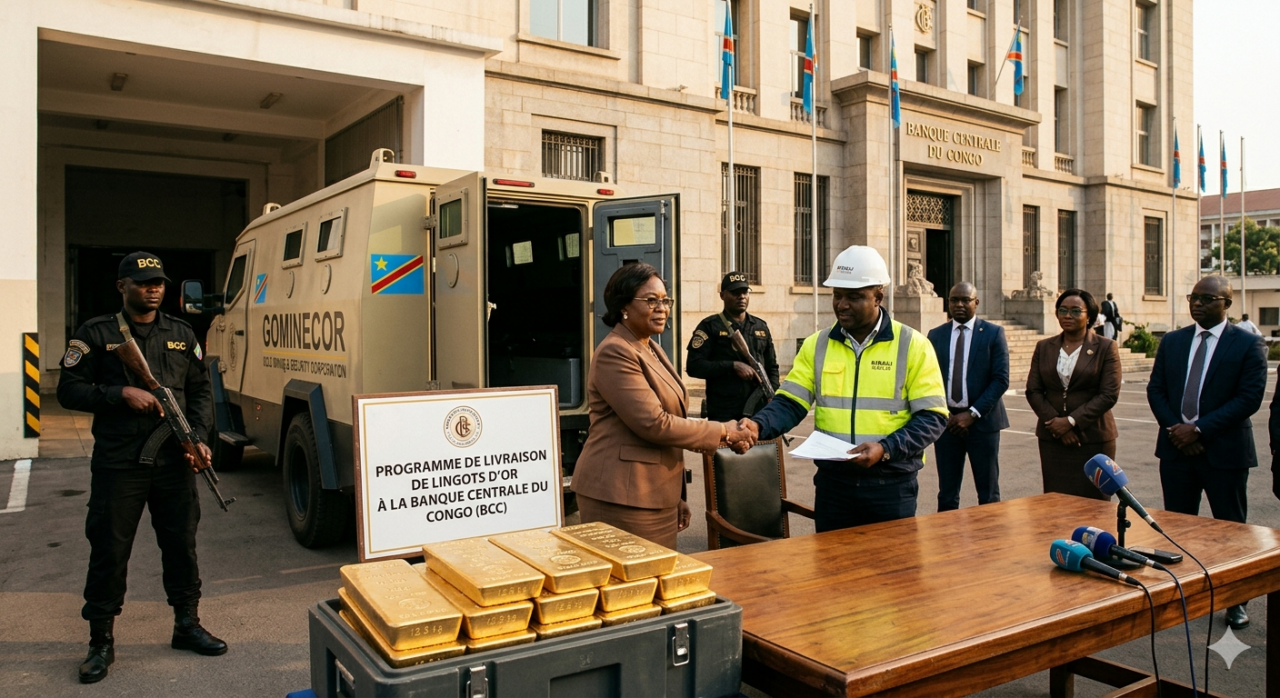
The Central Bank of Congo has taken a significant step toward strengthening the Democratic Republic of Congo’s financial resilience by receiving its first batch of gold ingots under a new national reserve program. The delivery, totaling 20 kilograms of refined gold, was officially handed over in April 2026 by Société Minière de Kilo-Moto, marking the beginning of a broader strategy to rebuild and diversify the country’s reserve assets.
This initial consignment represents more than a symbolic milestone; it signals a shift in how the Central Bank of Congo intends to manage its foreign exchange reserves in an increasingly volatile global economy. Historically, the country’s reserves have been heavily concentrated in foreign currencies such as the U.S. dollar and the euro. By incorporating physical gold into its holdings, the central bank aims to hedge against currency fluctuations and external economic shocks while reinforcing long-term financial stability.
A notable aspect of the program is its emphasis on domestic value addition. The gold ingots were produced and refined locally at the Bukavu refinery, underscoring a deliberate move away from exporting raw minerals toward processing resources within the country. This approach not only enhances the value of the commodity but also supports local industries, creates jobs, and strengthens technical capacity within the mining sector. It reflects a broader policy direction aimed at ensuring that more of the economic benefits derived from the country’s vast mineral wealth are retained domestically.
Under the newly introduced “Gold for Reserves” framework, the central bank expects to receive approximately 50 kilograms of gold each month from state-sanctioned mining entities. If sustained, this steady accumulation could significantly increase the country’s gold reserves over time, providing a more balanced and diversified asset base. Such a strategy is particularly important for resource-rich economies like the Democratic Republic of Congo, where reliance on commodity exports often exposes the economy to global price swings and exchange rate instability.
Economists believe the initiative could have a stabilizing effect on the Congolese franc (CDF), which has faced inflationary pressures over the past year. By backing reserves with tangible assets like gold, the central bank may improve confidence in the national currency and reduce vulnerability to external shocks. While the immediate impact on inflation and exchange rates may be gradual, the long-term benefits of a more diversified reserve structure are widely seen as positive for macroeconomic stability.
The move also aligns with a growing trend among African central banks seeking to assert greater economic sovereignty. Countries such as Ghana, Zimbabwe, and Nigeria have recently implemented similar policies, increasing their gold holdings by purchasing locally mined output. This regional shift reflects a broader rethinking of reserve management strategies, with governments looking to reduce dependence on foreign currencies and strengthen their ability to navigate global financial uncertainties.
For the Democratic Republic of Congo, the launch of this gold reserve program represents a strategic pivot toward self-reliance and economic resilience. As the initiative expands, its success will depend on consistent supply from the mining sector, effective governance, and the ability to integrate gold reserves into a broader framework of sound monetary and fiscal policies. If managed effectively, it could mark a turning point in how the country leverages its natural resources to support sustainable economic growth.
Source: Omanghana