Omanghana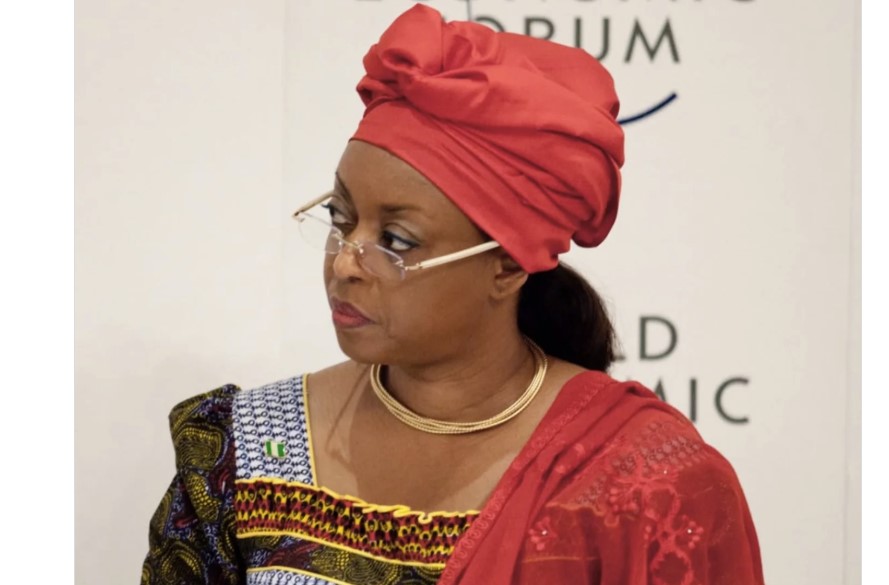
Former OPEC President and Nigeria’s ex-Minister of Petroleum Resources, Diezani Alison-Madueke, has been acquitted of all bribery charges by a London jury, bringing an end to an 11-year legal battle that attracted international attention.
After a five-month trial at Southwark Crown Court, jurors deliberated for more than 46 hours before returning unanimous not-guilty verdicts on Wednesday, June 17, 2026. The 65-year-old was cleared of five counts of accepting bribes and one count of conspiracy to commit bribery.
Co-Defendants Also Cleared
The verdict also exonerated Alison-Madueke’s alleged co-conspirators.
Her older brother, Doye Agama, a 69-year-old Pentecostal archbishop based in Manchester, was found not guilty of conspiracy to commit bribery.
Meanwhile, Olatimbo Ayinde, a 54-year-old British-Nigerian oil executive, was acquitted of charges relating to bribery and bribery of a foreign public official. During the proceedings, the defense argued that Ayinde had acted as an undercover informant working with Nigeria’s Economic and Financial Crimes Commission (EFCC) to expose corruption within government circles.
The Allegations
The case originated from an investigation launched by the United Kingdom’s National Crime Agency (NCA) more than a decade ago, culminating in formal charges against Alison-Madueke in August 2023.
Prosecutors alleged that while serving as Nigeria’s Minister of Petroleum Resources between 2010 and 2015 under President Goodluck Jonathan, she received lavish benefits from oil executives seeking lucrative government contracts.
Among the alleged inducements were a £2.8 million luxury property in London’s Marylebone district, chauffeur-driven vehicles, private jet travel, Cartier jewelry, and payments toward her son’s private school education.
Defense Challenges Prosecution’s Claims
Led by Jonathan Laidlaw KC, Alison-Madueke’s legal team rejected the allegations and argued that the prosecution had failed to prove its case beyond reasonable doubt.
The defense maintained that Nigerian public officials are constitutionally prohibited from holding foreign bank accounts, making it common practice for legitimate third parties to manage overseas expenses. Alison-Madueke also testified that official travel costs were reimbursed by the Nigerian government and insisted she had earned the nickname “Madame Due Process” because of her commitment to transparency.
Her lawyers further claimed that important defense documents had either disappeared or had been improperly withheld during the investigation, undermining key aspects of the prosecution’s case.
Blow to UK Anti-Corruption Efforts
The acquittal represents a significant setback for the National Crime Agency, which had viewed the prosecution as a landmark opportunity to demonstrate the United Kingdom’s commitment to tackling international corruption and illicit wealth flowing through London.
The lengthy 11-year investigation and prosecution also drew criticism, with defense lawyers and observers questioning the delays and highlighting concerns about the efficiency of the justice system.
Legal Challenges Continue
Following the verdict, a spokesperson for Alison-Madueke said the former minister felt that her “nightmare is over” after enduring years of public scrutiny and legal uncertainty.
However, despite her acquittal in the United Kingdom, Alison-Madueke’s legal issues have not been fully resolved. She continues to face separate money laundering and asset forfeiture proceedings initiated by authorities in Nigeria and the United States, even as she remains free and residing in London’s St. John’s Wood area.
Source: Omanghana