Omanghana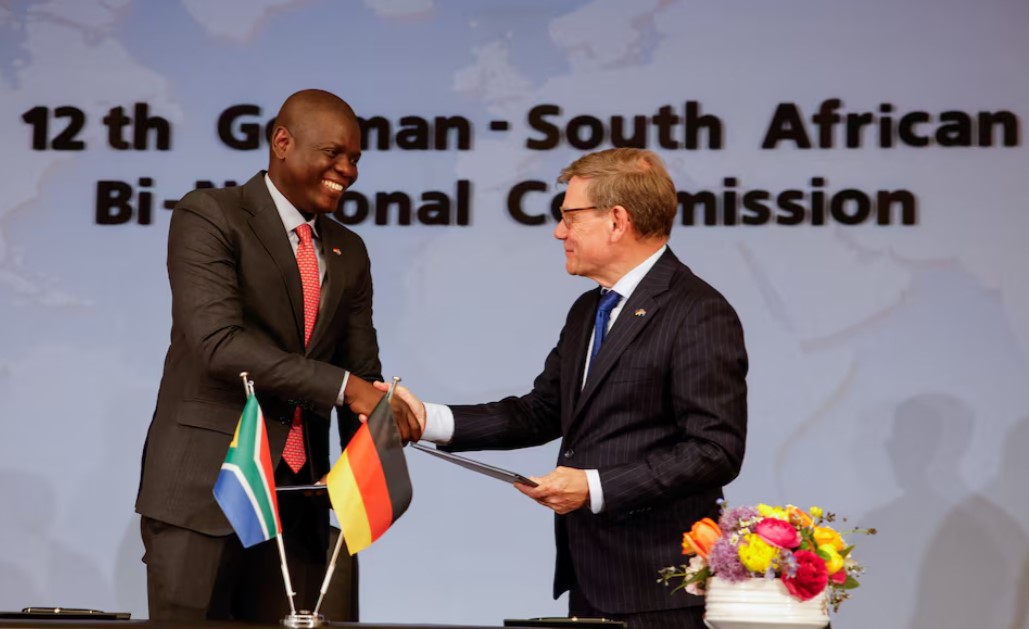
Germany and South Africa have significantly strengthened their bilateral relationship following the 12th session of the German–South African Bi-National Commission, marking a new chapter in cooperation between Europe and Africa’s most industrialized economy. The high-level engagement culminated in the formal elevation of ties to a “Strategic Partnership,” reflecting a shared commitment to deeper collaboration across climate policy, energy transition, economic development, and global governance.
A central outcome of the meeting was Germany’s pledge of a new €200 million concessional climate loan to support South Africa’s ongoing efforts to expand its power grid and accelerate the transition to renewable energy. The funding is expected to play a crucial role in stabilizing electricity supply while enabling the integration of cleaner energy sources into the national grid. As South Africa continues to grapple with energy challenges, including capacity constraints and aging infrastructure, this financial support represents a timely boost to its long-term sustainability agenda.
Beyond climate finance, both countries agreed to intensify cooperation in strategically important sectors such as critical minerals, green hydrogen, and battery value chains. These areas are increasingly central to the global energy transition, and South Africa’s vast mineral resources position it as a key player in the emerging green economy. Germany, seeking to secure reliable supply chains and reduce dependence on traditional energy sources, has committed—alongside the European Union—to extending more than €270 million in funding to support joint initiatives in these sectors. This collaboration is expected to drive investment, innovation, and industrial development while strengthening economic ties between the two nations.
The elevation of relations to a Strategic Partnership signals a broader expansion of cooperation beyond economic and environmental issues. Both governments have agreed to enhance high-level dialogue on global security, conflict mediation, and cyber foreign policy, reflecting a shared interest in addressing complex international challenges. This move positions South Africa as a key partner for Germany on the African continent and underscores the importance of multilateral engagement in an increasingly fragmented geopolitical landscape.
Additional agreements reached during the commission meeting highlight a comprehensive approach to partnership. In the area of vocational training, both countries committed to expanding programs aimed at equipping young people with practical skills, thereby addressing youth unemployment and supporting workforce development. In the agricultural sector, joint efforts will focus on preventing the spread of foot-and-mouth disease, a critical issue for South Africa’s livestock industry and export markets. These initiatives demonstrate a recognition that sustainable development requires coordinated action across multiple sectors.
South Africa’s Minister of International Relations and Cooperation, Ronald Lamola, expressed appreciation for Germany’s continued support, particularly at a time when Pretoria’s relations with the United States have faced increasing strain. He specifically acknowledged his German counterpart, Johann Wadephul, for maintaining strong diplomatic engagement despite shifting global dynamics.
Tensions between South Africa and the United States have intensified in recent months, with Donald Trump reportedly excluding South Africa from certain G20 engagements, citing disagreements over foreign policy positions and domestic legislation. This development has added a layer of complexity to South Africa’s international relations, making partnerships with countries like Germany even more strategically important.
Overall, the outcomes of the Bi-National Commission meeting underscore a deepening alignment between Germany and South Africa at a time when global alliances are evolving. By combining financial support, technological collaboration, and diplomatic engagement, the two nations are positioning themselves to address shared challenges while advancing mutual interests in sustainability, economic growth, and international stability.
Source: Omanghana