Omanghana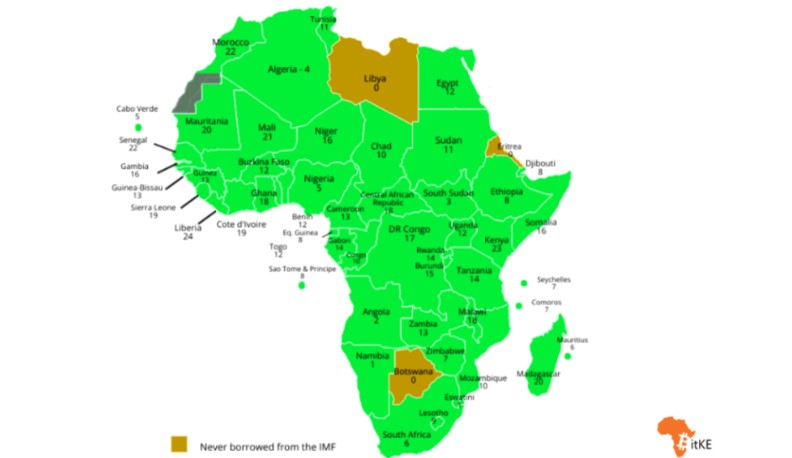
photo by bitcoinke.io
Ghana has emerged as Africa’s fourth-largest debtor to the International Monetary Fund (IMF) as of May 2026, with outstanding obligations reaching 2.72 billion Special Drawing Rights (SDR), equivalent to approximately $3.74 billion.
The latest IMF data places Ghana behind Egypt, Côte d’Ivoire, and Kenya among the continent’s largest borrowers from the global lender. The rise in Ghana’s obligations largely reflects recent disbursements made under the IMF’s Extended Credit Facility (ECF) program, which was introduced to support the country’s economic recovery and debt restructuring efforts.
According to the rankings, Egypt currently holds the position as Africa’s largest IMF debtor with 7.24 billion SDR in outstanding obligations. Côte d’Ivoire follows with 3.60 billion SDR, while Kenya ranks third with 2.87 billion SDR. Ghana occupies the fourth spot at 2.72 billion SDR, narrowly ahead of Angola, which owes 2.43 billion SDR.
Despite the significant debt exposure, Ghana’s fiscal outlook has shown signs of improvement. The IMF reported that the country recorded a notable reduction in its overall public debt burden by the end of 2025. Total public debt reportedly declined to GH¢641 billion, while the debt-to-GDP ratio dropped to 45.3%, signaling progress in the government’s fiscal consolidation efforts.
The IMF credited the improvement to tighter fiscal discipline, ongoing debt restructuring measures, and reforms aimed at stabilizing the economy following years of macroeconomic pressure and external shocks.
However, the fund cautioned that maintaining these gains would require continued prudent economic management and strict adherence to fiscal reforms. Analysts say Ghana’s ability to sustain debt reduction efforts while balancing social spending, infrastructure investment, and economic growth will remain a critical challenge in the coming years.
The Extended Credit Facility program remains central to Ghana’s broader economic recovery strategy, providing financial support alongside policy guidance designed to restore investor confidence, stabilize inflation, and strengthen long-term fiscal sustainability.
Source: Omanghana