Omanghana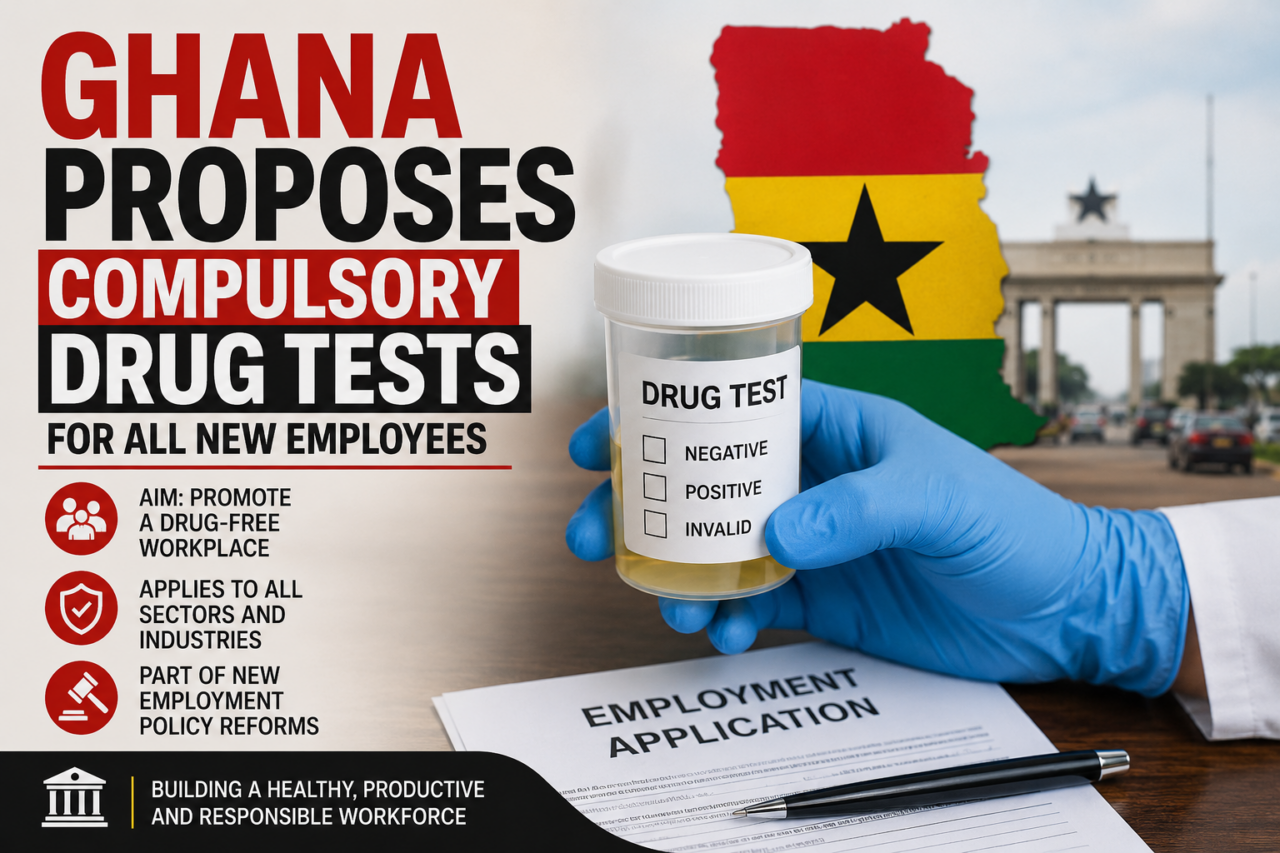
The Narcotics Control Commission (NACOC) has formally proposed a nationwide policy that would require compulsory drug testing for all job applicants seeking employment in both Ghana’s public and private sectors. The proposal, announced by NACOC Deputy Director-General Alexander Twum-Barimah, is intended to combat rising substance abuse among young people and strengthen the integrity and productivity of the country’s future workforce.
Under the proposed framework, all prospective employees would be required to present certified proof of a negative drug test before being considered for recruitment. The tests would reportedly be conducted either directly through NACOC or through approved medical institutions authorized by the commission. The drug clearance certificate would become a standard employment requirement similar to other pre-employment documentation and medical screening procedures.
NACOC officials say the policy is designed as a preventive national intervention aimed at discouraging the increasing use of illicit substances among Ghana’s youth population. According to the commission, making drug screening a mandatory condition for employment could create a strong deterrent effect, particularly among young people preparing to enter the workforce.
Supporters of the proposal also argue that compulsory testing could help protect workplaces from productivity losses, absenteeism, impaired decision-making, and safety risks associated with drug abuse. NACOC believes that implementing a unified national testing structure across both public institutions and private companies would contribute to building a more disciplined and reliable workforce while strengthening public confidence in state institutions and corporate recruitment systems.
The commission’s push for broader drug screening has been heavily influenced by recent findings from large-scale recruitment exercises conducted within Ghana’s security services. In May 2026, the Ministry of the Interior disclosed that more than 6,000 applicants were disqualified during expanded medical screenings for recruitment into the Police Service, Fire Service, and Prison Service.
According to officials, over 100,000 candidates participated in the nationwide recruitment process, but more than 4,000 applicants reportedly tested positive for drug use, while an additional 2,000 failed mental health assessments. The screening exercise, which was carried out in partnership with NACOC, exposed what authorities described as a significant substance abuse problem among prospective security personnel and intensified calls to expand mandatory drug testing beyond the security sector into the wider labor market.
The proposal, however, is expected to generate substantial public debate because it remains an administrative recommendation rather than an enacted law. Legal experts, labor unions, civil society groups, and human rights advocates are likely to scrutinize the policy’s implementation framework, financial implications, and constitutional legality.
One of the major concerns surrounding the proposal is the question of who would bear the financial burden of mandatory testing. Critics argue that requiring unemployed job seekers to pay for certified drug clearances could place additional pressure on economically vulnerable youth already struggling with high unemployment and limited income opportunities.
Labor rights advocates are also expected to raise concerns over privacy protections and the legality of compelling applicants to disclose medical information for positions that may not involve public safety or high-risk operational duties. Some analysts warn that blanket mandatory testing for all sectors could trigger constitutional challenges regarding discrimination, workers’ rights, and data privacy.
Observers additionally note that Ghana would not be alone in adopting stricter pre-employment screening standards if the proposal is eventually implemented. Neighboring Nigeria has already introduced mandatory drug screening policies for applicants seeking employment in parts of its public service sector, reflecting a growing regional focus on substance abuse prevention within state institutions.
Despite the anticipated controversy, NACOC maintains that the proposal is necessary to address what it sees as an escalating public health and workforce integrity challenge. The commission argues that early intervention through structured screening policies could help reduce long-term social and economic consequences associated with widespread drug abuse among young adults entering the labor market.
Source: Omanghana