Omanghana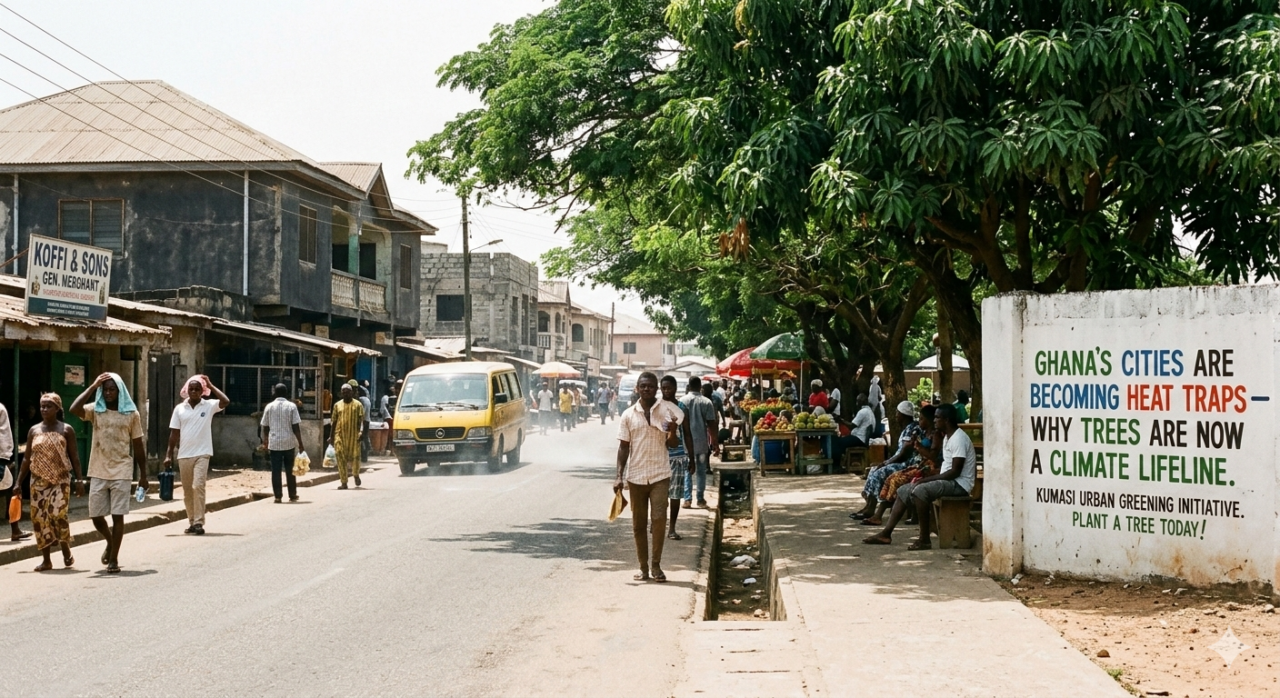
Rapid urbanization across Ghana is dramatically reshaping its cities — and not always for the better. In major urban centers such as Accra, expanding concrete developments, vanishing wetlands, and shrinking green spaces are turning once-breezy neighborhoods into dangerous “heat traps.”
Residents increasingly describe afternoons as “unbearable”, while nights remain too warm for the body to cool down and recover — a pattern that climate experts warn is intensifying due to the urban heat island effect.
Urban heat islands occur when cities absorb and retain more heat than surrounding rural areas. Asphalt, concrete, and metal surfaces trap solar radiation during the day and slowly release it at night, preventing temperatures from dropping.
In Accra and other fast-growing cities:
-
Trees are being cleared for housing and road expansion
-
Wetlands are filled to make space for real estate projects
-
School compounds and public spaces are paved over for parking lots
The result is a cityscape that stores heat instead of dissipating it.
Urban planners and climate scientists say integrating trees into city design is no longer optional — it is essential for survival.
Urban vegetation can reduce surface temperatures by 2–8°C through two primary mechanisms:
-
Shading: Trees block direct sunlight from heating buildings and pavements
-
Evapotranspiration: Plants release water vapor, cooling the surrounding air
Shaded areas can feel dramatically cooler than those exposed to direct sun — a crucial difference for households without air conditioning.
In low-income neighborhoods where cooling systems are rare, tree cover can mean the difference between tolerable heat and dangerous conditions.
Rising urban temperatures are not just uncomfortable — they are economically disruptive and socially unequal.
Extreme heat reduces labor output, particularly in outdoor industries. In Ghana’s informal economy, where many people work as:
-
Market traders
-
Street vendors
-
Artisans
-
Transport operators
— Prolonged sun exposure directly affects earnings and health.
Hotter temperatures increase electricity demand for cooling, placing stress on already fragile power grids. At the same time, hospitals report higher admissions related to dehydration, heat exhaustion, and cardiovascular stress.
Informal workers, children in overcrowded schools, and residents of densely built low-income communities bear the brunt of rising heat. Without adequate tree cover or ventilation, recovery from daytime heat becomes nearly impossible at night.
Critics argue that Ghana’s urban planning framework often treats trees as ornamental rather than essential infrastructure.
-
Green belts are not legally protected
-
Landscaping requirements are inconsistently enforced
-
Municipal budgets rarely prioritize long-term tree maintenance
Meanwhile, rapid construction continues to reduce natural canopy cover. Wetlands — which naturally cool cities and absorb floodwater — are increasingly converted into housing estates and commercial zones.
Other cities facing similar climate pressures have demonstrated that strategic urban greening works.
Through its “green corridors” initiative, Medellín planted thousands of trees and created vegetated pathways across highways and neighborhoods, reducing average urban temperatures by up to 2°C.
Meanwhile, Singapore has integrated greenery into nearly 47% of its land area through strict building codes, rooftop gardens, and vertical vegetation systems. Green space is embedded into policy, not treated as decoration.
Experts argue that Ghana can build climate resilience by making urban greening a legal and financial priority. Key proposals include:
-
Embedding mandatory tree-planting requirements into building codes
-
Requiring housing developers to preserve canopy cover
-
Protecting wetlands and green belts by law
-
Allocating dedicated municipal budgets for tree maintenance
-
Encouraging vertical gardens and rooftop greenery in dense areas
Urban forestry, they say, should be treated like roads and drainage systems — as core infrastructure, not optional beautification.
As climate change intensifies heatwaves across West Africa, Ghana’s cities face a pivotal choice: continue paving over natural cooling systems or redesign urban spaces to prioritize trees and green cover.
The science is clear. Trees cool cities, protect health, boost productivity, and reduce energy demand. Without urgent action, Accra and other urban centers risk becoming increasingly hostile environments for millions of residents.
In the fight against rising temperatures, a tree is no longer just a symbol of nature — it is a frontline defense against urban heat.
Source: Omanghana