Omanghana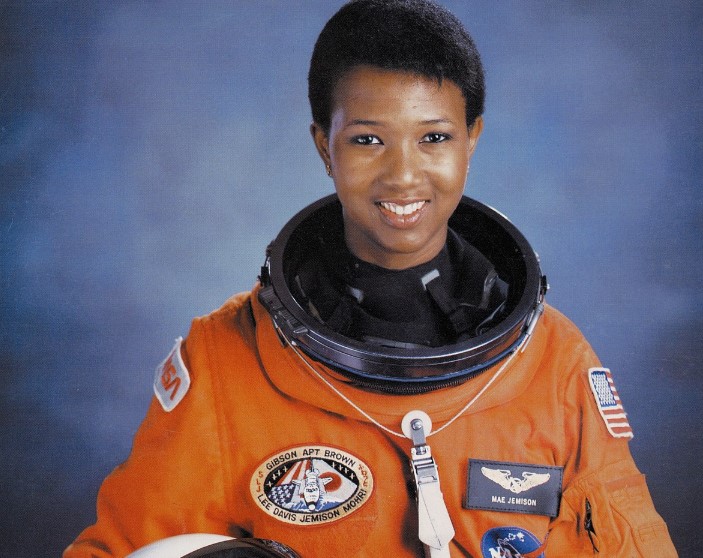
The early career of Mae Jemison reveals a chapter of resilience and leadership that she has often described as even more demanding than her later achievements in space. Long before becoming the first African American woman to travel to space, Jemison served as a physician with the Peace Corps from 1983 to 1985, taking on a role that would test her medical expertise, decision-making, and ability to operate under pressure in resource-limited environments.
At just 26 years old, Jemison was appointed Area Medical Officer for Sierra Leone and Liberia, a position that placed her in charge of the health and well-being of Peace Corps volunteers, staff, and even U.S. embassy personnel in both countries. Her responsibilities were extensive and multifaceted. She oversaw the operation of a medical office, laboratory, and pharmacy, while also supervising local and international medical staff. In regions where access to healthcare infrastructure was often limited, her role required not only clinical skill but also administrative leadership and adaptability.
Beyond her day-to-day medical duties, Jemison contributed to scientific research in collaboration with leading institutions such as the Centers for Disease Control and Prevention and the National Institutes of Health. Her work focused on vaccine-related research, particularly in areas such as hepatitis B and rabies, diseases that posed significant public health challenges in the region. These efforts reflected her broader commitment to combining clinical practice with scientific advancement, even in challenging field conditions.
Jemison also played a key role in health education, recognizing that prevention and awareness were as critical as treatment. She authored self-care manuals for Peace Corps volunteers and developed practical guidelines addressing community health and safety issues. These materials helped equip individuals with the knowledge needed to manage risks and maintain well-being in unfamiliar and often demanding environments.

One of the most defining moments of her service came when she made a life-saving decision that underscored her clinical judgment and courage. In a situation where a patient was initially suspected to have malaria, Jemison identified the symptoms as meningitis—a far more severe condition requiring immediate intervention. Despite resistance from embassy officials due to the high cost, she authorized an $80,000 medical evacuation. Her decision proved correct, and the timely action ultimately saved the patient’s life. The incident remains a powerful example of her willingness to act decisively in the face of uncertainty and bureaucratic pressure.
This period of service, though less widely known than her later achievements with NASA, played a crucial role in shaping Jemison’s approach to leadership, problem-solving, and global engagement. It demonstrated her ability to operate effectively in complex, high-stakes environments—qualities that would later define her career as an astronaut and public figure.
On April 12, 2026, this legacy of service was brought back into the spotlight when the Peace Corps highlighted Jemison’s journey in a message celebrating the achievements of the Artemis II crew, including Christina Hammock Koch, following their record-breaking mission and safe return to Earth. The tribute drew a symbolic connection between generations of explorers—those who serve on the ground in challenging global environments and those who push the boundaries of human exploration in space.
Jemison’s story serves as a powerful reminder that the path to extraordinary achievement is often forged through moments of quiet determination and service. Her time in the Peace Corps not only tested her limits but also laid the foundation for a career that would inspire millions around the world.
Source: Omanghana